
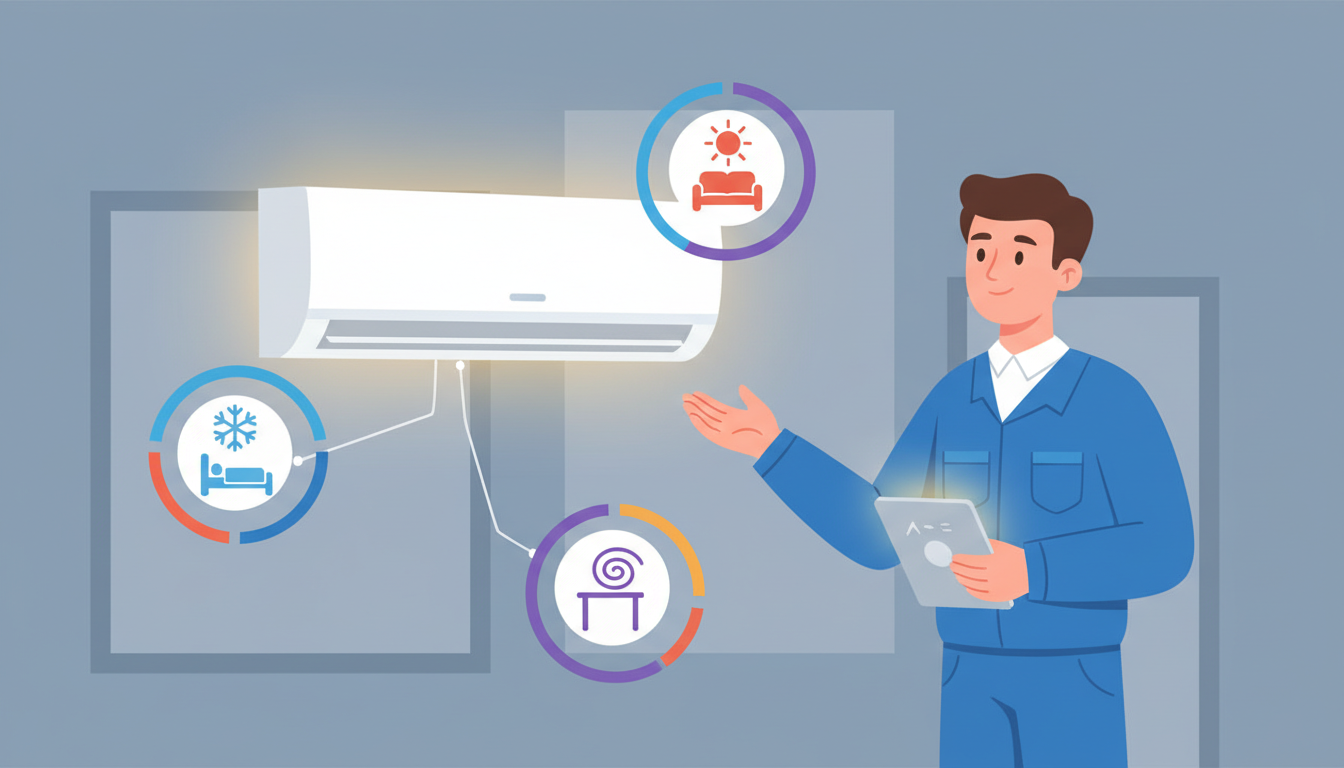
Why Is My Multi-Zone Mini-Split Not Balancing Comfort?
Why Is My Multi-Zone Mini-Split Not Balancing Comfort?
You've invested in a multi-zone mini-split system for customized comfort in every room, but instead of enjoying perfect temperatures throughout your home, you're dealing with one zone that's freezing while another feels like a sauna. If your multi-zone mini-split isn't balancing comfort properly, you're not alone—this is the most common complaint among multi-zone system owners.
The good news? Most multi-zone mini-split comfort issues aren't signs of system failure. They're typically caused by simple configuration problems, capacity mismatches, or operational limitations that you can diagnose and often fix yourself. In this guide, we'll walk you through exactly why your zones aren't balancing and what you can do about it.
Understanding How Multi-Zone Mini-Splits Work
Before we troubleshoot your comfort issues, it's important to understand how multi-zone systems differ from single-zone units. A multi-zone mini-split uses one outdoor condenser unit to power multiple indoor air handlers (heads) installed in different rooms or zones.
Unlike traditional HVAC systems, each zone has its own thermostat and can be controlled independently. This sounds perfect in theory, but in practice, these zones share the same refrigerant lines and compete for capacity from the single outdoor unit.
Think of it like a pizza that needs to feed multiple people—if one person takes too much, the others get less. Your outdoor unit has a fixed BTU capacity that must be distributed among all connected zones, and therein lies the root of many balancing problems.
The #1 Reason: Zone Competition and Capacity Overload
The most common cause of multi-zone mini-split comfort imbalance is what HVAC professionals call "zone competition." When multiple zones call for heating or cooling simultaneously, they're all drawing from the same outdoor unit's capacity.
Here's where homeowners run into trouble: if the combined BTU rating of all your indoor units exceeds your outdoor unit's capacity, the system will throttle down to protect itself. This means every zone gets less cooling or heating power than it needs.
How to Check for Capacity Overload
Add up the BTU ratings of all your indoor air handlers. You'll find these numbers on the specification labels or in your installation manual. Compare this total to your outdoor unit's maximum capacity.
Example: If you have three 12,000 BTU indoor units (36,000 BTU total) connected to a 30,000 BTU outdoor condenser, you're overloaded by 6,000 BTU. When all three zones run simultaneously, none will perform optimally.
The solution? You may need to limit how many zones operate at once, or consider upgrading to a larger outdoor unit that can handle your total indoor capacity.
Fan Speed Settings Are Creating Uneven Airflow
One of the simplest yet most overlooked causes of comfort imbalance is inconsistent fan speed settings across your zones. If you've set one zone to "Low" fan speed and another to "High," you'll definitely notice a temperature difference.
The zone running on high fan speed will circulate air more effectively and feel more comfortable, while the low-speed zone will struggle to distribute conditioned air evenly. This creates hot or cold spots even when the system is working perfectly.
Quick Fan Speed Fix
Walk to each indoor unit and check the current fan speed setting on the remote or control panel. Set all zones to the same fan speed—typically "Auto" or "Medium"—and monitor the results for a few hours.
You should notice more consistent comfort across zones within 30-60 minutes. If one room genuinely needs more airflow due to size or layout, that's fine, but make intentional choices rather than leaving mismatched settings by accident.
Your Zones Can't Heat and Cool Simultaneously
Here's a limitation that catches many homeowners off guard: your multi-zone ductless system can either heat or cool, but it cannot do both at the same time. The outdoor unit operates in one mode system-wide, regardless of individual zone settings.
This means if your bedroom needs cooling on a mild spring evening while your basement needs heating, the system must choose one mode. Whichever zone doesn't match the current operating mode will simply circulate air without conditioning it.
During shoulder seasons (spring and fall), this limitation becomes especially problematic. South-facing rooms may need cooling while north-facing rooms need heating, creating the exact comfort imbalance you're experiencing.
Working Around the Heating/Cooling Limitation
The best strategy is to use the "Auto" mode during transitional weather, which allows the system to switch between heating and cooling based on the majority of zone demands. You can also adjust individual zone temperature setpoints to minimize conflicts.
For example, if most zones need cooling but one consistently needs heating, raise that zone's temperature setpoint by 2-3°F to reduce its demand. Ceiling fans can also help circulate air and reduce the temperature differential without requiring the HVAC system to switch modes.
For more comprehensive guidance on managing your mini-split system, check out our mini-split repair guide.
Airflow Obstructions Blocking Even Distribution
Even the best-designed multi-zone system will struggle if airflow is obstructed in one or more zones. Furniture placement, closed doors, dirty filters, and blocked return vents all restrict the circulation that's essential for balanced comfort.
When airflow is restricted in one zone, that air handler works harder but achieves less. The refrigerant doesn't exchange heat efficiently, temperatures don't stabilize, and you'll notice that zone always feels "off" compared to others.
Common Airflow Blockers to Check
Inspect each zone for these common obstructions:
- Furniture placement: Couches, beds, or shelves within 3 feet of the indoor unit
- Curtains and drapes: Hanging fabric that blocks the air outlet or intake
- Dirty air filters: Clogged filters reduce airflow by up to 50%
- Closed or partially closed doors: Especially problematic in bedrooms
- Vent blockages: Storage items, plants, or decor placed directly below units
Clear at least 3 feet of space around each indoor unit for optimal air circulation. Replace or clean filters every 30-60 days depending on usage and dust levels in your home.
Refrigerant Distribution Issues Between Zones
In multi-zone systems, refrigerant must be distributed from the outdoor unit through branch boxes to each indoor head. If the installation wasn't done correctly, or if there's a partial blockage or leak in one of the refrigerant lines, that zone will receive inadequate refrigerant flow.
This manifests as one zone that never quite reaches the desired temperature, even when other zones are comfortable. The affected zone may also show frost buildup on the indoor unit or refrigerant lines during cooling mode.
Signs of Refrigerant Problems
Watch for these indicators:
- One zone consistently 5-10°F warmer or cooler than its setpoint
- Ice formation on refrigerant lines or the indoor coil
- Hissing sounds near the indoor or outdoor units
- The outdoor unit running constantly without achieving comfort
- Oil stains near connection points on refrigerant lines
Refrigerant issues require professional HVAC service. Don't attempt to add refrigerant yourself—modern systems require precise charging and specialized equipment. For general HVAC troubleshooting steps, visit our HVAC repair guide.
Thermostat Sensor Placement and Calibration
Where your temperature sensors are located dramatically affects how each zone performs. If the sensor on one indoor unit is exposed to direct sunlight, near a heat source, or in a dead air pocket, it will give false readings that throw off the entire zone's operation.
A sensor reading 78°F when the room is actually 72°F will cause the system to undercool that zone. Meanwhile, the opposite problem—a sensor in a cold spot—will cause overcooling as the system tries to compensate.
Optimizing Sensor Placement
Most mini-split sensors are integrated into the indoor unit itself, but you can influence their accuracy:
- Ensure no lamps, appliances, or electronics are directly below the unit generating heat
- Keep the unit out of direct sunlight streaming through windows
- Don't place furniture that blocks air circulation around the sensor area
- If your system has wireless remote sensors, relocate them to more representative locations
Some premium multi-zone systems allow you to adjust temperature offset settings to compensate for sensor inaccuracies. Check your owner's manual for this feature—adjusting by 1-2°F can significantly improve comfort balance.
Installation and Sizing Errors
Sometimes the comfort imbalance stems from mistakes made during the original installation. If your zones weren't sized correctly for the rooms they serve, no amount of adjustment will fix the underlying problem.
A 9,000 BTU indoor unit in a 400-square-foot bedroom will perform beautifully, but that same unit in a 600-square-foot great room with vaulted ceilings will constantly struggle. The under-sized zone will always lag behind properly sized zones.
Evaluating Your Zone Sizing
Calculate the rough BTU requirements for each zone using this formula:
Square footage × 25 BTU per square foot = Recommended BTU capacity
For example, a 300-square-foot bedroom needs approximately 7,500 BTU (300 × 25). Adjust upward for rooms with:
- High ceilings (add 20% for vaulted or 10+ foot ceilings)
- Large windows with southern exposure (add 10-15%)
- Poor insulation (add 20-30%)
- Heat-generating appliances or equipment
If your calculation shows a zone is significantly undersized, you may need to replace that indoor unit with a higher-capacity model or reduce the load through improved insulation and window treatments.
Remote Control and Communication Problems
Modern multi-zone systems rely on communication between the outdoor unit, indoor units, and remote controls. If one zone's remote control is malfunctioning or if there's a communication error between components, that zone won't respond correctly to your commands.
This can manifest as a zone that seems to ignore temperature setpoint changes, runs continuously regardless of settings, or operates in the wrong mode compared to what you've selected.
Troubleshooting Remote and Communication Issues
Try these steps to resolve control problems:
- Replace remote batteries in all zone controllers
- Power cycle the system by turning off the circuit breaker for 60 seconds
- Reset the indoor unit using the button on the unit itself (consult your manual)
- Check for error codes displayed on the indoor unit's LED panel
- Verify wireless signal if using wireless remotes—interference from other devices can cause problems
If you're experiencing persistent remote control issues, our guide on mini-split remote troubleshooting provides detailed solutions.
Priority Zones and Sequential Operation
Some multi-zone systems use priority logic or sequential operation to manage capacity distribution. This means the system may favor certain zones over others when demand is high, or it may cycle between zones rather than running all of them simultaneously.
If you're not aware of this behavior, it can feel like comfort imbalance when it's actually the system working as designed. Zone 1 might get full capacity for 10 minutes, then Zone 2, then Zone 3, creating a rotating pattern of comfort.
Managing Priority Settings
Check your system's advanced settings or installer menu for options like:
- Zone priority rankings (master bedroom as high priority, guest room as low)
- Simultaneous operation limits (maximum 2 zones at once)
- Capacity distribution percentages (allocate 60% to living spaces, 40% to bedrooms)
Adjusting these settings to match your actual usage patterns can dramatically improve perceived comfort. If your system doesn't have these advanced features, you can create a manual schedule—cooling bedrooms at night and living areas during the day.
How to Balance Your Multi-Zone System (Step-by-Step)
Now that you understand the causes, here's a systematic approach to balancing your multi-zone mini-split:
Step 1: Set All Zones to the Same Baseline
- Set identical temperature setpoints (e.g., 72°F in cooling mode)
- Use the same fan speed setting across all zones
- Select the same operating mode
Step 2: Monitor for 2-3 Hours
- Note which zones reach setpoint quickly
- Identify zones that lag behind
- Check outdoor unit runtime and cycling patterns
Step 3: Make Small Adjustments
- Lower setpoint by 1-2°F in zones that overshoot
- Raise setpoint by 1-2°F in zones that undershoot
- Adjust fan speeds if needed for specific rooms
Step 4: Address Physical Issues
- Clean all filters
- Clear obstructions around indoor units
- Check for closed doors or blocked vents
Step 5: Verify Capacity Isn't Exceeded
- Calculate total BTU demand when all zones run
- If overloaded, stagger zone operation
- Consider turning off unused zones
Step 6: Test Over Multiple Days
- Monitor during peak heat/cold periods
- Note any consistent patterns
- Fine-tune setpoints as needed
Most systems will achieve good balance within 3-5 days of systematic adjustment. If problems persist, you may have underlying issues requiring professional diagnosis.
When to Call a Professional HVAC Technician
While many comfort balance issues can be resolved through adjustments and maintenance, some situations require professional expertise:
- Refrigerant leaks or low refrigerant levels (never attempt DIY refrigerant work)
- Electrical problems including frequent breaker trips or power issues
- Mechanical failures such as failed expansion valves or compressor problems
- Persistent error codes that don't clear after basic troubleshooting
- Installation defects including undersized line sets or incorrect branch box connections
- Significant performance degradation despite all troubleshooting efforts
A qualified HVAC technician has specialized tools to measure refrigerant pressures, airflow rates, temperature differentials, and electrical parameters that aren't accessible to homeowners. If you've exhausted the troubleshooting steps above, professional diagnosis is the next appropriate step.
Frequently Asked Questions
Why is one zone always colder than the others in my multi-zone mini-split?
The most common cause is uneven fan speed settings or capacity distribution. Check that all zones are using the same fan speed, and verify that your outdoor unit has sufficient capacity for all connected indoor units running simultaneously. If one zone is significantly larger than others, it may need a higher-capacity indoor unit.
Can I run just one zone of my multi-zone mini-split?
Yes, you can operate just one zone while leaving others off. In fact, this can improve performance in the active zone since it has access to the outdoor unit's full capacity. However, frequently running only one small zone on an oversized outdoor unit can reduce efficiency and increase wear.
How often should I clean the filters in a multi-zone system?
Clean or replace filters every 30-60 days depending on usage, dust levels, and whether you have pets. Zones that run more frequently or serve high-traffic areas may need more frequent filter maintenance. Dirty filters are a leading cause of comfort imbalance.
Why won't my multi-zone system heat one room while cooling another?
Multi-zone mini-splits can only operate in one mode at a time—either heating or cooling across all zones. The outdoor unit cannot simultaneously heat and cool different zones. During transitional seasons, use the Auto mode and adjust individual zone setpoints to minimize this limitation.
Is it normal for a multi-zone mini-split to throttle performance?
Yes, if the combined capacity of your indoor units exceeds the outdoor unit's maximum output, the system will reduce performance to protect itself. This is called capacity overload, and it affects all zones. The solution is to avoid running all zones at maximum demand simultaneously, or upgrade to a larger outdoor unit.
Conclusion: Achieving Balanced Comfort in Your Multi-Zone System
Multi-zone mini-split comfort imbalances are frustrating, but they're rarely indicative of serious system failure. In most cases, the issues stem from capacity mismatches, operational limitations, or simple configuration problems that you can address with systematic troubleshooting.
Start with the basics: verify fan speeds are consistent, clean all filters, check for airflow obstructions, and ensure your total zone capacity doesn't exceed your outdoor unit's maximum output. These simple steps resolve 70-80% of reported comfort balance issues.
For persistent problems involving refrigerant distribution, electrical faults, or mechanical failures, don't hesitate to call a qualified HVAC professional. Your comfort is worth the investment in proper diagnosis and repair.
Ready to tackle other mini-split issues? Explore our comprehensive guides and start enjoying the perfectly balanced comfort you deserve from your multi-zone system.