
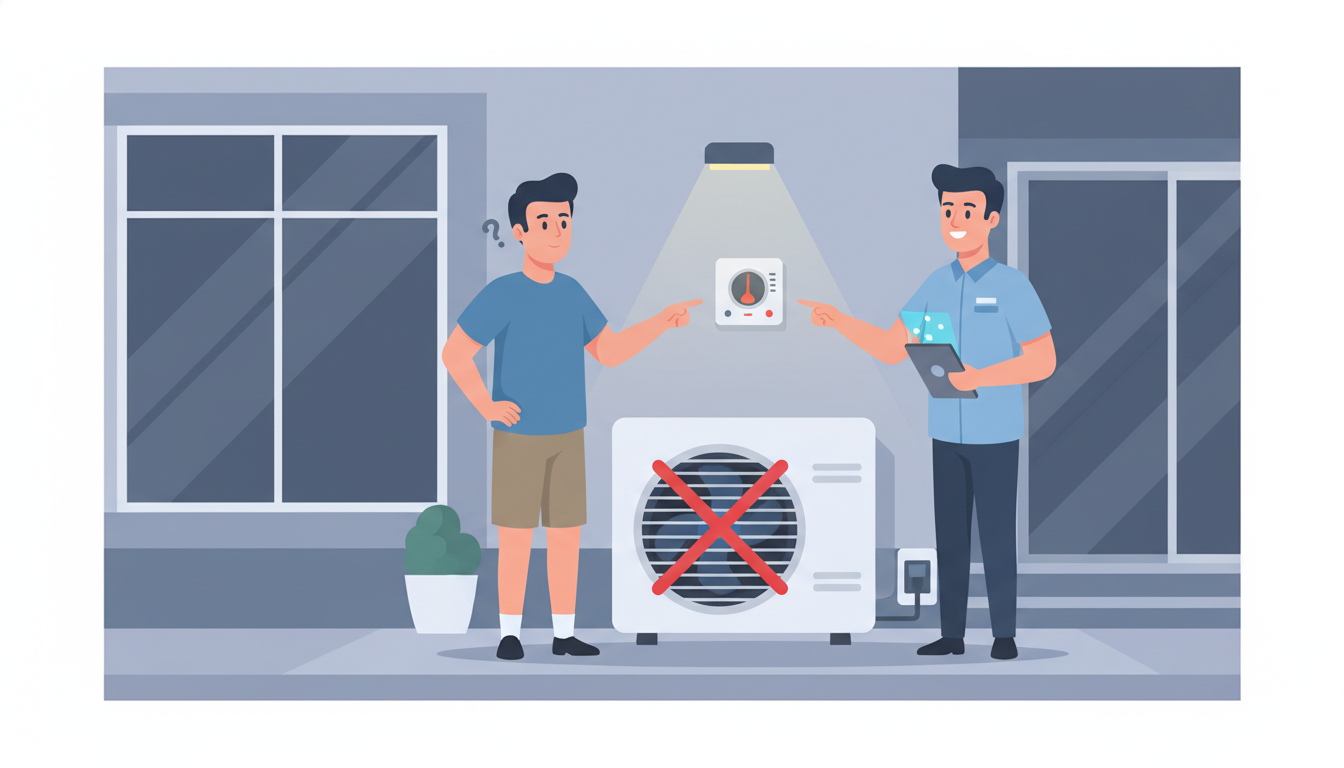
Outdoor AC Unit Not Turning On? Start Here
Outdoor AC Unit Not Turning On? Start Here
You walk outside on a scorching hot day, expecting to hear the familiar hum of your outdoor AC unit. Instead, you're met with complete silence. Your outdoor AC unit not turning on is more than just an inconvenience—it's a comfort crisis that needs immediate attention.
Don't panic. While a non-functioning outdoor air conditioner can signal various issues, many of them are surprisingly simple fixes you can tackle yourself before calling in the pros. Let's walk through the most common culprits and get your cooling system back up and running.
Quick First Steps Before You Start Troubleshooting
Before you dive into diagnosing the problem, take these safety precautions seriously. Working with electrical components can be dangerous if you're not careful.
First, turn off the power to your AC system at both the thermostat and the circuit breaker. This protects you from electrical shock and prevents damage to your system during inspection. Never skip this step, even if you're just taking a quick look.
Second, give your system a visual once-over. Look for obvious signs of damage like disconnected wires, pest intrusion, or physical damage to the outdoor unit. Sometimes the issue is staring you right in the face.
Check Your Thermostat Settings First
Before you assume the worst, start with the simplest solution. Your thermostat is the command center for your entire HVAC system, and incorrect settings are often the culprit behind an AC condenser not turning on.
Make sure your thermostat is set to "cool" mode, not "heat" or "off." This sounds basic, but it's surprisingly easy to overlook. Check that your desired temperature is set at least 3-5 degrees below the current room temperature.
If your thermostat runs on batteries, replace them now. Dead batteries can prevent your thermostat from sending the cooling signal to your outdoor unit. For smart thermostats, ensure the Wi-Fi connection is active and the device hasn't gone into power-saving mode.
Inspect the Circuit Breaker and Electrical Panel
A tripped breaker is one of the most common reasons your outside AC unit not working. Your air conditioning system draws significant power, and various electrical issues can flip that breaker switch.
Head to your electrical panel and look for any breakers in the "off" position or stuck in the middle. Your AC typically has two breakers—one for the indoor air handler and one for the outdoor condenser unit. Both need to be in the "on" position.
If you find a tripped breaker, flip it back on. However, if it trips again immediately, stop. This indicates a serious electrical problem like a short circuit or overloaded circuit that requires professional attention. Don't keep resetting a breaker that won't stay on—you could cause a fire or damage your system.
Look for the Outdoor Disconnect Switch
Many homeowners don't know this exists, but there's usually a disconnect switch mounted on or near your outdoor unit. This emergency switch allows you to cut power quickly for maintenance or emergencies.
The disconnect switch looks like a small gray or beige metal box mounted on your home's exterior wall near the condenser unit. Open it and make sure the switch is in the "on" position. Sometimes these get accidentally flipped during yard work or by curious kids.
If the disconnect box contains fuses instead of a switch, inspect them for signs of damage. A blown fuse will have a broken internal filament or blackened glass. Replace blown fuses with identical ratings—never use a higher amperage fuse as a substitute.
Test Your AC Capacitor
The capacitor is your outdoor unit's starting battery. When your central air outdoor unit not turning on, a failed capacitor is often the prime suspect. This small cylindrical component stores electrical energy and provides the initial power boost needed to start the compressor and fan motor.
Here's how to spot capacitor failure: A bulging or swollen top is a dead giveaway that your capacitor has failed. A healthy capacitor should have a flat top. If you see any oil residue, corrosion, or a burnt smell, the capacitor needs replacement.
You can also perform a visual inspection while the unit attempts to start. If you hear a clicking sound or humming but nothing happens, the capacitor likely can't provide enough juice to start the motor. Some handy homeowners can replace a capacitor themselves, but this involves working with high-voltage components that can hold a charge even when power is off.
If you're not comfortable working with electrical components, call a professional. A typical capacitor replacement costs $150-$300 and takes less than an hour.
Examine the Contactor Relay
The contactor relay works hand-in-hand with your capacitor. When your thermostat calls for cooling, it sends a low-voltage signal that closes the contactor, which then sends high-voltage power to your compressor and fan motor.
To check the contactor, remove the access panel on your outdoor unit (with the power off at the breaker). The contactor looks like a small black box with wires attached. Look for signs of pitting, burning, or melted plastic on the contact points.
If the contacts are stuck together or won't close, your outdoor AC compressor not starting makes perfect sense. Contactors wear out over time from the constant making and breaking of electrical connections. Replacement is straightforward for HVAC techs and typically costs $150-$250 including labor.
Check for Frozen Evaporator Coils
This might surprise you, but ice on your indoor unit can prevent your outdoor unit from turning on. When your evaporator coils freeze, many modern systems have a safety switch that shuts down the outdoor condenser to prevent compressor damage.
Look at your indoor air handler unit. If you see ice buildup on the copper lines or the coil itself, turn off your system and let it thaw completely. This can take 4-8 hours, so be patient.
Frozen coils usually indicate one of three problems: restricted airflow from a dirty filter, low refrigerant from a leak, or a malfunctioning blower fan. Once the ice melts, replace your air filter and see if the problem resolves. If your coils freeze again, you've got a refrigerant leak or airflow issue that needs professional diagnosis.
For more detailed guidance on HVAC troubleshooting, check out our comprehensive HVAC repair guide.
Dirty Condenser Coils Can Prevent Startup
Your outdoor unit's condenser coils need to breathe. When they're caked with dirt, grass clippings, cottonwood seeds, or other debris, your system can't dissipate heat properly. In extreme cases, this can prevent startup altogether.
Inspect your condenser coils through the metal grating on your outdoor unit. If they're visibly dirty or clogged, it's time for cleaning. Turn off all power to the unit, then carefully spray the coils from the inside out using a garden hose with a spray nozzle.
Never use a pressure washer—the high pressure can bend the delicate aluminum fins. If your coils are severely clogged, you might need a specialized coil cleaner from a hardware store or a professional cleaning service.
Clean condenser coils also improve efficiency, potentially lowering your energy bills by 10-15%. Make this an annual maintenance task every spring before cooling season.
Indoor Unit Running But Outdoor Unit Silent?
If you notice your outside AC unit not working but inside is, you're dealing with a communication or power issue between the two components. This is actually a helpful diagnostic clue.
First, this confirms your thermostat is working—it's successfully telling your indoor air handler to run. The problem lies somewhere in the chain between the indoor unit and outdoor condenser. Common causes include a blown fuse in the outdoor disconnect, a failed contactor, a bad capacitor, or a broken control wire.
Check the small control wires that run from your indoor unit to your outdoor unit. These low-voltage wires can break, get chewed by animals, or disconnect at their terminals. If you see any obvious wire damage, that's likely your culprit.
This scenario often points to an electrical component failure rather than a mechanical problem, which is actually good news. Electrical parts are generally cheaper and faster to replace than major mechanical components like compressors.
For more specific troubleshooting when dealing with this exact scenario, visit our guide on indoor AC unit running but outdoor unit not working.
Listen for Unusual Sounds
When your AC condenser won't start clicking noise or other unusual sounds can provide valuable diagnostic clues. Different sounds point to different problems.
A clicking sound without startup usually means your contactor is trying to engage but the compressor isn't receiving enough power. This often indicates capacitor failure. A humming or buzzing sound suggests the compressor wants to start but can't—again, typically a capacitor or contactor issue.
If you hear absolutely nothing—no clicks, hums, or fan noise—you're likely dealing with a complete power loss. Go back and check your breakers, fuses, and disconnect switch.
A grinding or squealing noise that occurs when the unit tries to start suggests a failing fan motor or compressor with mechanical problems. These issues require professional repair and can be expensive if the compressor is involved.
How to Reset Your Outdoor AC Unit
Sometimes your system just needs a good reset to clear error codes or restart after a power outage. Here's how to reset outdoor AC unit properly.
First, turn off your thermostat. Then, flip the breaker for your outdoor unit to "off" and wait at least 5 minutes. This allows capacitors to discharge and the system to fully power down.
After 5 minutes, flip the breaker back on and wait another 5 minutes before turning on your thermostat. This gives the system time to initialize and the compressor oil to settle. Don't rush this process—your compressor has built-in safety delays to prevent damage.
If your outdoor unit turns on after a reset but shuts down again within minutes or hours, you've got an underlying problem that needs diagnosis. The reset was just a temporary fix.
When to Call a Professional HVAC Technician
Some problems are beyond DIY fixes, and knowing when to call in the experts saves you time, money, and potential safety hazards. If you've checked everything above and your outdoor air conditioner not starting persists, it's time to make that call.
Contact a professional immediately if you smell burning plastic or see sparks near electrical components. These indicate serious electrical problems or component failure that could cause a fire. Don't attempt repairs in these situations.
Also call an HVAC technician if your breaker keeps tripping repeatedly, if you notice refrigerant leaks (ice on copper lines with hissing sounds), or if your compressor has failed. Compressor replacement is one of the most expensive HVAC repairs, often costing $1,500-$3,500, so you'll want a professional diagnosis before proceeding.
If your system is more than 10-12 years old and experiencing major component failures, discuss replacement options with your technician. Sometimes replacing the entire system makes more financial sense than pouring money into aging equipment.
Our central AC repair guide offers additional insights on when repair makes sense versus replacement.
Preventive Maintenance to Avoid Future Problems
The best way to prevent your outdoor AC unit from failing is regular maintenance. A well-maintained system lasts 15-20 years; a neglected one might only give you 8-10.
Change your air filter every 1-3 months depending on usage and household conditions. A clogged filter is the leading cause of preventable HVAC problems. Mark your calendar and make it a routine.
Schedule professional maintenance twice yearly—once before cooling season in spring and once before heating season in fall. A maintenance visit costs $75-$150 but can prevent thousands in repair costs. Techs will test electrical components, check refrigerant levels, clean coils, and spot problems before they cause system failure.
Keep the area around your outdoor unit clear. Maintain at least 2 feet of clearance on all sides for proper airflow. Trim bushes, remove grass clippings after mowing, and keep debris away from the unit.
Consider installing a surge protector for your HVAC system. Power surges from lightning or grid fluctuations can fry expensive components like circuit boards and compressors. A whole-home surge protector costs $300-$600 installed and protects your entire electrical system.
Understanding Repair Costs
When your outdoor AC unit not turning on requires professional repair, costs vary widely depending on the component involved. Here's what to expect.
Minor electrical repairs (thermostat replacement, breaker replacement, wiring fixes) typically run $100-$300. Capacitor or contactor replacement usually costs $150-$400. These are considered routine repairs that most HVAC companies can complete in a single visit.
Fan motor replacement ranges from $300-$700 depending on motor size and type. Refrigerant leak repair and recharge costs $300-$1,500 depending on leak location and refrigerant type (R-22 is much more expensive than newer R-410A).
Compressor replacement is the big-ticket item at $1,500-$3,500. At this price point, especially for systems over 10 years old, you should seriously consider full system replacement instead. A new central air system costs $3,500-$7,500 installed, which might make more sense than a $3,000 compressor for an aging unit.
Always get multiple quotes for expensive repairs. Prices can vary significantly between contractors, and you want someone reputable who stands behind their work.
Emergency Cooling While Waiting for Repair
If you're stuck without AC during a heat wave, take steps to stay comfortable and safe while waiting for your repair appointment.
Close blinds and curtains during the hottest parts of the day to block solar heat gain. Use fans strategically—box fans in windows can create cross-ventilation by pulling cool air in from shaded sides of your house and pushing hot air out from sunny sides.
Avoid using heat-generating appliances like ovens, dryers, and dishwashers during peak heat hours. Cook outdoors if possible, or stick to cold meals. These appliances add significant heat to your home.
Stay hydrated and pay attention to signs of heat exhaustion: dizziness, nausea, rapid heartbeat, or confusion. Vulnerable populations like elderly, very young, or those with health conditions should consider staying with friends or family, or visiting cooling centers if the heat is severe.
Some window units or portable AC units can provide temporary relief for sleeping areas. You can often rent these from equipment rental companies if you don't want to buy one.
FAQ: Common Questions About Outdoor AC Units Not Turning On
Why won't my outdoor AC unit turn on but the indoor unit is running?
This indicates a power or communication problem between your indoor and outdoor units. The most common causes are a tripped breaker for the outdoor unit, a blown fuse in the outdoor disconnect box, a failed capacitor, or a bad contactor relay. Check your outdoor breaker and disconnect switch first, as these are the easiest fixes.
How do I know if my AC capacitor is bad?
Visual inspection is your best first step. A failed capacitor often has a bulging or swollen top instead of being flat. You might also see oil leaking from the capacitor, corrosion on the terminals, or a burnt smell. If your outdoor unit hums or clicks but won't start, the capacitor likely can't provide enough power to start the motor.
Can I reset my outdoor AC unit myself?
Yes, resetting your outdoor unit is safe and simple. Turn off your thermostat, flip the outdoor breaker to "off," wait 5 minutes, flip the breaker back on, wait another 5 minutes, then turn on your thermostat. This full reset clears error codes and allows capacitors to discharge. If the problem persists after reset, you'll need to diagnose the underlying issue.
How much does it cost to fix an outdoor AC unit that won't turn on?
Costs range from $100 for a simple fix like replacing a blown fuse to $3,500+ for compressor replacement. Most common repairs (capacitor, contactor, fan motor) fall in the $150-$700 range. The exact cost depends on which component has failed and your location. Always get quotes from multiple HVAC contractors for expensive repairs.
Is it the thermostat or the outdoor unit causing the problem?
If changing your thermostat settings produces no response—no clicks, hums, or fan activity anywhere in the system—the thermostat or its wiring might be the issue. However, if your indoor air handler responds to thermostat changes but the outdoor unit stays silent, the problem is with the outdoor unit, its electrical components, or the communication between indoor and outdoor units.
Take Action Now
An outdoor AC unit not turning on doesn't have to ruin your summer comfort. Start with the simple checks: thermostat settings, circuit breakers, and the disconnect switch. Many homeowners successfully resolve the issue without ever calling a technician.
However, know your limits. Electrical work can be dangerous, and expensive components like compressors require professional expertise. When in doubt, call a licensed HVAC technician who can diagnose and repair your system safely.
Regular maintenance remains your best defense against unexpected failures. Clean or replace filters monthly, keep your outdoor unit clear of debris, and schedule professional tune-ups twice yearly. These simple habits extend your system's lifespan and keep cool air flowing when you need it most.
Ready to learn more about keeping your HVAC system running smoothly? Explore our complete library of troubleshooting guides and maintenance tips to become a more informed homeowner.