How Poor Airflow Can Freeze Your Evaporator Coil
How Poor Airflow Can Freeze Your Evaporator Coil
Is your air conditioner blowing warm air or not cooling your home effectively? If you've noticed ice forming on your AC unit, poor airflow is likely the culprit behind your frozen evaporator coil. Understanding why this happens and how to fix it can save you from costly repairs and uncomfortable summer days.
In this guide, you'll discover exactly how poor airflow causes your evaporator coil to freeze, the warning signs to watch for, and the specific steps you can take to prevent this common HVAC problem.
What Is an Evaporator Coil and Why Does It Matter?
Your evaporator coil is the indoor component of your air conditioning system that actually cools the air in your home. Located inside your air handler or furnace, this serpentine network of copper tubing contains cold refrigerant that absorbs heat from the air passing over it.
Here's how the process works: Your blower motor pushes warm air from your home across the cold evaporator coil. The refrigerant inside the coil absorbs the heat from that air, cooling it down before sending it back through your ductwork. The now-heated refrigerant travels to your outdoor condenser unit where the heat is released outside.
This continuous heat exchange process is what keeps your home comfortable. But when something disrupts the airflow over your evaporator coil, the entire refrigeration cycle breaks down—and ice formation begins.
The Science Behind Poor Airflow and Frozen Evaporator Coils
When your evaporator coil doesn't receive enough warm air flowing over it, the temperature of the coil drops below the freezing point of water (32°F). Here's what happens step by step:
The Normal Cooling Process
Under normal operating conditions, your evaporator coil maintains a temperature between 40°F and 50°F. Warm, humid air from your home passes over the coil at a rate of approximately 400 cubic feet per minute (CFM) per ton of cooling capacity. This constant supply of warm air keeps the coil at the optimal temperature for heat transfer.
When Airflow Becomes Restricted
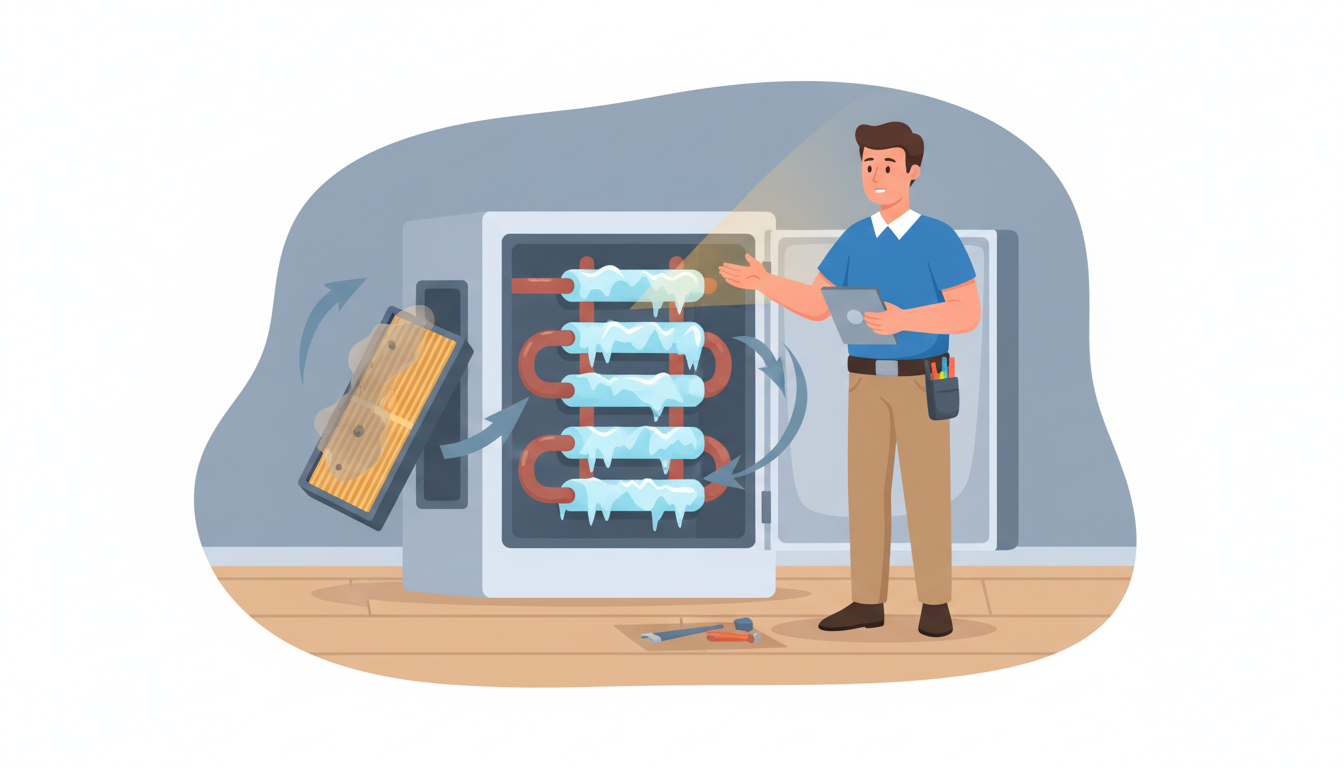
When airflow drops below the necessary CFM, less warm air reaches the coil. The refrigerant inside continues to absorb whatever heat is available, causing the coil temperature to plummet. As the coil surface temperature drops below 32°F, the moisture in the air that contacts the coil freezes instantly.
The Dangerous Feedback Loop
Ice formation creates a vicious cycle. The ice layer acts as an insulator, further blocking airflow across the coil. This causes more ice to form, which restricts even more airflow. Before long, your entire evaporator coil can become encased in a solid block of ice—completely stopping the cooling process and potentially damaging your system.
8 Common Causes of Poor Airflow That Freeze Your Evaporator Coil
Understanding the specific sources of restricted airflow helps you diagnose and fix the problem quickly. Here are the most common culprits:
1. Dirty or Clogged Air Filters
Your air filter is the first line of defense against dust, pet dander, and other airborne particles entering your HVAC system. When filters become clogged with debris, they create a physical barrier that dramatically reduces airflow to your evaporator coil.
How it causes freezing: A dirty filter can reduce airflow by 50% or more. This means your evaporator coil receives only half the warm air it needs to maintain proper operating temperature. Within hours of running in this condition, ice can begin forming on the coil surface.
The solution: Check your air filter monthly and replace it every 30-90 days depending on usage, pets, and allergies. If you have high-MERV filters (MERV 11+), check them even more frequently as they trap more particles and clog faster.
2. Blocked Return Air Vents and Grilles
Return air vents are strategically placed throughout your home to pull air back to your HVAC system for cooling. When these vents get blocked by furniture, curtains, or closed doors, your system can't pull in enough air.
How it causes freezing: Insufficient return air means your blower motor is working harder but moving less air across the evaporator coil. The reduced airflow causes the coil temperature to drop dangerously low.
The solution: Ensure all return air grilles have at least 6-12 inches of clearance. Avoid closing off too many rooms in your home, as this limits the available air your system can circulate. Keep interior doors open or install transfer grilles to maintain proper air circulation.
3. Dirty Evaporator Coils
Over time, dust, dirt, and debris can accumulate directly on your evaporator coil fins. This buildup acts like a blanket, preventing efficient heat transfer even when adequate air is flowing through the system.
How it causes freezing: Dirty coils can't absorb heat effectively from the air passing over them. The refrigerant stays colder than normal, causing condensation on the coil to freeze. The layer of grime essentially insulates the coil from the warm air it needs.
The solution: Have your evaporator coils professionally cleaned during annual HVAC maintenance. If you're comfortable working with your system, you can gently clean accessible coils with a soft brush and coil cleaner, but always turn off power to the unit first.
4. Malfunctioning Blower Motor or Fan
Your blower motor is responsible for moving air across the evaporator coil at the correct speed and volume. When the motor or fan malfunctions, airflow drops significantly.
How it causes freezing: A failing blower motor may run at reduced speed, move air intermittently, or stop working altogether. Even a 20% reduction in blower speed can cut airflow enough to cause ice formation. Common issues include worn bearings, failed capacitors, or faulty fan motors.
The solution: Listen for unusual noises from your air handler—squealing, grinding, or clicking sounds often indicate blower motor problems. If you notice weak airflow from your vents, have an HVAC technician inspect the blower motor assembly, check the capacitor, and test motor speed.
5. Collapsed or Disconnected Ductwork
Ductwork hidden in your attic, crawlspace, or walls can develop problems over time. Ducts can collapse, disconnect at joints, or develop large tears that leak conditioned air.
How it causes freezing: When supply or return ducts are compromised, your system can't maintain proper airflow through the evaporator coil. Disconnected return ducts are particularly problematic because they prevent adequate air from reaching the air handler.
The solution: Inspect accessible ductwork for obvious damage, disconnections, or excessive dust accumulation around joints. For a comprehensive assessment, consider scheduling a professional duct inspection that may include camera inspection and airflow measurements.
6. Undersized or Restrictive Ductwork
Some homes have ductwork that was improperly sized during installation or has become more restrictive due to renovations and additions.
How it causes freezing: Undersized ducts create excessive static pressure in your system, limiting the amount of air that can flow across the evaporator coil. High static pressure forces your blower motor to work harder while actually moving less air.
The solution: This requires professional evaluation. An HVAC technician can measure static pressure and calculate whether your ductwork is appropriately sized for your system's tonnage. Duct modifications or additions may be necessary.
7. Closed or Blocked Supply Vents
Many homeowners close supply vents in unused rooms thinking they'll save energy. Unfortunately, this practice disrupts the carefully balanced airflow your system needs.
How it causes freezing: Closing vents doesn't reduce your system's workload—it just redirects air elsewhere and increases static pressure. The reduced airflow across the evaporator coil can cause freezing, especially if you've closed vents in multiple rooms.
The solution: Keep at least 80% of your supply vents open throughout your home. If you want zone control, invest in a properly designed zoning system with dampers rather than simply closing vents.
8. Wrong Blower Speed Settings
Many HVAC systems have multiple blower speed settings, and sometimes these get changed during maintenance or thermostat replacements.
How it causes freezing: If your blower is set to a low speed when it should be on medium or high, airflow will be insufficient. This is particularly common with systems that have separate heating and cooling blower speeds.
The solution: Check your thermostat settings and ensure the fan is set to "Auto" rather than constantly running on low. For systems with adjustable blower speeds, have a technician verify that heating and cooling speeds are properly configured.
Warning Signs Your Evaporator Coil Is Freezing Due to Poor Airflow
Catching the problem early can prevent extensive damage to your HVAC system. Watch for these telltale signs:
Visible Ice Formation
Check your indoor air handler unit. If you can access the evaporator coil (usually behind a panel), you might see frost or ice accumulating on the copper tubing. Ice may also form on the refrigerant lines leading to your outdoor unit.
Weak Airflow from Vents
Place your hand near supply vents throughout your home. If airflow feels weak or significantly reduced compared to normal, this indicates an airflow restriction somewhere in your system.
Ice on Refrigerant Lines
The refrigerant lines connecting your indoor and outdoor units may develop frost or ice, particularly the larger insulated line (suction line). This is a clear indicator of insufficient airflow or refrigerant issues.
Higher Energy Bills
When your evaporator coil freezes, your system runs longer trying to reach the thermostat setpoint but never succeeds. This extended runtime shows up as increased electricity consumption on your utility bills.
Warm Air from Vents
A frozen evaporator coil can't cool air effectively. If your AC is running but only blowing warm or room-temperature air, ice buildup may be completely blocking the heat exchange process.
Water Leaks Around Indoor Unit
As ice melts when your system cycles off, it can produce more water than your condensate drain can handle. You might notice water pooling around your indoor air handler or water stains on nearby ceilings.
How to Fix a Frozen Evaporator Coil Caused by Poor Airflow
If you've discovered your evaporator coil is frozen, follow these steps to safely resolve the issue:
Step 1: Turn Off Your Air Conditioner
Immediately turn off your AC at the thermostat. Continuing to run your system with a frozen coil can damage the compressor—an expensive component to replace. Switch your thermostat to "Off" mode.
Step 2: Turn On the Fan Only
Switch your thermostat fan setting from "Auto" to "On." This runs the blower motor without the compressor, circulating room-temperature air across the frozen coil to speed up thawing.
Step 3: Let the Coil Thaw Completely
Complete thawing typically takes 24 hours for heavily frozen coils. You can monitor progress if you have access to the coil. Never try to chip ice off the coil or use heat guns, as this can damage the delicate fins.
Step 4: Check and Address the Airflow Problem
While the coil thaws, identify and fix the airflow restriction:
- Replace your air filter if it's dirty
- Clear away items blocking return or supply vents
- Ensure all interior doors can stay open or have transfer grilles
- Remove any obstructions from your outdoor unit
- Check visible ductwork for disconnections
Step 5: Restart Your System
Once the coil is completely thawed and you've addressed obvious airflow issues, turn your AC back on. Monitor the system for the next few hours to ensure ice doesn't return.
When to Call a Professional
Contact an HVAC technician if:
- Ice returns after you've addressed basic airflow issues
- You can't locate the source of the airflow restriction
- Your blower motor makes unusual noises or seems weak
- You suspect ductwork problems in inaccessible areas
- Ice forms on refrigerant lines along with the evaporator coil (this could indicate low refrigerant in addition to airflow problems)
Professional HVAC technicians have specialized tools to measure airflow (CFM), static pressure, and refrigerant levels. They can diagnose complex issues that aren't visible to homeowners.
Preventing Future Evaporator Coil Freezing
The best approach to frozen coils is prevention. Implement these strategies to maintain proper airflow and avoid ice formation:
Establish a Filter Replacement Schedule
Set calendar reminders to check your air filter monthly. Replace standard filters every 1-3 months, or more frequently if you have pets or allergies. Consider upgrading to a filter subscription service that automatically ships replacements.
Schedule Annual HVAC Maintenance
Professional maintenance should include evaporator coil cleaning, blower motor inspection, ductwork assessment, and airflow measurements. Spring tune-ups before cooling season are ideal for identifying potential problems.
Keep Return Air Paths Clear
Make a habit of checking return air grilles monthly. Move furniture away from vents and avoid blocking returns with heavy curtains or decor.
Maintain Proper Vent Settings
Keep interior doors open or install transfer grilles between rooms with closed doors. Avoid closing more than 20% of supply vents in your home.
Monitor System Performance
Pay attention to how your system normally sounds and feels. Changes in airflow strength, unusual noises, or longer run times can indicate developing problems before they cause freezing.
Address Humidity Issues
Excess humidity in your home can contribute to ice formation. Use bathroom and kitchen exhaust fans, fix plumbing leaks, and consider a whole-home dehumidifier if you live in a humid climate.
Understanding the Cost of Poor Airflow Issues
Addressing airflow problems early can save you significant money compared to dealing with the consequences of a frozen evaporator coil:
DIY Fixes (Free - $50)
- Air filter replacement: $15-$50
- Clearing blocked vents: Free
- Adjusting furniture placement: Free
Professional Repairs ($150 - $800)
- Professional coil cleaning: $150-$400
- Blower motor capacitor replacement: $150-$300
- Ductwork repairs: $300-$800+
- Blower motor replacement: $400-$800
Major System Damage ($1,500 - $5,000+)
- Compressor replacement: $1,500-$2,500
- Complete evaporator coil replacement: $1,000-$2,000
- Full system replacement: $3,500-$7,500+
Regular maintenance and prompt attention to airflow issues typically cost under $200 annually but can prevent thousands in emergency repairs. For guidance on maintaining your HVAC system, check out our comprehensive HVAC repair guide.
Poor Airflow vs. Other Causes of Frozen Coils
While poor airflow is the most common cause of frozen evaporator coils, other issues can produce similar symptoms:
Low Refrigerant Levels
Refrigerant leaks reduce the pressure in your system, causing the evaporator coil to become too cold even with adequate airflow. If you've addressed all airflow issues but freezing continues, have your refrigerant levels checked.
Outdoor Temperature Too Low
Running your AC when outdoor temperatures drop below 60°F can cause freezing because there isn't enough heat for the system to reject at the condenser. Most air conditioners aren't designed for cooling in cold weather.
Malfunctioning Thermostats
A faulty thermostat might cause your system to run continuously without cycling off properly, leading to temperature problems at the evaporator coil.
Expansion Valve Problems
The thermal expansion valve (TXV) or metering device controls refrigerant flow into the evaporator coil. If this component malfunctions, it can cause freezing regardless of airflow conditions.
For help distinguishing between refrigerant issues and airflow issues when ice forms, our diagnostic guide can help you identify the root cause.
The Role of Proper HVAC Sizing in Airflow Problems
Oversized or undersized HVAC systems can contribute to chronic airflow issues and frozen coils:
Oversized Systems
An oversized AC cools your space too quickly, causing short cycling. The unit doesn't run long enough for proper dehumidification, and the frequent on-off cycling can create temperature fluctuations at the evaporator coil.
Undersized Systems
An undersized system runs constantly trying to cool your home, which can lead to airflow problems if any restrictions exist. The constant runtime also accelerates filter clogging and system wear.
If you frequently experience frozen coils despite maintaining clean filters and clear vents, consider having a load calculation performed to verify your system is properly sized for your home.
Seasonal Considerations for Airflow and Frozen Coils
Evaporator coil freezing is most common during specific conditions:
Peak Summer Cooling Season
High cooling demand means your system runs longer, making any airflow restrictions more apparent. Filters also clog faster during peak season due to increased runtime.
High Humidity Periods
Humid air carries more moisture that condenses on the evaporator coil. If airflow is already marginal, the extra moisture can accelerate ice formation.
Spring and Fall
Running AC during cooler shoulder seasons (when outdoor temps are 60-70°F) increases freezing risk even with minor airflow issues. The reduced heat available makes the system more sensitive to airflow restrictions.
FAQs About Poor Airflow and Frozen Evaporator Coils
How long does it take for poor airflow to freeze an evaporator coil?
Under severe airflow restriction (like a completely clogged filter), ice can begin forming within 2-4 hours of continuous operation. With minor restrictions, it might take 8-24 hours of runtime before visible ice appears.
Can I run my AC with a partially frozen evaporator coil?
No, you should turn off your AC immediately if you notice any ice formation. Continuing to run the system can damage your compressor, leading to repairs costing thousands of dollars. Switch to fan-only mode to thaw the coil.
Will a frozen evaporator coil thaw on its own?
Yes, if you turn off the cooling system, a frozen coil will eventually thaw as it reaches room temperature. However, this doesn't fix the underlying airflow problem. You must identify and correct the cause of poor airflow to prevent refreezing.
How much does it cost to fix a frozen evaporator coil?
If poor airflow caused the freezing and no permanent damage occurred, fixes typically range from free (replacing a dirty filter) to $150-$400 for professional coil cleaning. If the freezing damaged your compressor or other components, costs can exceed $2,000.
Can a dirty outdoor condenser unit cause the evaporator coil to freeze?
While a dirty condenser unit affects system efficiency, it typically doesn't directly cause evaporator coil freezing. However, it can contribute to overall system stress that makes airflow restrictions more problematic. Clean both indoor and outdoor coils for optimal performance.
Take Action to Protect Your HVAC System
Poor airflow is the leading cause of frozen evaporator coils, but it's also one of the most preventable HVAC problems. By maintaining clean air filters, keeping vents clear, and scheduling regular professional maintenance, you can avoid the discomfort and expense of a frozen system.
Remember these key takeaways:
- Check your air filter monthly and replace it regularly
- Ensure return air grilles have clear space around them
- Keep at least 80% of supply vents open throughout your home
- Schedule annual professional HVAC maintenance
- Turn off your AC immediately if you notice ice formation
If you're experiencing recurring freezing issues or need help diagnosing airflow problems, don't wait for complete system failure. Our central AC repair guide provides additional troubleshooting steps, or contact a qualified HVAC technician to assess your system's airflow and prevent costly damage.
Your evaporator coil depends on consistent, adequate airflow to operate efficiently. By understanding how poor airflow causes freezing and taking proactive steps to maintain proper air circulation, you'll keep your home comfortable and your AC running smoothly for years to come.