How to Prevent Mini-Split Repair Problems With Better Maintenance
How to Prevent Mini-Split Repair Problems With Better Maintenance
Mini-split systems are incredible investments for home comfort, but like any HVAC equipment, they need proper care to stay reliable. The good news? Most mini-split repair problems are completely preventable with the right maintenance routine. By taking proactive steps to care for your ductless system, you can avoid costly repairs, extend your equipment's lifespan, and keep your home comfortable year-round.
In this guide, you'll discover exactly how to prevent mini-split repair problems through better maintenance practices. Whether you're looking to handle basic tasks yourself or want to know what professional service should include, we've got you covered.
Why Mini-Split Preventive Maintenance Matters
Your mini-split system works hard to keep your home comfortable, cycling on and off throughout the day and night. Without regular maintenance, small issues can snowball into expensive repair bills.
Studies show that well-maintained mini-split systems last 20+ years, while neglected units often fail within 10-12 years. That's a decade of lost performance and comfort. Regular mini-split preventive maintenance not only prevents breakdowns but also keeps your energy bills low and your indoor air quality high.
The average mini-split repair costs between $300 and $1,500, depending on the problem. Meanwhile, annual maintenance typically runs $150-$300. The math is simple—prevention is far cheaper than repair.
When you skip maintenance, dust and debris accumulate on critical components like evaporator coils and blower wheels. This forces your system to work harder, consuming more energy and wearing out faster. Eventually, you'll face problems like refrigerant leaks, compressor failure, or complete system breakdowns.
Common Mini-Split Problems You Can Prevent
Understanding what goes wrong with mini-split systems helps you prevent these issues before they start. Here are the most common mini-split problems that proper maintenance can eliminate:
Refrigerant Leaks
Refrigerant leaks happen when connections loosen, lines corrode, or vibration causes wear over time. Signs include reduced cooling capacity, ice buildup on the outdoor unit, and hissing sounds. Regular professional inspections catch small leaks before they drain your system completely.
Clogged Filters and Reduced Airflow
Dirty filters are the number one cause of mini-split performance issues. When airflow gets restricted, your system can't cool or heat effectively. Your indoor unit works overtime, energy consumption spikes, and eventually, the system overheats. Cleaning filters regularly prevents this entire chain of problems.
Condensate Drain Clogs
Your mini-split removes moisture from the air, and that water needs somewhere to go. When the condensate drain line clogs with algae, mold, or debris, water backs up and leaks into your home. This can damage walls, ceilings, and flooring. Monthly drain line checks prevent water damage and mold growth.
Dirty Coils Reducing Efficiency
Both the indoor evaporator coil and outdoor condenser coil need clean surfaces to transfer heat effectively. When coils get coated with dust, pollen, or grime, your system's efficiency drops by 20-30%. Your energy bills climb while your comfort suffers. Annual professional coil cleaning keeps performance at peak levels.
Understanding these issues is the first step. For a deeper dive into how dirty filters and coils affect your system, check out our guide on dirty filters and coils affect mini-split performance.
Electrical Connection Issues
Loose electrical connections cause intermittent operation, complete system failure, or even fire hazards. Temperature changes cause expansion and contraction, which can loosen terminals over time. Professional maintenance includes tightening all electrical connections and testing components for safety.
Outdoor Unit Obstructions
Your outdoor condenser unit needs clear airflow to release heat effectively. When leaves, grass clippings, or debris block the unit, heat gets trapped, efficiency drops, and the compressor works harder than designed. In extreme cases, the compressor overheats and fails—a repair that costs $1,200-$2,000.
Your DIY Mini-Split Maintenance Checklist
You don't need to be an HVAC technician to handle basic mini-split maintenance. These DIY tasks take just 20-30 minutes monthly and prevent most common problems.
Monthly Tasks: How Often to Clean Mini-Split Filters
Clean or replace air filters every 2-4 weeks. This single task prevents more problems than anything else you can do.
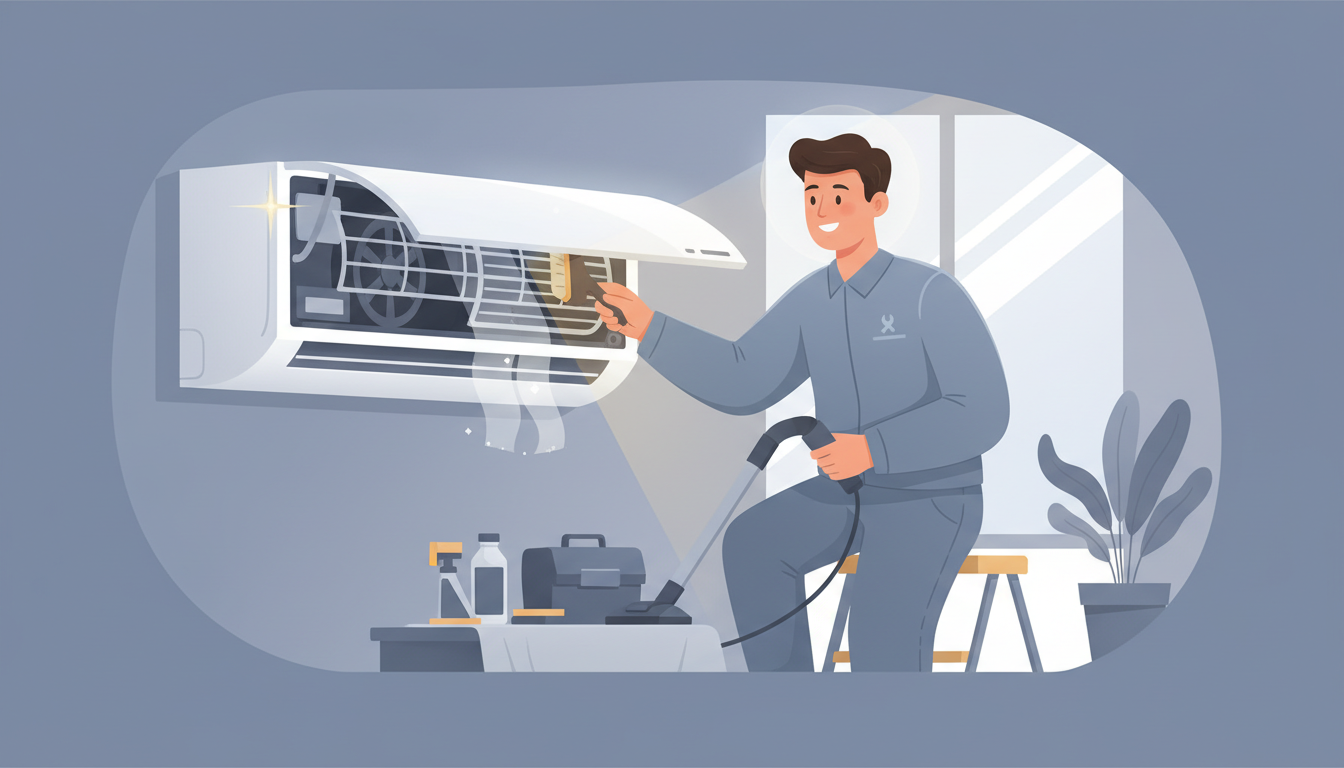
Here's how to clean your mini-split filters:
- Turn off the indoor unit
- Open the front panel (usually lifts up or swings open)
- Remove the filter screens
- Vacuum off loose dust and debris
- Wash filters with warm, soapy water
- Rinse thoroughly and let air dry completely
- Reinstall filters and close the panel
If you use your system heavily, have pets, or live in a dusty area, check filters weekly. Some households need to clean filters every week during peak cooling or heating seasons.
Monthly Visual Inspections
Take five minutes each month to inspect both your indoor and outdoor units:
- Indoor unit: Look for water stains, unusual sounds, or ice buildup
- Outdoor unit: Check for debris, vegetation growth within 2 feet, or visible damage
- Condensate drain: Ensure water drips freely when the system runs
- Remote control: Test all functions to ensure proper operation
Seasonal Maintenance Tasks
Before cooling season (spring):
- Deep clean all filters
- Clear vegetation and debris around the outdoor unit
- Test the system in cooling mode for 15-20 minutes
- Listen for unusual sounds or vibrations
- Check that the condensate drain flows freely
Before heating season (fall):
- Repeat filter cleaning
- Clear fallen leaves from around the outdoor unit
- Test heating mode thoroughly
- Inspect outdoor unit for signs of pest intrusion
These seasonal checks catch problems early, before you need your system most. For comprehensive guidance on mini-split maintenance, visit our mini-split repair guide.
Simple Tasks That Extend Mini-Split Lifespan
Keep the outdoor unit clear. Maintain at least 2 feet of clearance on all sides. Trim back shrubs, remove weeds, and never stack items on or against the unit.
Clean the cabinet exterior. Gently spray the outdoor unit with a garden hose to remove dirt, pollen, and debris from the fins. Don't use a pressure washer—the high pressure can bend delicate fins.
Keep indoor vents unobstructed. Don't block your indoor unit with furniture, curtains, or decorations. Proper airflow is essential for efficient operation.
Use consistent temperature settings. Avoid extreme temperature swings that force your system to work harder than necessary. Gradual temperature changes are easier on equipment.
What Professional Mini-Split Maintenance Should Include
While DIY maintenance handles routine care, professional service goes deeper. Schedule professional maintenance twice yearly—once before cooling season and once before heating season.
Comprehensive System Inspection
A qualified HVAC technician will:
- Check refrigerant levels and pressures
- Test electrical connections and tighten terminals
- Inspect all wiring for damage or wear
- Measure voltage and amperage to verify proper operation
- Test capacitors and replace if showing signs of failure
- Verify proper thermostat operation
Deep Cleaning Services
Professional cleaning goes beyond what homeowners can do:
Blower wheel cleaning: The blower wheel inside your indoor unit accumulates sticky dust that soap and water can't remove. Technicians disassemble the unit to access and thoroughly clean this critical component.
Evaporator coil cleaning: Using specialized cleaners and tools, professionals remove all buildup from evaporator coils, restoring full heat transfer capability.
Condenser coil cleaning: The outdoor coil gets coated with pollen, dirt, and debris. Professional-grade cleaners and techniques restore like-new performance.
Drain line treatment: Technicians clear drain lines and treat them with agents that prevent algae and mold growth for months.
Performance Testing and Optimization
After cleaning and inspection, professionals test your system under load:
- Measure temperature differential to verify proper cooling/heating
- Check airflow at all indoor units
- Test defrost cycle operation (heat pumps)
- Verify proper system shutdown sequences
- Calibrate thermostats if needed
This testing ensures your system not only runs but runs at peak efficiency. For more information about professional HVAC services, explore our HVAC repair guide.
Best Maintenance Schedule for Mini-Splits
Consistency is key to preventing mini-split repair problems. Here's your complete maintenance schedule:
Your Monthly Routine (5-10 minutes)
- Clean or inspect air filters
- Visual inspection of both units
- Check condensate drain operation
- Test remote control functions
Your Seasonal Routine (30-45 minutes)
- Deep clean filters
- Clear outdoor unit surroundings
- Test system in upcoming mode (cooling or heating)
- Inspect for visible damage or wear
Your Annual Professional Service (twice yearly)
- Spring service before cooling season begins
- Fall service before heating season begins
- Each visit includes inspection, deep cleaning, and performance testing
This three-tier approach catches problems at every level. Monthly tasks prevent immediate issues, seasonal prep ensures readiness, and professional service catches problems you can't see or access.
Signs Your Mini-Split Needs Maintenance Now
Don't wait for your scheduled maintenance if you notice these warning signs:
Reduced cooling or heating performance: If your system struggles to maintain comfortable temperatures, it needs attention immediately. This often indicates dirty coils, low refrigerant, or failing components.
Unusual sounds: Grinding, squealing, or banging sounds mean something is wrong. These noises often indicate failing motors, loose components, or debris in the system.
Water leaks: Any water around your indoor unit signals a clogged drain line or a more serious problem. Address water leaks immediately to prevent property damage.
Ice buildup: Ice on indoor or outdoor coils indicates restricted airflow, low refrigerant, or other issues that require professional diagnosis.
Higher energy bills: A sudden spike in energy costs without increased usage suggests your system is working harder than normal. This often means maintenance is overdue.
Unpleasant odors: Musty smells indicate mold or mildew growth. Burning smells suggest electrical problems. Both require immediate attention.
Short cycling: If your system turns on and off frequently without completing full cooling or heating cycles, it's stressed and needs professional service.
These symptoms tell you something is wrong now. Ignoring them leads to bigger repairs or complete system failure.
How Maintenance Prevents Specific Repair Problems
Let's connect the dots between maintenance and prevention:
How to Prevent Mini-Split Refrigerant Leaks
Regular professional inspections catch small leaks before they become major problems. Technicians check connection tightness, inspect lines for corrosion, and verify proper refrigerant levels. Catching a small leak early costs $200-$300 to repair. Waiting until your system loses all refrigerant and damages the compressor costs $1,500-$2,500.
Prevent Mini-Split Water Leaks
Monthly drain line checks and annual professional cleaning prevent 95% of water leaks. A simple 30-second check monthly—verifying water drips from the drain during operation—catches clogs before water backs up into your home.
Extending Compressor Life
The compressor is your system's most expensive component. Clean filters, clean coils, and proper refrigerant levels prevent the strain that kills compressors prematurely. Systems with regular maintenance routinely run 20+ years on original compressors. Neglected systems often need compressor replacement within 8-10 years.
Preventing Electrical Failures
Annual electrical inspections catch loose connections, failing capacitors, and worn contactors before they cause system shutdown. A $30 capacitor replacement during routine maintenance prevents a $300 emergency service call.
Mini-Split Maintenance Cost vs Repair Cost Analysis
The financial case for maintenance is overwhelming:
Annual maintenance investment:
- Two professional service visits: $300-$400
- Replacement filters: $20-$40
- Total annual cost: $320-$440
Common repair costs (when you skip maintenance):
- Refrigerant leak repair: $300-$800
- Compressor replacement: $1,200-$2,000
- Blower motor replacement: $450-$700
- Control board replacement: $300-$600
- Coil replacement: $600-$1,500
A single major repair costs more than 3-5 years of proper maintenance. Plus, maintained systems consume 15-25% less energy, saving $200-$400 annually on utility bills.
Over a 15-year system lifespan, maintenance costs about $5,000-$6,000. Neglected systems often cost $3,000-$5,000 in repairs plus early replacement, totaling $8,000-$12,000 extra.
Additional Tips to Extend Your Mini-Split System Life
Beyond regular maintenance, these practices maximize your investment:
Don't overwork your system: Set realistic temperature expectations. Asking your mini-split to cool to 65°F when it's 100°F outside stresses components unnecessarily.
Use economy or eco modes: These settings run your system more efficiently, reducing wear and tear while maintaining comfort.
Address problems immediately: Small issues become big repairs when ignored. If something seems off, investigate right away.
Keep indoor units accessible: Don't paint over, block, or modify your indoor units. They need proper airflow and access for cleaning.
Document maintenance: Keep records of all service, including dates, tasks performed, and any issues found. This helps technicians diagnose problems and preserves warranty coverage.
Choose qualified technicians: Not all HVAC companies specialize in mini-splits. Work with certified technicians who understand ductless systems specifically.
Frequently Asked Questions
How often should I have my mini-split professionally serviced?
Schedule professional maintenance twice per year—once in spring before cooling season and once in fall before heating season. This ensures your system is clean, properly charged, and ready for peak performance when you need it most. If you use your system heavily year-round, some manufacturers recommend quarterly service.
Can I perform mini-split maintenance myself?
Yes, you can handle basic tasks like filter cleaning, visual inspections, and drain line checks. These monthly and seasonal tasks prevent most common problems. However, professional service is essential for deep cleaning, refrigerant checks, electrical testing, and accessing internal components. Think of DIY maintenance as routine care and professional service as preventive medicine.
What happens if I skip mini-split maintenance?
Skipping maintenance leads to reduced efficiency, higher energy bills, shortened equipment lifespan, and expensive repairs. Dust buildup restricts airflow, dirty coils reduce heat transfer, small leaks become major problems, and components fail prematurely. Most mini-split problems develop gradually—maintenance catches them early when fixes are simple and inexpensive.
How long do mini-splits last with proper maintenance?
Well-maintained mini-split systems typically last 20-25 years. Some systems exceed 30 years with excellent care. Neglected systems often fail within 10-12 years. The difference comes down to consistent filter cleaning, annual professional service, and addressing problems promptly. Maintenance is the single biggest factor in system longevity.
Are mini-split maintenance contracts worth it?
Maintenance contracts provide peace of mind and often save money. Most contracts include two annual visits plus priority service and discounts on repairs. If you're busy, forgetful, or uncomfortable with DIY tasks, contracts ensure your system gets proper care. Compare contract costs to individual service call prices—most customers save $50-$150 annually with contracts.
Conclusion: Take Action to Prevent Mini-Split Repair Problems
Preventing mini-split repair problems doesn't require special skills or expensive tools. It requires consistency. Monthly filter cleaning, seasonal inspections, and professional maintenance twice yearly keep your ductless system running efficiently for decades.
The choice is simple: invest 30 minutes monthly and a few hundred dollars annually in maintenance, or face repairs costing thousands plus shortened equipment life. Systems with regular maintenance provide 20+ years of reliable comfort. Neglected systems struggle to reach 10 years.
Start your maintenance routine today. Clean your filters, inspect both units, and schedule professional service if it's been more than six months. Your mini-split—and your wallet—will thank you.
Need professional help with your mini-split system? Contact a qualified HVAC technician who specializes in ductless systems. They'll assess your system's current condition, perform comprehensive maintenance, and create a service schedule tailored to your specific needs.