
Why Refrigerant Issues Require Professional Service: A Complete Guide
Why Refrigerant Issues Require Professional Service: A Complete Guide
When your air conditioner stops cooling effectively, refrigerant problems are often to blame. You might be tempted to tackle the issue yourself or hire an unlicensed handyman to save money. However, refrigerant issues are among the few HVAC problems that absolutely require professional service—and not just for technical reasons, but for legal, safety, and financial ones too.
In this guide, you'll discover why refrigerant repairs demand certified professionals, what risks you face with DIY attempts, and how to ensure your HVAC system gets the expert care it needs.
Understanding Refrigerant and Why It Matters
Refrigerant is the lifeblood of your air conditioning system. This specialized chemical circulates through your AC unit in a closed-loop system, absorbing heat from inside your home and releasing it outdoors. Unlike other HVAC components you might maintain yourself, refrigerant requires precise handling and specialized knowledge.
Your AC system should never need refrigerant "topped off" under normal circumstances. If your refrigerant levels are low, it means you have a leak—and that leak needs professional attention. Simply adding more refrigerant without fixing the underlying problem is like putting a bandage on a broken bone; it doesn't address the real issue and can cause more damage.
For a comprehensive overview of common HVAC problems and repairs, check out our HVAC repair guide.
Legal Requirements: It's Not Just Recommended—It's the Law
EPA Certification Is Mandatory
Federal law strictly regulates who can handle refrigerants. The Environmental Protection Agency (EPA) requires all technicians working with refrigerants to hold Section 608 certification. This isn't a suggestion or industry best practice—it's a legal requirement that carries serious penalties for violations.
Attempting to service refrigerant systems without proper certification can result in:
- Fines up to $37,500 per day per violation for individuals
- Criminal penalties for knowing violations
- Liability for environmental damage
- Voided warranties on HVAC equipment
- Potential homeowner's insurance complications
Why These Laws Exist
These regulations protect both the environment and public safety. Refrigerants historically contributed to ozone depletion, and many modern refrigerants have high global warming potential. The EPA mandates proper handling, recovery, and disposal to minimize environmental harm.
Even newer, more environmentally friendly refrigerants like R-410A require careful handling. While they don't deplete the ozone layer, improper release still contributes to climate change and violates federal environmental laws.
Safety Hazards: Real Dangers of DIY Refrigerant Repair
Chemical Exposure Risks
Refrigerants pose serious health risks when mishandled. Direct contact with refrigerant can cause:
- Severe frostbite from the extremely cold liquid
- Chemical burns on skin and eyes
- Oxygen displacement in enclosed spaces
- Irregular heartbeat (cardiac arrhythmia) from inhaling refrigerant vapors
- Asphyxiation in poorly ventilated areas
Professional technicians wear protective equipment and follow strict safety protocols to prevent these injuries. They're trained to work in confined spaces and recognize dangerous situations before they become emergencies.
High-Pressure System Dangers
Your AC system operates under significant pressure—often 200-400 PSI or higher. Opening refrigerant lines without proper training and tools can result in:
- Explosive decompression causing injuries
- Refrigerant spraying into eyes or onto skin
- Damage to system components from improper pressure release
- Fire hazards if refrigerant contacts hot surfaces or ignition sources
Risk of Mixing Refrigerants
Different refrigerant types cannot be mixed. Combining incompatible refrigerants can:
- Destroy your compressor (the most expensive component)
- Create dangerous chemical reactions
- Make proper diagnosis impossible
- Require complete system replacement rather than simple repairs
- Void all manufacturer warranties immediately
If you've noticed symptoms of a refrigerant leak, learn more about refrigerant leak symptoms homeowners should recognize.
Technical Expertise: Specialized Skills Professionals Bring
Precision Leak Detection
Finding refrigerant leaks requires more than eyeballing your AC unit. Professional technicians use sophisticated equipment including:
Electronic Leak Detectors: Sensitive instruments that detect refrigerant concentrations as low as 0.1 ounces per year—far too small for homeowners to find without specialized equipment.
UV Dye Systems: Technicians inject fluorescent dye into the system, then use UV lights to visually identify even microscopic leaks that would otherwise remain hidden.
Pressure Testing Equipment: Professionals pressurize systems with nitrogen to pinpoint leaks before introducing expensive refrigerant.
Ultrasonic Detectors: These devices detect the high-frequency sound of refrigerant escaping under pressure, finding leaks in noisy environments where other methods fail.
Proper Refrigerant Recovery
Before any repairs, professionals must recover existing refrigerant using EPA-approved recovery equipment. This process:
- Prevents environmental contamination
- Complies with federal regulations
- Allows accurate assessment of how much refrigerant was lost
- Ensures no contamination enters the recycled refrigerant supply
Recovery machines cost thousands of dollars and require regular calibration—not something homeowners can justify purchasing for a single repair.
Accurate Refrigerant Charging
Adding the right amount of refrigerant requires precision. Too little or too much refrigerant both cause problems:
Undercharged Systems:
- Insufficient cooling capacity
- Compressor overheating and premature failure
- Ice formation on refrigerant lines
- Higher energy bills from extended run times
Overcharged Systems:
- Excessive pressure damaging components
- Reduced cooling efficiency
- Compressor damage from liquid slugging
- Shortened equipment lifespan
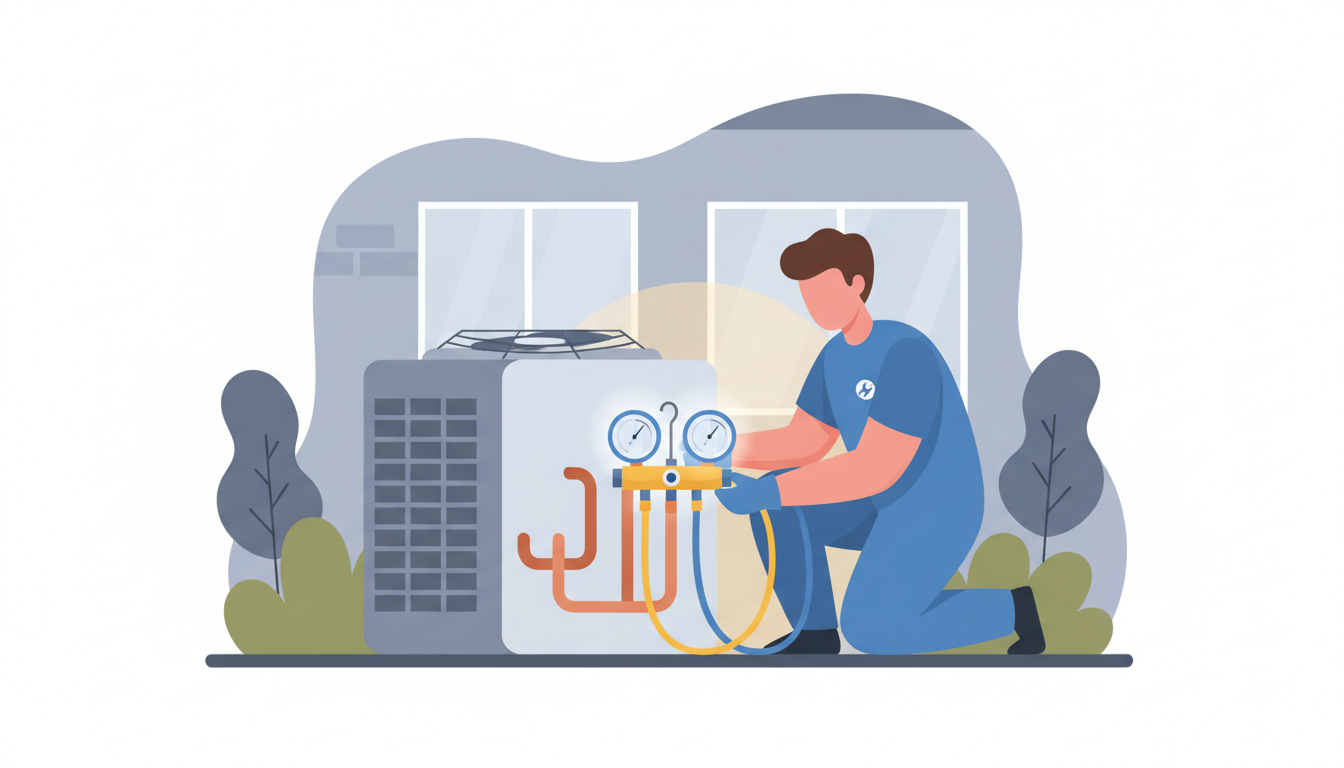
Professional technicians use manifold gauges, temperature measurements, and manufacturer specifications to charge systems precisely. They don't simply "add a can" and hope for the best—they calculate exact refrigerant requirements based on system size, outdoor temperature, and measured pressures.
If you've noticed ice on your AC refrigerant line, this indicates a refrigerant problem requiring professional diagnosis.
System Complexity: Why Refrigerant Repairs Aren't Simple
Identifying the Root Cause
Refrigerant doesn't just disappear. Low levels always indicate a leak, but finding and fixing that leak requires understanding your entire HVAC system. Common leak locations include:
- Evaporator Coils: Often corroded by formaldehyde from building materials or damaged by acidic condensation
- Condenser Coils: Vulnerable to physical damage, corrosion from outdoor elements, and vibration stress
- Service Valves: Can develop leaks from improper installation or wear over time
- Line Set Connections: Brazed joints may crack from vibration or thermal expansion cycles
- Compressor Seals: High-pressure seals deteriorate with age and system contamination
Each leak location requires different repair techniques. Professionals assess the leak severity, repair cost, and remaining system lifespan to recommend the most cost-effective solution.
System Evacuation Requirements
After repairs, systems must be evacuated to remove moisture and air before recharging with refrigerant. This critical step:
- Prevents ice formation that blocks refrigerant flow
- Eliminates corrosive moisture that damages components
- Removes non-condensable gases that reduce efficiency
- Requires vacuum pumps and micron gauges homeowners don't own
Improper evacuation leads to premature system failure, often within months of "repair." Professional technicians evacuate systems to 500 microns or lower—a level of vacuum impossible to achieve without proper equipment.
Financial Impact: The True Cost of DIY Attempts
Compressor Replacement Costs
Your compressor is the heart of your AC system and the most expensive component to replace. A single DIY mistake can destroy your compressor, turning a $300 leak repair into a $2,000-$4,000 compressor replacement—or complete system replacement costing $3,500-$7,500.
Common DIY mistakes that destroy compressors include:
- Introducing moisture into the system
- Running the system without proper refrigerant levels
- Adding the wrong refrigerant type
- Failing to replace the filter-drier after opening the system
Voided Warranties
Manufacturers require professional installation and service to maintain warranties. Any DIY refrigerant work immediately voids:
- Equipment manufacturer warranties (typically 5-10 years)
- Extended warranties or service agreements
- Homeowner's insurance coverage for HVAC damage
When your system fails after DIY repair attempts, you'll pay full replacement cost out of pocket—even if the system is still under the original warranty period.
Hidden Costs of Improper Repairs
Beyond direct repair costs, improper refrigerant service creates ongoing expenses:
- Energy Bills: An improperly charged system uses 20-40% more electricity
- Shortened Lifespan: Poor repairs reduce system life by years
- Repeat Service Calls: Band-aid fixes require constant attention
- Emergency Repairs: DIY failures often happen during peak cooling season when emergency rates apply
Environmental Responsibility: Protecting Our Planet
Ozone Depletion and Climate Change
Older refrigerants like R-22 (Freon) contribute to ozone layer depletion. Even newer refrigerants have global warming potential hundreds to thousands of times greater than carbon dioxide. Every pound of refrigerant improperly released:
- Remains in the atmosphere for decades
- Contributes significantly to climate change
- Violates environmental protection laws
Professional technicians are trained and equipped to prevent refrigerant release, recovering and recycling refrigerants according to EPA mandates.
Proper Disposal and Recycling
Refrigerant cannot go in the trash or be released into the air. Professionals:
- Use certified recovery equipment
- Send recovered refrigerant to approved reclaimers
- Maintain detailed records for EPA compliance
- Dispose of contaminated refrigerant following hazardous waste protocols
What Homeowners Can (and Should) Do
While refrigerant service requires professionals, you're not helpless in maintaining your system:
Regular Maintenance
Schedule annual professional maintenance to catch small leaks before they become major problems. Technicians check refrigerant levels during routine maintenance, identifying issues early when repairs cost less.
Monitor for Warning Signs
Watch for these indicators you need professional refrigerant service:
- Warm air from supply vents
- Ice buildup on refrigerant lines or indoor coil
- Hissing or bubbling sounds near AC components
- Unexplained increases in energy bills
- AC running constantly without reaching set temperature
Maintain Outdoor Unit Clearance
Keep vegetation, debris, and objects at least two feet away from your outdoor unit. Physical damage to the condenser coil is a common leak source you can prevent through simple maintenance.
Change Filters Regularly
Dirty filters restrict airflow, causing the evaporator coil to freeze and potentially crack—leading to refrigerant leaks. Replace filters every 1-3 months depending on use and household conditions.
Choosing the Right Professional
Verify Certification
Always confirm your technician holds:
- EPA Section 608 certification for refrigerant handling
- State and local HVAC licensing
- Proper insurance coverage (liability and workers' compensation)
- Manufacturer certifications for your equipment brand
Don't hesitate to ask for proof of credentials. Reputable professionals gladly provide documentation.
Look for Experience with Your System Type
Refrigerant systems vary by age and type. Ensure your technician has experience with:
- Your specific refrigerant type (R-22, R-410A, R-32, etc.)
- Your system configuration (split system, package unit, heat pump)
- Your equipment brand and model
Get Detailed Written Estimates
Professional refrigerant service should include:
- Thorough leak detection (not just adding refrigerant)
- Repair or replacement of leaking components
- System evacuation and proper recharging
- Post-repair pressure testing to verify the fix
- Warranty on labor and parts
Beware of technicians who offer to simply "add refrigerant" without leak detection and repair. This approach wastes money and ignores the underlying problem.
Frequently Asked Questions
Can I buy refrigerant and add it myself?
No. Federal law prohibits selling refrigerant to uncertified individuals. Even if you could obtain refrigerant, adding it without fixing leaks wastes money and violates EPA regulations. Systems don't use up refrigerant—low levels always mean you have a leak that requires professional repair.
How much does professional refrigerant service cost?
Costs vary based on leak severity and location, but typical repairs range from $250-$1,600. Simple leak repairs cost $200-$500, while complex repairs or multiple leaks may exceed $1,000. However, this investment protects your $3,500-$7,500 system from catastrophic failure caused by improper DIY repairs.
How long do refrigerant repairs take?
Most repairs complete in 2-4 hours, including leak detection, repair, evacuation, and recharging. Complex repairs requiring coil replacement may take longer. Your technician should provide timeline estimates before starting work.
Do I need to replace my whole system if there's a refrigerant leak?
Not usually. Many leaks are repairable at reasonable cost. However, consider replacement if:
- Your system is over 15 years old
- Multiple leaks exist throughout the system
- The evaporator or condenser coil needs replacement
- Repair costs exceed 50% of new system cost
- Your system uses R-22 refrigerant (being phased out)
How can I prevent refrigerant leaks?
While some causes are unavoidable, you can reduce leak risk through:
- Annual professional maintenance
- Prompt repairs of minor issues before they worsen
- Keeping the outdoor unit clear of debris
- Regular filter changes to prevent coil freezing
- Protecting outdoor unit from physical damage
Conclusion: Protect Your Investment with Professional Service
Refrigerant issues demand professional service—not because HVAC companies want to monopolize the work, but because the legal requirements, safety hazards, technical complexity, and financial risks make DIY attempts dangerous and costly.
By choosing certified HVAC professionals for refrigerant service, you:
- Comply with federal environmental regulations
- Protect your family's safety from chemical and pressure hazards
- Ensure accurate diagnosis and lasting repairs
- Maintain equipment warranties and insurance coverage
- Maximize system efficiency and lifespan
- Contribute to environmental protection
Your air conditioning system represents a significant investment in your home's comfort and value. When refrigerant issues arise, professional service isn't an unnecessary expense—it's essential protection for that investment and your family's wellbeing.
Ready to schedule professional refrigerant service? Don't wait until a small leak becomes a major failure. Contact a certified HVAC technician today to assess your system and ensure it's operating safely, efficiently, and legally.