Why Some HVAC Companies Push Replacement Too Soon: What You Need to Know
Why Some HVAC Companies Push Replacement Too Soon: What You Need to Know
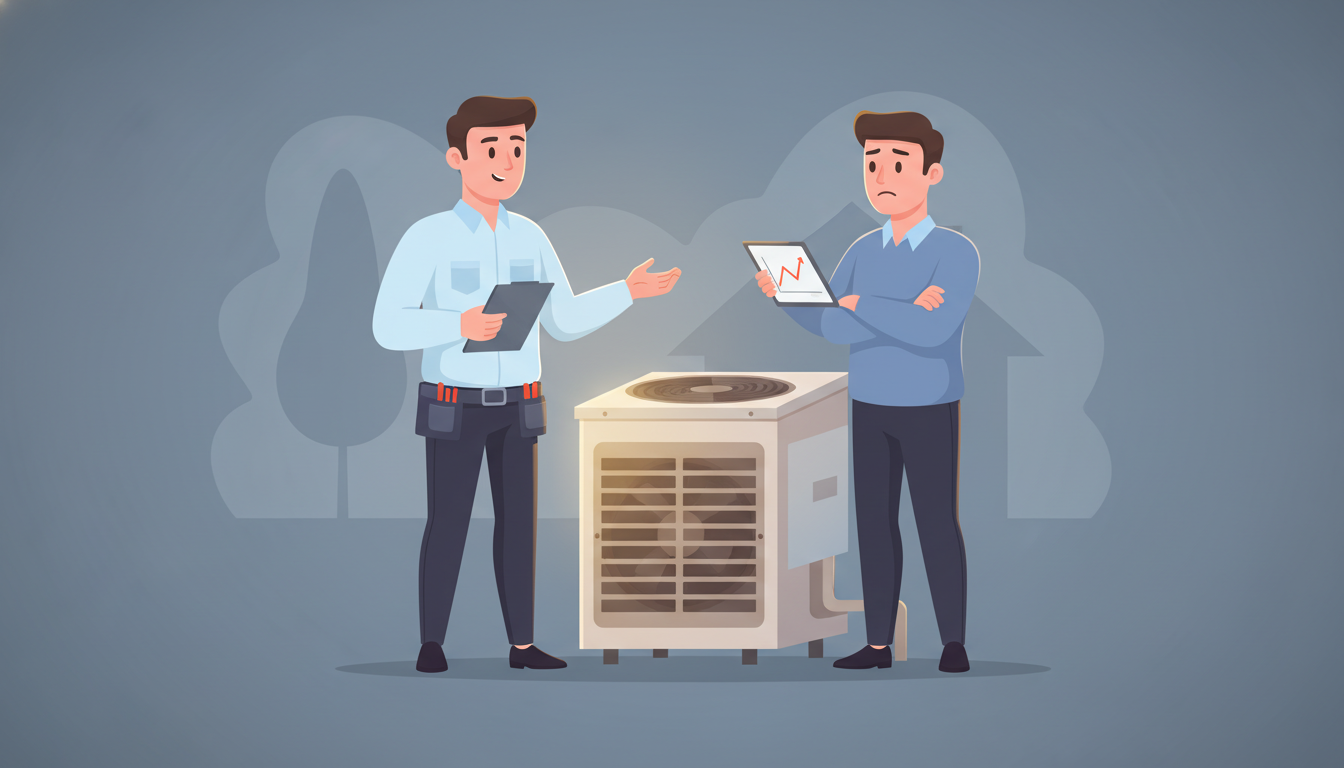
You just called an HVAC technician to fix a minor issue with your air conditioner. Instead of a simple repair quote, you're suddenly hearing that your entire system needs to be replaced—and it'll cost you $8,000 or more. Sound familiar?
If you've experienced this, you're not alone. While many HVAC companies operate with integrity, some push replacement too soon for reasons that have more to do with their bottom line than your comfort. Understanding why this happens—and how to protect yourself—can save you thousands of dollars and years of reliable service from your current system.
The Financial Reality Behind HVAC Replacement Sales
Why Replacements Are More Profitable Than Repairs
Here's something most HVAC companies won't openly discuss: replacement installations generate significantly higher profit margins than repairs. A typical residential HVAC replacement can yield profit margins of 15-25% in competitive markets, with total project values ranging from $5,000 to $15,000 or more.
Compare that to a repair job that might cost you $300-$800, and you can see the incentive structure at play. When a technician arrives at your home, they're often making a split-second decision: recommend a repair that benefits you, or push a replacement that benefits their commission check.
How Commission Structures Drive Replacement Recommendations
Many HVAC companies compensate their technicians based on revenue, not margin. This creates a problematic incentive system. A technician who earns the same commission percentage on both repairs and installations will naturally favor the higher-dollar sale.
For example, a technician earning 10% commission makes $30 on a $300 repair but $1,500 on a $15,000 replacement. Even if the repair would have solved your problem perfectly, the financial pressure to recommend replacement can be overwhelming.
Some companies even offer additional bonuses called "spiffs"—cash incentives for selling specific equipment or hitting replacement sales targets. During peak seasons, these bonuses increase to keep technicians focused on high-value sales rather than simple fixes.
The "10-Year Rule" Myth
When Age Alone Isn't a Valid Reason to Replace
One of the most common tactics you'll encounter is the blanket recommendation to replace any system that's 10-12 years old. While it's true that the average HVAC system lasts 10-15 years, age alone should never be the sole factor in a replacement decision.
Many homeowners have reported that technicians told them their system was "too old" and needed replacement, only to get a second opinion and discover the unit had many years of reliable service left. In fact, some well-maintained HVAC systems continue operating efficiently for 20+ years.
The industry statistic that "80% of HVAC revenue comes from systems older than 10 years" reveals why companies target aging equipment. These systems represent the highest-value sales opportunities, even when they're still functioning perfectly.
What Really Matters: Performance, Not Just Age
Instead of focusing solely on your system's age, honest HVAC professionals evaluate several factors:
- Current efficiency levels compared to when the system was new
- Frequency and cost of recent repairs
- Availability of replacement parts
- Overall condition of major components (compressor, heat exchanger, etc.)
- Your comfort level and temperature consistency
- Energy costs compared to newer, high-efficiency models
A 12-year-old system that's been well-maintained, runs efficiently, and rarely needs repairs could easily serve you for several more years. Conversely, a 7-year-old system that's been neglected might genuinely need replacement.
Common Pressure Tactics to Watch Out For
The "Limited Time" Urgency Play
Pressure tactics often involve creating artificial urgency. You might hear:
- "This special pricing is only available today"
- "We have one unit left at this discount price"
- "Manufacturer rebates end this week"
- "If you don't replace it now, it could fail during the hottest week of summer"
While legitimate seasonal promotions and manufacturer rebates do exist, reputable companies give you time to make informed decisions. Rushed, pressured decisions rarely serve your best interests.
Bait-and-Switch Discount Offers
Beware of advertisements promoting "FREE inspections" or deeply discounted diagnostic visits. Some companies use these as loss leaders to get technicians into your home, where the real sales pitch begins.
The technician might find minor issues and inflate their severity, or claim the advertised unit is "out of stock" but conveniently have a more expensive model available. Remember: no business survives by giving everything away. If the discount seems too good to be true, the real cost is probably hidden elsewhere.
Fear-Based Selling
Some technicians rely on fear to close sales:
- Exaggerating safety concerns ("Your heat exchanger could leak carbon monoxide")
- Predicting imminent catastrophic failure without evidence
- Claiming your system is "obsolete" or parts are "no longer available"
- Suggesting your home warranty won't cover future repairs
While legitimate safety issues absolutely exist and should be addressed immediately, fear-based selling often involves overstating risks to pressure you into unnecessary upgrades.
How to Know When Replacement Is Actually Necessary
The 50% Rule for Repair vs. Replacement
Most HVAC professionals follow a practical guideline: if a single repair costs 50% or more of what a new system would cost, replacement makes financial sense—especially if your system is approaching the end of its expected lifespan.
For example, if replacing a failed compressor would cost $2,500 and a new system costs $6,000, and your current system is already 12 years old, replacement might be the smarter long-term investment. However, if that same repair is needed on a 5-year-old system, repair is almost always the better choice.
For a comprehensive breakdown of when repairs make sense versus replacement, check out our detailed HVAC repair vs replacement guide.
Legitimate Red Flags That Signal Replacement Time
There are genuine signs that your HVAC system is reaching the end of its useful life:
-
Frequent, escalating repair costs: If you're calling for repairs multiple times per year and costs keep increasing, replacement may be more economical
-
Significant efficiency decline: Your energy bills have increased substantially even though your usage patterns haven't changed
-
Inconsistent temperatures: Hot and cold spots throughout your home that can't be resolved with ductwork adjustments or thermostat repairs
-
Strange noises: Banging, grinding, or rattling sounds that indicate major component failure
-
Refrigerant issues with R-22 systems: If you have an older system using R-22 refrigerant (being phased out), major refrigerant leaks can make repairs prohibitively expensive
-
Extended runtime: Your system runs constantly but struggles to maintain comfortable temperatures
When you notice these issues, replacement often makes sense—but only after getting proper diagnostics and considering all options.
How to Protect Yourself from Premature Replacement Recommendations
Always Get a Second Opinion
This is your most powerful protection. If a technician recommends replacement, especially during what you thought would be a routine service call, get at least one additional opinion from a different company.
Many homeowners have discovered that what one technician called a "system failure requiring immediate replacement" was actually a minor repair costing a few hundred dollars. The investment in a second diagnostic visit (typically $75-$150) can save you thousands.
Insist on Written, Itemized Estimates
Legitimate HVAC companies provide detailed, written estimates that break down:
- Specific components that need replacement or repair
- Labor costs separated from equipment costs
- Warranty information for both parts and labor
- Timeline for completion
- Any permits or additional fees required
Vague estimates with round numbers or "all-inclusive" pricing without details are red flags. Our guide on why written HVAC estimates matter explains what to look for in a quality estimate.
Ask the Right Questions
When a technician recommends replacement, ask:
- "What specifically is wrong with my current system?" (Request detailed technical explanations)
- "Can you show me the failed component?" (Honest technicians will demonstrate the problem)
- "What are my repair options and their costs?" (Compare all alternatives)
- "How much longer would a repair extend my system's life?" (Get realistic timeframes)
- "Are parts still available for my system?" (Verify claims of obsolescence)
- "What's your commission structure on replacements vs. repairs?" (This question alone often reveals intentions)
Pay attention to how technicians respond. Those who become defensive, evasive, or push back on your questions may not have your best interests at heart.
Research the Company's Reputation
Before allowing any company into your home:
- Check recent online reviews on Google, Yelp, and the Better Business Bureau
- Look for patterns: Do multiple reviewers mention pressure tactics or unnecessary replacement recommendations?
- Verify licenses and certifications: Legitimate contractors proudly display their credentials
- Ask for references: Reputable companies readily provide contact information for satisfied customers
Be especially wary of companies with suspiciously perfect reviews or a sudden flood of 5-star ratings—these can indicate fake review campaigns.
What Honest HVAC Companies Do Differently
Transparent Pricing and Multiple Options
Reputable HVAC contractors offer multiple solutions at different price points. Research shows that companies offering four or more options see their closing rates increase significantly—but more importantly, customers feel empowered to make informed decisions.
An honest technician might present:
- Option 1: The minimal repair needed to restore function
- Option 2: The repair plus preventive maintenance on related components
- Option 3: A mid-range replacement system
- Option 4: A high-efficiency system with maximum energy savings
This approach lets you decide what makes sense for your situation and budget, rather than feeling pressured into a single, expensive recommendation.
Focus on Education, Not Pressure
The best HVAC professionals take time to educate you about your system. They'll:
- Walk you through your equipment and explain how it works
- Show you specific problem areas
- Discuss the pros and cons of repair versus replacement
- Provide realistic timelines and expectations
- Encourage you to take time making your decision
- Offer to answer questions even after leaving your home
They understand that informed customers make better decisions and become long-term clients.
Long-Term Relationship Building
Companies focused on sustainable business models prioritize customer relationships over individual sales. They know that earning your trust through honest service today leads to:
- Future repair and maintenance work
- Eventual replacement business when your system genuinely reaches end-of-life
- Referrals to friends, family, and neighbors
- Positive online reviews that attract new customers
This long-term thinking aligns their interests with yours. They want your system to last as long as possible while performing efficiently.
The Role of Maintenance Agreements
How Maintenance Plans Can Work For or Against You
Many HVAC companies heavily promote maintenance agreements—annual contracts that include regular tune-ups and priority service. These can be valuable, but understand the strategy behind them.
Research indicates that offering maintenance agreements during service calls can increase a company's annual sales by 25-50%. These agreements create ongoing relationships with customers whose systems are aging—the prime target market for replacement sales.
However, this isn't inherently bad. Regular maintenance genuinely extends system life and helps identify small issues before they become expensive problems. The key is working with companies that view maintenance as a customer service, not just a sales pipeline.
Questions to Ask About Maintenance Plans
- What specific services are included in each visit?
- Do you get discounts on repairs if problems are discovered?
- Can you cancel at any time, or are you locked into a contract?
- What happens if the company tries to sell you a replacement during a maintenance visit?
Legitimate maintenance programs save you money and extend your system's life. Predatory ones just create more opportunities for high-pressure sales.
When Manufacturer Rebates and Financing Create False Urgency
Understanding the Economics of Promotions
Manufacturers do offer legitimate rebates and promotions, especially during shoulder seasons (spring and fall) when demand for HVAC services drops. These can represent real savings.
However, some companies exploit these promotions to create artificial urgency. They might:
- Exaggerate the rebate amount by inflating base prices
- Claim rebates are ending "tomorrow" when they actually run for months
- Offer financing that looks attractive but includes hidden fees or high interest rates
Do your homework. Visit manufacturer websites directly to verify current rebates and their expiration dates. Compare total project costs, not just the rebate amounts.
The Financing Trap
Many HVAC companies partner with financing companies to offer "easy payment plans" or "$99/month" system replacements. While financing can make necessary replacements more accessible, it can also encourage premature replacement of systems that could have been repaired.
Before accepting financing:
- Calculate the total cost including all interest
- Compare this to the cost of repairing your current system
- Consider whether you'd make this decision if paying cash
- Read all terms carefully, looking for penalties and fees
The Environmental and Economic Case for Repair
Why Repairing Makes Sense Beyond Just Cost
Choosing repair over premature replacement isn't just good for your wallet—it's better for the environment. Manufacturing and disposing of HVAC equipment requires significant resources and energy. When your system can be effectively repaired, you're:
- Reducing manufacturing demand and associated emissions
- Keeping functional equipment out of landfills
- Minimizing your carbon footprint
- Supporting sustainable consumption practices
From an economic perspective, extending your system's life by even 3-5 years through proper repairs and maintenance can save you $5,000-$10,000 or more.
For more information on making informed repair decisions, visit our comprehensive HVAC repair guide.
Frequently Asked Questions
How can I tell if an HVAC company is being honest about needing replacement?
Honest companies provide detailed explanations of what's wrong, show you the failed components, offer multiple options including repair, give you written estimates, and encourage you to get second opinions. They don't pressure you to decide immediately or use fear-based tactics.
What's the average lifespan of an HVAC system?
Central air conditioners and heat pumps typically last 10-15 years, while furnaces can last 15-20 years. However, well-maintained systems often exceed these averages. Age alone shouldn't determine replacement—consider performance, efficiency, and repair costs instead.
Should I always choose repair over replacement to save money?
Not necessarily. If repair costs approach 50% of replacement cost and your system is near the end of its expected lifespan, replacement may be more economical long-term. The key is making decisions based on facts, not pressure.
Do HVAC technicians really earn commission on replacements?
Many do, though practices vary by company. Some technicians earn percentage-based commission on total sales, while others receive flat bonuses ("spiffs") for selling specific equipment or reaching sales targets. This creates inherent incentive to recommend replacement over repair.
What should I do if I feel pressured during an HVAC service call?
Politely but firmly tell the technician you need time to consider your options. Ask for a written estimate and say you'll get back to them. Never make major financial decisions under pressure. If the technician becomes aggressive or won't leave, that's a clear red flag about the company's integrity.
Taking Control of Your HVAC Decisions
Understanding why some HVAC companies push replacement too soon empowers you to make informed decisions. The pressure tactics, commission structures, and profit margins that drive premature replacement recommendations are real—but so are the legitimate reasons to eventually replace aging equipment.
Your best protection is knowledge combined with healthy skepticism. When faced with a replacement recommendation:
- Get multiple opinions from independent companies
- Ask detailed questions and insist on clear answers
- Request written estimates with itemized costs
- Verify the claimed problem with visual inspection
- Research the company's reputation thoroughly
- Take your time making the decision
Remember, you're in control. No matter how urgent a technician claims the situation is, you always have time to make an informed choice. The right HVAC company will respect that and support your decision-making process.
By recognizing the warning signs of pressure tactics and understanding the financial incentives at play, you can protect yourself from unnecessary expenses while ensuring your home stays comfortable for years to come.
When you do need HVAC service—whether it's a repair or an eventual replacement—work with companies that prioritize your long-term satisfaction over short-term profits. The difference in your experience, and in your bank account, will be substantial.