What to Do After Storm Damage Affects Your HVAC System
What to Do After Storm Damage Affects Your HVAC System
Severe weather can strike without warning, leaving your home's HVAC system vulnerable to damage from high winds, flooding, flying debris, and electrical surges. When storm damage affects your HVAC system, knowing the right steps to take can mean the difference between a simple repair and a complete system replacement. This guide walks you through everything you need to do after storm damage impacts your heating and cooling equipment.
Prioritize Safety First
Before you even think about inspecting your HVAC system, your safety must come first. Storm damage HVAC systems can present serious hazards that require immediate attention.
Turn Off Power Immediately
If you notice any visible damage to your outdoor AC unit or indoor HVAC components, shut off power to the system right away. Go to your electrical panel and switch off the dedicated circuit breaker for your HVAC system. If you see water around the unit or any electrical components, do not approach it until you've confirmed the power is off.
If your HVAC breaker keeps tripping, this could indicate serious electrical damage from the storm. Never repeatedly flip the breaker back on, as this could cause further damage or create a fire hazard.
Watch for These Danger Signs
- Burning smells or electrical odors coming from the unit
- Sparking or smoke from any HVAC components
- Standing water around or inside the outdoor unit
- Exposed wiring or damaged electrical connections
- Hissing sounds that might indicate a refrigerant leak
- Gas odors if you have a gas furnace
Any of these signs mean you should keep the system off and call a professional immediately. Understanding when an HVAC electrical problem becomes an emergency can help you make the right call.
Conduct a Visual Inspection
Once you've confirmed it's safe to approach your HVAC system, perform a thorough visual inspection of both the outdoor and indoor units.
Check Your Outdoor Unit
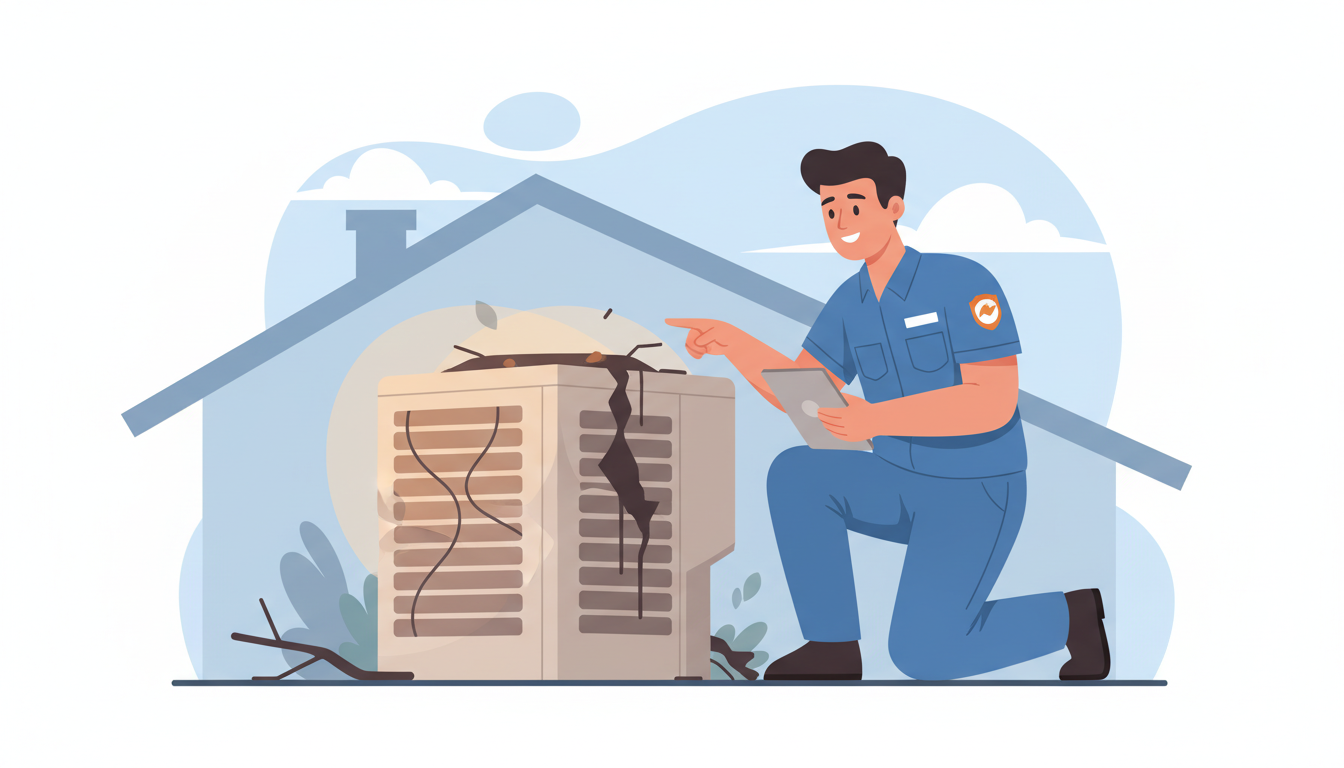
Your outdoor air conditioner or heat pump is the most vulnerable to storm damage. Look for:
- Physical damage like dents, cracks, or bent housing
- Bent or damaged fins on the condenser coil (the metal fins surrounding the unit)
- Debris accumulation including leaves, branches, dirt, or other objects
- Damaged fan blades that are bent, broken, or missing
- Disconnected refrigerant lines or electrical wiring
- Shifted position if the unit has been knocked off its pad
- Flooding or water damage if the unit sits in a low-lying area
Even small debris can cause significant problems if it gets pulled into the system when it runs, so don't turn on the unit until you've cleared away all visible debris.
Inspect Indoor Components
Storm damage doesn't stop at the outdoor unit. Check your indoor HVAC components for these issues:
- Water stains on ceilings or walls near ductwork
- Damaged ductwork visible in attics or basements
- Water inside the air handler or furnace cabinet
- Tripped breakers or blown fuses in your electrical panel
- Thermostat problems like a blank screen or erratic behavior
- Musty odors that could indicate water intrusion
Document Everything for Insurance
Proper documentation is critical for filing a successful insurance claim after HVAC storm damage.
Take Comprehensive Photos
Use your smartphone to capture:
- Multiple angles of the damaged outdoor unit
- Close-up shots of specific damage (dents, bent fins, broken parts)
- The surrounding area showing debris, fallen branches, or flooding
- Indoor damage including water stains, damaged ductwork, or electrical issues
- Your property showing the overall storm damage context
- Date-stamped images (most phones do this automatically)
Create Detailed Written Records
In addition to photos, write down:
- Date and time of the storm
- Description of storm conditions (wind speed, hail, flooding, etc.)
- All visible damage to your HVAC system
- Any unusual sounds or smells when you last used the system
- When you discovered the damage
- Emergency measures you took (turned off power, covered unit, etc.)
Keep these records in a safe place, both digitally and as physical copies. You'll need them when you file your insurance claim and when the HVAC technician arrives.
Don't Attempt DIY Repairs
While it's tempting to try fixing minor storm damage yourself, HVAC systems are complex and require professional expertise.
Why Professional Help Is Essential
Modern HVAC systems involve:
- Refrigerant handling that requires EPA certification
- Electrical components operating at dangerous voltages
- Precision calibration that affects system efficiency and longevity
- Warranty protection that DIY repairs can void
- Safety systems that must function correctly to prevent hazards
Attempting repairs without proper training and equipment can result in:
- Additional damage to expensive components
- Personal injury from electrical shock or refrigerant exposure
- Voided manufacturer warranties
- Failed insurance claims
- Carbon monoxide risks (for gas systems)
What You Can Safely Do
While major repairs require a professional, you can safely:
- Remove loose debris from around (not inside) the outdoor unit
- Clear the area of branches, leaves, and other storm debris
- Check and replace your air filter if it got wet or dirty
- Document damage with photos and notes
- Cover the unit with a breathable tarp if more storms are forecast (remove before operation)
Never open the electrical panels, handle refrigerant lines, or attempt to straighten bent fins or coils yourself.
Contact a Licensed HVAC Technician
Finding the right HVAC professional after a storm is crucial for proper repairs and insurance claims.
Choose a Qualified Professional
Look for HVAC contractors who are:
- Licensed and insured in your state
- Experienced with storm damage repairs
- Available for emergency service if needed
- Certified by manufacturers (especially if your system is under warranty)
- Highly rated by previous customers
Beware of storm-chasing contractors who appear immediately after disasters offering deals that seem too good to be true. Verify credentials and check references before hiring anyone.
What to Tell Your HVAC Technician
When you call, provide:
- Your exact address and best contact information
- A description of visible damage to help them bring the right parts
- When the storm occurred and when you discovered the damage
- Whether you've filed an insurance claim or plan to
- Any safety concerns like electrical odors or refrigerant leaks
- Your system's age and model if you know it
A thorough HVAC repair assessment will determine whether your system can be repaired or needs replacement.
Understanding Common Storm Damage Issues
Different types of storm damage affect HVAC systems in specific ways. Understanding these helps you communicate better with technicians and insurance adjusters.
Electrical Damage from Power Surges
Lightning strikes and power fluctuations during storms can damage:
- Compressors (the most expensive component to replace)
- Circuit boards in both outdoor and indoor units
- Capacitors that help start the motors
- Thermostat wiring and controls
- Blower motors in the air handler
Electrical damage often isn't immediately visible but shows up when you try to run the system. Signs include the unit refusing to start, unusual humming sounds, or breakers that trip repeatedly.
Physical Impact Damage
High winds can turn branches, patio furniture, and roof debris into projectiles that damage:
- Condenser coils (the fins can bend easily)
- Fan blades (plastic blades crack or break)
- Cabinet housing (dents and punctures)
- Refrigerant lines (can cause costly leaks)
- Compressor (severe impacts can damage internal components)
Even small dents can affect airflow and system efficiency, while damaged refrigerant lines require immediate professional attention.
Water and Flood Damage
Standing water is particularly destructive to HVAC systems:
- Electrical components short out when submerged
- Motors and bearings rust and seize up
- Insulation in ductwork absorbs water and grows mold
- Circuit boards corrode from water exposure
- Refrigerant contamination if water enters the system
If your outdoor unit was completely submerged, even for a short time, replacement is often more cost-effective than attempting repairs. Water damage can cause problems that don't appear for weeks or months after the storm.
Debris and Contamination
Wind-blown debris causes multiple problems:
- Clogged condenser coils reduce cooling capacity
- Damaged fan blades create vibration and noise
- Blocked drainage leads to water backup
- Dirt and mud inside the unit damage moving parts
- Leaves and organic material promote rust and corrosion
Professional cleaning can resolve some debris issues, but particles that entered the system while running may have caused internal damage.
Filing Your Insurance Claim
Most homeowners insurance policies cover storm damage to HVAC systems, but you need to follow the proper procedures.
Contact Your Insurance Company Promptly
Call your insurance agent or company within 24-48 hours of discovering the damage. Delays can complicate your claim. Provide them with:
- Your policy number
- Date and nature of the storm
- Description of HVAC damage
- Photos and documentation you've gathered
- Estimated repair costs (if available)
Work with the Insurance Adjuster
Your insurance company will send an adjuster to assess the damage. To prepare:
- Don't make permanent repairs before the adjuster sees the damage (emergency mitigation is okay)
- Be present during the inspection to point out all damage
- Share your documentation including photos and technician reports
- Get the adjuster's contact information for follow-up questions
- Request a written estimate of covered damage
Understand Your Coverage
Review your policy to know:
- Your deductible amount (you pay this before insurance coverage kicks in)
- Whether you have replacement cost or actual cash value coverage
- Any coverage limits for HVAC systems
- Whether code upgrades are covered if repairs require bringing the system up to current standards
- If you have additional living expenses coverage for temporary housing if your HVAC is unusable
Common Claim Mistakes to Avoid
- Waiting too long to file your claim
- Not documenting all damage thoroughly
- Making repairs before the adjuster arrives
- Accepting the first settlement without question (you can negotiate)
- Failing to get written estimates from licensed contractors
- Not following up if your claim is delayed
Repair vs. Replacement Decision
After the technician assesses your storm-damaged HVAC system, you'll face a critical decision: repair or replace?
When Repair Makes Sense
Consider repairing your HVAC system if:
- The system is less than 10 years old
- Damage is limited to one or two components
- Repair costs are under 50% of replacement cost
- The system was well-maintained before the storm
- Your warranty may cover some repair costs
- No refrigerant contamination occurred
When Replacement Is Better
Replace your HVAC system if:
- The unit is over 15 years old
- Multiple major components need replacement
- Repair costs exceed 50-60% of a new system's price
- The system was submerged in water
- Refrigerant lines are damaged (expensive to repair)
- You've had frequent repairs before the storm
- A new system would significantly improve efficiency
Many insurance policies have limitations on how much they'll pay toward repairing older systems, sometimes offering actual cash value (depreciated amount) rather than full replacement cost.
Consider Energy Efficiency Upgrades
If replacement is necessary, take advantage of the opportunity to upgrade to a more efficient system. Modern HVAC units can be 20-40% more efficient than systems from 10-15 years ago, resulting in lower energy bills that help offset the replacement cost.
Temporary Cooling and Heating Solutions
While waiting for repairs or replacement, you may need temporary solutions to maintain comfort in your home.
Short-Term Cooling Options
- Portable air conditioners can cool individual rooms
- Window units provide temporary cooling for key spaces
- Fans (ceiling and floor) improve air circulation
- Close blinds and curtains during the hottest parts of the day
- Limit heat-generating activities like cooking and using the dryer
Short-Term Heating Options
- Space heaters (use carefully, following all safety guidelines)
- Seal air leaks around windows and doors
- Layer clothing and blankets to stay warm
- Focus heating on occupied rooms only
If extreme temperatures make your home uninhabitable, your insurance policy may cover temporary housing costs under additional living expenses coverage.
Preventative Measures for Future Storms
Once repairs are complete, take steps to protect your HVAC system from future storm damage.
Install Surge Protection
A whole-house surge protector costs $200-500 and can prevent thousands of dollars in HVAC damage from lightning strikes and power surges. For extra protection, add a dedicated surge protector at your outdoor unit.
Secure Your Outdoor Unit
- Hurricane straps or tie-downs anchor the unit to its pad
- A reinforced pad prevents shifting during storms
- Debris screens protect the unit from flying objects (remove them during normal operation)
- Elevating the unit prevents flood damage in low-lying areas
Maintain Your System Regularly
Well-maintained HVAC systems are more resilient to storm damage:
- Annual professional maintenance catches small issues before they become big problems
- Clean areas around outdoor units removes potential projectiles
- Trim nearby trees and shrubs to prevent branch damage
- Keep gutters clean to prevent water from overflowing near outdoor units
Create a Storm Preparation Plan
Before severe weather arrives:
- Know how to shut off power to your HVAC system
- Keep emergency contact numbers for HVAC technicians handy
- Take pre-storm photos of your system for insurance purposes
- Clear the area around outdoor units of loose items
- Know your insurance coverage details before you need to file a claim
Frequently Asked Questions
How long can I wait before calling an HVAC technician after storm damage?
You should contact an HVAC professional within 24-48 hours of discovering damage. Delayed repairs can lead to additional problems like rust, water intrusion, or electrical corrosion. Quick action also helps with insurance claims, as delays can raise questions about when the damage actually occurred.
Will my homeowners insurance cover HVAC storm damage?
Most standard homeowners insurance policies cover sudden storm damage to HVAC systems, including damage from wind, hail, lightning, and falling trees. However, flood damage typically requires separate flood insurance. Check your policy's coverage limits, deductible, and whether you have replacement cost or actual cash value coverage.
Can I run my HVAC system after a storm to see if it works?
Do not turn on your HVAC system if you see any visible damage, water intrusion, burning smells, or exposed wiring. Running a damaged system can cause additional harm to components and create safety hazards. Let a professional inspect the system first to ensure it's safe to operate.
How much does storm damage HVAC repair typically cost?
Repair costs vary widely depending on the damage. Simple repairs like replacing a capacitor or fan blade might cost $150-400, while compressor replacement can run $1,500-3,000. Extensive electrical damage or multiple component failures can exceed $2,000-4,000. If repair costs approach 50% or more of a new system's price, replacement often makes more financial sense.
What should I do if my HVAC system was completely submerged in flood water?
If your HVAC system was submerged, turn off power immediately and don't attempt to run it. Complete submersion almost always requires system replacement rather than repair, as water damages electrical components, motors, insulation, and can contaminate refrigerant. Document the damage thoroughly for your insurance claim and consult with a licensed HVAC technician about replacement options.
Take Action to Protect Your Home Comfort
Storm damage to your HVAC system is stressful, but taking the right steps immediately after severe weather can minimize damage, speed up repairs, and ensure your insurance claim goes smoothly. Remember: safety first, document everything, and always work with licensed professionals for repairs.
Don't wait until the next storm season to prepare. Regular maintenance, surge protection, and knowing what to do when disaster strikes will help protect your investment and keep your home comfortable year-round.
If you're dealing with storm damage to your HVAC system right now, turn off power to the unit, document the damage with photos, and contact a licensed HVAC technician immediately. The faster you act, the sooner you'll have your heating and cooling back to normal.