
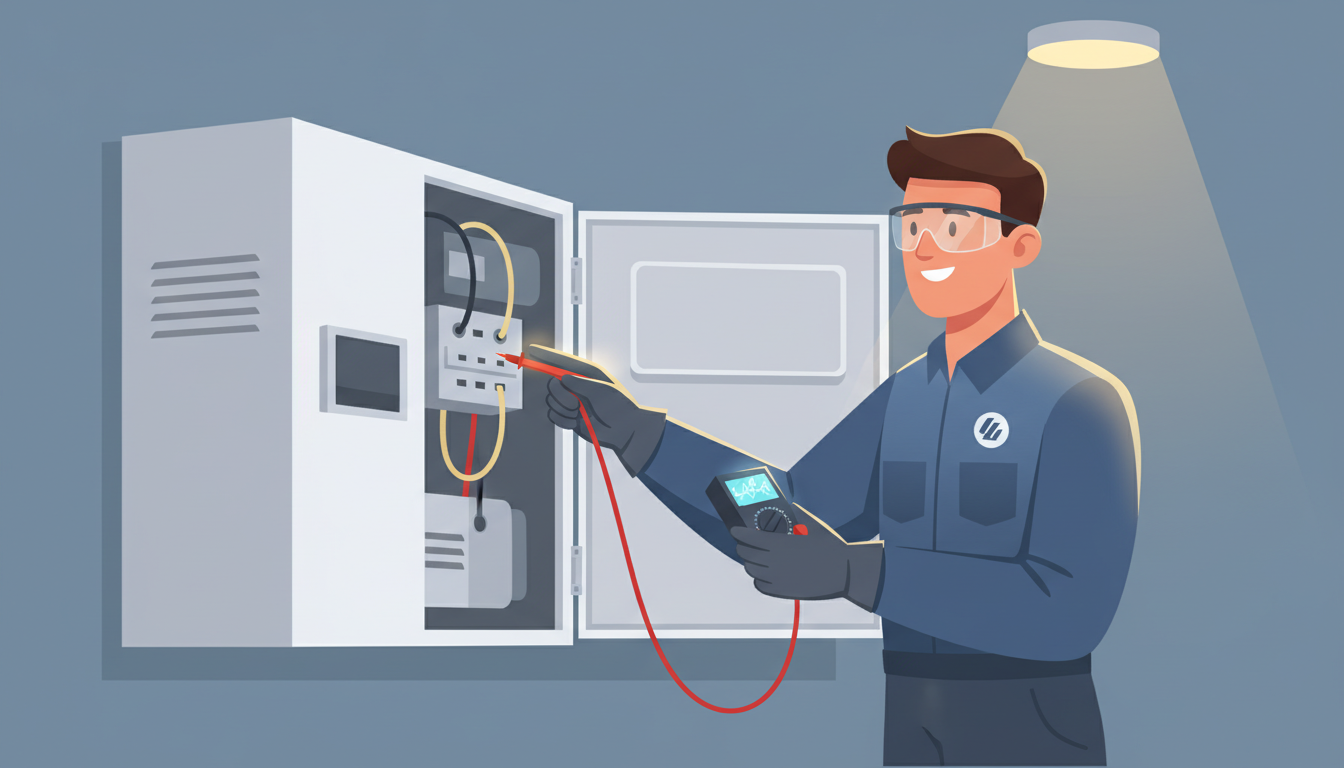
How a Technician Tests HVAC Electrical Components Safely
How a Technician Tests HVAC Electrical Components Safely
When your air conditioner stops cooling or your furnace won't fire up, there's a good chance an electrical problem is to blame. But testing HVAC electrical components isn't something you can rush into without the right preparation. One wrong move could result in serious injury or even death from electrical shock.
Professional HVAC technicians follow strict safety protocols every time they test electrical components. Whether you're a new technician learning the ropes or a homeowner trying to understand what your HVAC pro is doing, this guide breaks down exactly how technicians test HVAC electrical components safely—from the initial safety checks to reading the final test results.
Understanding HVAC Electrical Safety Risks
Before you even pick up a multimeter, you need to understand what you're dealing with. HVAC systems typically operate on both low voltage (24V for controls) and high voltage (120V to 240V for motors and compressors). High voltage circuits carry enough current to stop your heart instantly.
According to OSHA data, electrical hazards cause hundreds of workplace injuries and dozens of fatalities each year in the HVAC industry alone. The most common causes? Skipping safety steps, working on energized circuits without proper protection, and assuming power is off without verifying.
The good news is that electrical injuries are almost entirely preventable when you follow proper testing procedures. Every component test starts with safety first—no exceptions.
Essential Safety Equipment for HVAC Electrical Testing
You can't test HVAC electrical components safely without the right protective gear. Here's what professional technicians wear and use for every electrical testing job:
Personal Protective Equipment (PPE)
- Insulated gloves rated for the voltage you're working with - Regular work gloves won't protect you from electrical shock
- Safety glasses with side shields - Protects your eyes from arc flash and debris
- Non-conductive footwear - Rubber-soled boots that won't conduct electricity
- Flame-resistant clothing - Prevents burns from arc flash incidents
- Hard hat with face shield - For high-voltage work or when arc flash risk exists
Required Testing Tools
- Digital multimeter - Must be rated for the voltage levels you'll encounter (CAT III or CAT IV rating)
- Non-contact voltage tester - Your first line of defense for checking if circuits are live
- Insulated hand tools - Screwdrivers, pliers, and wrenches with insulated handles rated to 1000V
- Clamp meter - For measuring current without breaking the circuit
- Capacitor discharge tool - Essential for safely draining stored voltage from capacitors
Never use damaged or worn testing equipment. Before each job, check your multimeter on a known live circuit to confirm it's working properly.
The Pre-Testing Safety Checklist Every Technician Follows
Professional HVAC technicians don't just walk up to a unit and start testing. They follow a specific sequence that ensures their safety before any electrical work begins. Here's the exact checklist:
Step 1: Turn Off All Power Sources
Locate the disconnect switch near the outdoor unit and the circuit breaker inside the electrical panel. Turn both off. Don't assume one power source controls everything—many HVAC systems have multiple circuits.
For furnaces, you'll also need to turn off the gas supply if you're working near gas valves or controls.
Step 2: Apply Lockout/Tagout Procedures
Once power is off, apply a lockout device to prevent anyone from turning it back on while you work. Attach a tag with your name, date, and reason for the lockout. This is required by OSHA for any electrical work.
If you're working alone, you're the only one who should have the key to remove the lock. If you're working with a crew, each person should have their own lock on the disconnect.
Step 3: Verify De-Energization
Here's where many inexperienced technicians make a fatal mistake—they assume the power is off because they flipped a switch. Never assume.
Use a non-contact voltage tester to check for voltage at the disconnect and inside the unit. Then use your multimeter to verify zero voltage between hot terminals and ground. Test your meter on a known live circuit both before and after checking your work area to ensure the meter itself is working.
Only after confirming zero voltage should you proceed to open panels or touch components.
Step 4: Ground Yourself and the Equipment
Even with power off, components like capacitors can store lethal voltage. Before touching any electrical component, ensure proper grounding. Use a discharge tool to drain capacitors—never use a screwdriver to short terminals.
Keep your work area dry. Water conducts electricity and dramatically increases your risk of shock.
How to Test Common HVAC Electrical Components
Once your safety protocols are in place and power is verified off, you can begin testing individual components. Here's how technicians test the most common HVAC electrical parts:
Testing Capacitors
Capacitors store electrical energy to help motors start and run efficiently. They're also one of the most dangerous components because they hold voltage even after power is disconnected.
Testing procedure:
- Discharge the capacitor using a proper discharge tool (typically a 20,000-ohm resistor)
- Disconnect at least one wire from the capacitor terminals
- Set your multimeter to the capacitance setting (µF)
- Touch the meter probes to the capacitor terminals
- Compare the reading to the capacitor's rated microfarad value (printed on the label)
A good capacitor should read within 5-10% of its rated value. If it reads significantly lower, shows infinite resistance, or reads zero, it's failed and needs replacement. When you encounter a failing capacitor or other electrical issues, knowing when the situation becomes an emergency is critical.
Testing Contactors and Relays
Contactors are heavy-duty switches that control power to compressors and fan motors. Testing them involves checking both the coil and the contacts.
Testing the coil:
- Remove power and disconnect the control wires
- Set your multimeter to resistance (ohms)
- Touch probes to the coil terminals (usually labeled A1 and A2)
- A reading between 10-100 ohms indicates a good coil
- Infinite resistance means an open (broken) coil
Testing the contacts:
- With power off, check continuity across each set of contacts
- Contacts should show infinite resistance when open (de-energized)
- Manually close the contactor and check again—should read near zero ohms
- Look for pitting, burning, or wear on contact surfaces
Testing Transformers
Transformers step down voltage from 120V or 240V to the 24V used by thermostats and control circuits. Testing a transformer involves checking both the primary (high voltage) and secondary (low voltage) sides.
Testing procedure:
- With power OFF, check resistance across primary terminals (should show some resistance, typically 1-10 ohms)
- Check resistance across secondary terminals (should also show continuity)
- Infinite resistance on either side indicates a broken transformer
- To test under load, restore power and measure voltage output at the secondary terminals (should read 24-28V AC)
If you're experiencing issues with your circuit breaker tripping repeatedly, a failing transformer could be drawing excessive current.
Testing Thermostats
Thermostats are low-voltage components, making them safer to test, but they still require proper technique.
Testing procedure:
- Remove the thermostat from the wall plate
- Set your multimeter to voltage
- Check for 24V AC between R and C terminals (power supply from transformer)
- Check continuity between terminals as you change thermostat settings
- When heating is called for, you should see continuity between R and W
- When cooling is called for, you should see continuity between R and Y
A thermostat that doesn't establish continuity between the correct terminals when calling for heating or cooling needs replacement.
Testing Compressor Motors
Compressor testing requires checking both electrical components and mechanical condition. For electrical testing:
Winding resistance test:
- Disconnect all wires from the compressor terminals (usually labeled C, R, and S)
- Measure resistance between each pair of terminals:
- Common to Start (C to S)
- Common to Run (C to R)
- Run to Start (R to S)
- The R to S reading should equal C to S plus C to R
If any reading shows infinite resistance, the winding is open (failed). If you read zero or very low resistance, the winding is shorted.
Ground test:
Measure resistance between each terminal and the compressor housing. You should read infinite resistance (no continuity). Any continuity to ground indicates a shorted compressor that must be replaced.
Testing Blower Motors and Fan Motors
Motor testing is similar to compressor testing but simpler since most are single-speed or multi-tap designs.
Testing procedure:
- Disconnect power and remove motor leads
- Check resistance between each motor lead and the motor housing
- Should read infinite resistance—any continuity indicates grounding
- Check resistance between motor leads (varies by motor type, check manufacturer specs)
- For multi-speed motors, each tap should show different resistance values
Reading and Interpreting Test Results
Getting accurate test results is only half the battle—you need to know what those numbers mean. Here's how professional technicians interpret common readings:
Normal vs. Abnormal Multimeter Readings
Voltage readings:
- Normal: Within 10% of rated voltage
- Abnormal: More than 10% variation suggests power supply problems or loose connections
Resistance readings:
- Zero or very low ohms: Short circuit or good contact point
- Some resistance: Normal for coils, windings, and heating elements
- Infinite resistance (OL): Open circuit, broken component, or no path
Capacitance readings:
- Within 5-10% of rated µF: Good capacitor
- Below rated value: Weak capacitor, replace soon
- Zero or infinite: Failed capacitor, replace immediately
Common Mistakes That Lead to Misdiagnosis
Even experienced technicians can misread test results. Watch out for these common errors:
Testing with power on when you should test with power off - Measuring resistance or capacitance with voltage present gives false readings and can damage your meter.
Not accounting for parallel paths - If you're testing a component that's still connected in a circuit, other components can provide alternate paths that affect your readings.
Testing on dirty or corroded terminals - Clean all connection points before testing. Corrosion adds resistance and gives inaccurate readings.
Using the wrong meter setting - Measuring AC voltage on DC setting (or vice versa) gives meaningless results.
When Testing Reveals an Emergency Situation
Sometimes your test results indicate a dangerous condition that requires immediate action. Here's when to stop work and address safety concerns:
- Voltage present after following lockout procedures - Indicates multiple power sources or improper disconnection
- Burn marks or melted insulation near terminals - Sign of overheating or arcing that could cause fire
- Moisture inside electrical panels - Creates shock hazard and accelerates corrosion
- Damaged or frayed wiring - Can cause shorts, ground faults, or fire
- Strong electrical burning smell - Indicates recent or ongoing electrical failure
Don't attempt repairs in these situations without proper expertise and equipment. For a complete understanding of when HVAC electrical problems require emergency service, knowing the warning signs can prevent disasters.
Testing Components on Live Circuits (When Necessary)
Some diagnostic tests require power to be on—checking voltage at components, measuring amp draw, or testing safety circuits. When you must test live circuits, additional precautions apply:
Live Testing Safety Rules
- Use only properly rated test equipment with intact insulation
- Work with one hand when possible (keep the other hand in your pocket or behind your back to prevent current flowing through your heart)
- Stand on an insulated mat
- Never work alone when testing live circuits
- Remove jewelry and watches before working near energized components
- Announce to your crew that you're working on live circuits
Safe Voltage Testing on Energized Circuits
When checking voltage with power on:
- Set your multimeter to the appropriate voltage range (AC or DC)
- Use meter probes with finger guards
- Connect the black (common) lead first to ground or neutral
- Touch the red lead to the hot terminal
- Remove the red lead first, then the black lead
- Record your reading and turn off power before doing any further work
Building Your HVAC Electrical Testing Skills
Testing HVAC electrical components safely is a skill that improves with experience, but you must start with proper training. Here's how professional technicians develop and maintain their expertise:
Formal Training and Certification
Most skilled HVAC technicians complete formal training programs that include extensive electrical theory and hands-on practice. HVAC programs typically cover:
- Electrical fundamentals and Ohm's Law
- Reading wiring diagrams and schematics
- Proper use of testing equipment
- NFPA 70E electrical safety standards
- Lockout/tagout procedures
- Arc flash awareness
Many technicians also pursue EPA certification (required for refrigerant work) and manufacturer-specific certifications.
Continuing Education
Electrical codes and HVAC technology change regularly. Professional technicians stay current through:
- Annual safety refresher courses
- Manufacturer training on new equipment
- Industry conferences and trade shows
- Online courses and webinars
- Peer learning and mentorship programs
Advanced Testing Techniques
As technicians gain experience, they learn advanced testing methods that go beyond basic voltage and resistance checks:
Insulation Resistance Testing
This test checks the integrity of motor winding insulation using a megohmmeter (megger). It applies high voltage (typically 500-1000V) to detect insulation breakdown before it causes failure.
Good insulation should show resistance in the megohm range. Readings below 1 megohm indicate deteriorating insulation that will eventually cause motor failure.
Amp Draw Testing
Measuring actual current draw tells you if motors and compressors are working efficiently or struggling:
- Use a clamp meter around a single conductor (not the cord)
- Compare actual amp draw to the nameplate rating
- Higher than rated amps suggests mechanical problems, low refrigerant, or electrical issues
- Lower than rated amps may indicate weak capacitor or failing motor windings
Control Circuit Troubleshooting
Many HVAC problems involve failed control circuits rather than major components. Systematic testing of control voltage throughout the circuit helps isolate problems:
- Check 24V at transformer output
- Check voltage at thermostat terminals
- Follow control voltage through each safety switch and relay
- The point where voltage disappears indicates the failed component
For comprehensive guidance on diagnosing all types of HVAC issues, our complete HVAC repair guide covers common problems and solutions.
When to Call for Professional Help
Even with proper training and equipment, some electrical testing situations require experienced professionals:
- High voltage work above 240V - Requires specialized training and equipment
- Complex control boards - Many contain delicate electronics that standard testing can damage
- Arc flash hazards - Situations where potential arc blast energy exceeds safe levels
- Unfamiliar equipment - Never test equipment you haven't been trained on
- Multiple failed components - Could indicate larger system problems requiring comprehensive diagnosis
There's no shame in calling for backup when you encounter something beyond your skill level. The best technicians know their limits and prioritize safety over ego.
Maintaining Your Testing Equipment
Your testing equipment is your lifeline when working with electricity. Proper maintenance ensures accuracy and safety:
Regular Calibration
Digital multimeters drift out of calibration over time. Have your primary meters professionally calibrated annually, or more often if they're subjected to drops, moisture, or extreme temperatures.
Visual Inspection
Before each use, inspect:
- Test lead insulation for cracks or damage
- Probe tips for damage or excessive wear
- Meter display for errors or dim display (replace battery)
- Meter case for cracks or damage
Proper Storage
Store testing equipment in a protective case away from moisture and extreme temperatures. Don't leave meters in your truck during freezing weather—the LCD displays can fail.
Replace test leads at least annually, even if they look fine. The insulation degrades over time and may fail when you need it most.
FAQ: HVAC Electrical Testing Safety
How long does a capacitor hold voltage after power is disconnected?
Capacitors can hold lethal voltage for hours or even days after power is removed. Always discharge capacitors with a proper resistor tool before touching terminals. Never assume a capacitor is safe just because power has been off for a while.
Can I test HVAC components with a basic multimeter from a hardware store?
Only if it's properly rated for HVAC work. Look for meters with CAT III 600V rating at minimum, or CAT IV for higher voltage work. Cheap meters often lack proper protection circuitry and can explode if used on high-energy circuits. Professional-grade meters from Fluke, Klein, or other reputable brands include the safety features you need.
What's the most common cause of electrical accidents during HVAC testing?
Assuming power is off without verifying it with a tester. This causes more injuries than any other mistake. Always test for voltage before touching any electrical component, even if you're certain you turned off the correct breaker.
How do I know if my multimeter is still accurate?
Test it on known voltage sources regularly. Check a standard wall outlet (should read 110-120V) and a 9V battery (should read close to 9V when fresh). If readings are more than 5% off, have the meter calibrated or replaced. Also test on a known live circuit before and after checking circuits you expect to be de-energized—this confirms your meter is working properly.
Is it safe to test HVAC electrical components in the rain or humid conditions?
No. Moisture increases conductivity and dramatically raises your risk of shock. Never test electrical components in wet conditions, and always ensure your work area is dry. If you must work in humid conditions, take extra precautions like insulated mats and moisture-protective equipment, but whenever possible, postpone electrical testing until conditions improve.
Conclusion: Safety Is Non-Negotiable
Testing HVAC electrical components safely isn't optional—it's the foundation of professional HVAC service. The few minutes you spend following proper safety procedures could save your life or prevent a career-ending injury.
Every professional technician follows the same core principles: verify power is off, use proper PPE and testing equipment, understand what you're testing, and know when to call for help. Whether you're testing a simple thermostat or diagnosing a complex compressor failure, these safety fundamentals never change.
If you're dealing with HVAC electrical issues and want professional help, contact a qualified HVAC technician who follows these safety protocols. Your safety—and your HVAC system's proper repair—depends on it.