
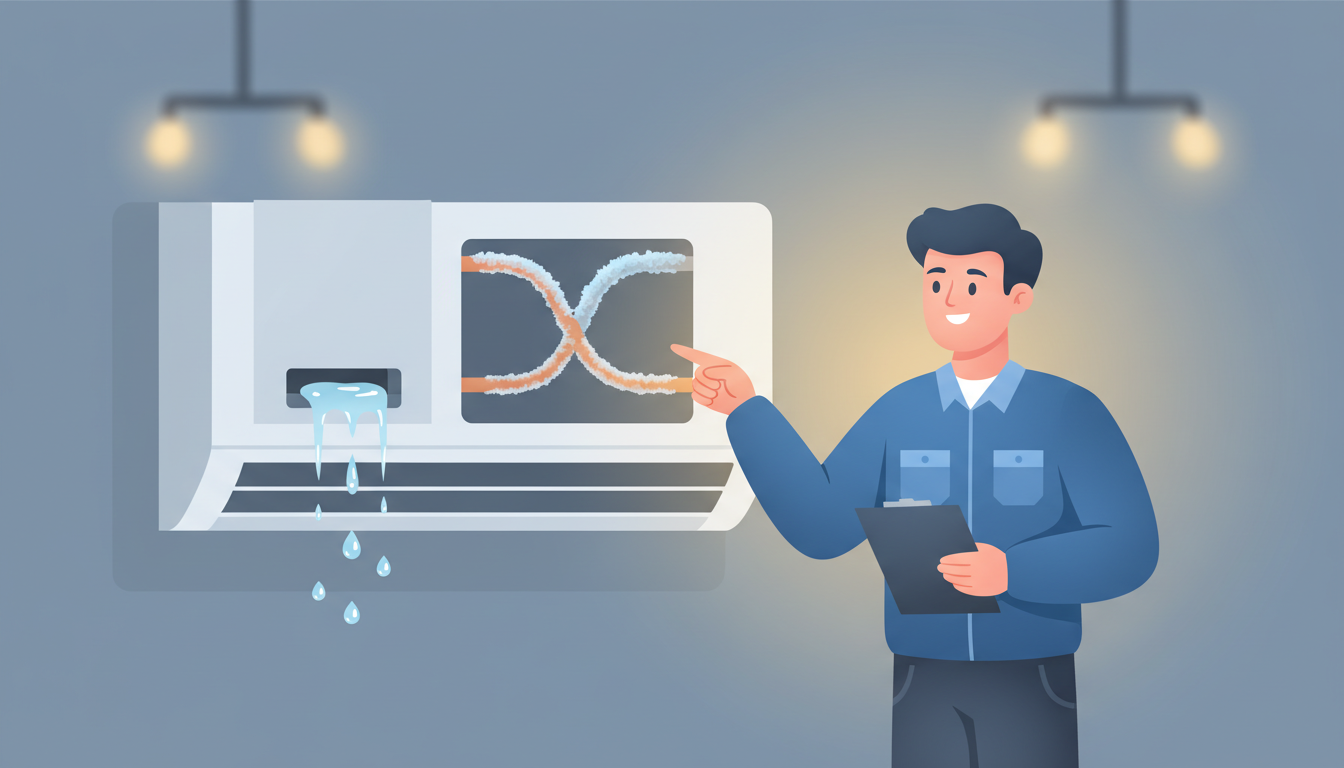
How to Tell Whether an HVAC Leak Is Water or Refrigerant
How to Tell Whether an HVAC Leak Is Water or Refrigerant
You walk past your air conditioner and notice a puddle forming underneath. Your heart sinks. Is this a simple water leak you can fix yourself, or a serious refrigerant problem that needs immediate professional attention? Knowing the difference between water and refrigerant leaks can save you time, money, and potential health risks. In this guide, you'll learn exactly how to identify which type of leak you're dealing with and what to do next.
Understanding the Two Types of HVAC Leaks
Your HVAC system naturally produces water as part of its cooling process, but it also contains refrigerant that should never leak out. Understanding why each substance appears helps you identify which one you're seeing.
Why Your AC Produces Water (And Why That's Normal)
When your air conditioner cools your home, it removes moisture from the air. This moisture condenses on the evaporator coil, similar to how water beads form on a cold glass on a hot day. This condensate should drain away through your condensate drain line into a drain pan and eventually outside or into your plumbing system.
Under normal operation, you might see small amounts of water near your outdoor unit—that's completely normal. However, pooling water indoors or excessive moisture outside signals a problem with your drainage system, not your refrigerant.
What Refrigerant Does (And Why Leaks Are Serious)
Refrigerant is the chemical substance that actually cools the air in your home. It circulates through your HVAC system in a closed loop, changing from liquid to gas and back again. Your system should maintain the same refrigerant charge for years without needing a refill.
If refrigerant is escaping, something is wrong with your system's integrity. Refrigerant leaks indicate corroded lines, damaged coils, or loose connections—problems that require immediate professional HVAC repair to prevent system failure and health hazards.
How to Tell If Your AC Is Leaking Water or Freon: The Quick Test
Before diving into detailed diagnostics, here's a simple initial assessment you can do in under five minutes.
Visual Inspection: What You're Looking At
If you see clear liquid pooling:
- Water leaks appear as clear, colorless puddles
- They typically form gradually over hours
- The liquid looks and feels exactly like water
- You'll often see continuous dripping from the indoor unit
If you see oily residue or no visible liquid:
- Refrigerant rarely pools because it evaporates quickly at room temperature
- You might notice oily spots or greasy residue near refrigerant lines
- The area around the leak may have a thin film or discoloration
- Ice or frost formation on coils during warm weather indicates refrigerant loss
The Touch Test (Safety First)
If you can safely access the liquid without touching electrical components:
Water leak characteristics:
- Feels wet like normal water
- Room temperature or slightly cool
- No unusual texture or oiliness
- Dries normally when wiped
Refrigerant leak indicators:
- May feel slightly oily or slick
- Evaporates very quickly
- Leaves an oily residue behind
- The surrounding pipes may be covered in ice
Safety warning: Never touch refrigerant directly. If you suspect a refrigerant leak, keep your distance and call a professional immediately.
The Complete Guide to Identifying Water Leaks
Water leaks are the most common type of HVAC leak, and they're usually easier and less expensive to fix. Here's how to confirm you're dealing with water.
Primary Signs of a Water Leak
1. Clear, Colorless Liquid The most obvious sign is clear liquid that looks, feels, and behaves exactly like water. If you can collect a small sample safely, it will be odorless and have no unusual properties.
2. Location Patterns Water leaks typically occur:
- Near or under your indoor air handler
- Around the condensate drain line
- From the drain pan beneath your evaporator coil
- At pipe connections on your indoor unit
3. Timing and Patterns Water leaks often worsen:
- During high humidity days
- When your AC runs continuously
- In the afternoon after hours of operation
- During the cooling season (rarely in winter)
Common Causes of Water Leaks
Clogged Condensate Drain Line This is the #1 cause of water leaks. Algae, mold, and debris build up in your drain line over time, blocking water flow. When water can't drain properly, it backs up and overflows from your drain pan.
Damaged or Rusty Drain Pan Drain pans last 10-15 years before rust and corrosion create holes. If your system is older, inspect the drain pan for visible rust spots or cracks.
Frozen Evaporator Coil When your evaporator coil freezes due to restricted airflow (dirty filter) or low refrigerant, the ice eventually melts and creates more water than your drain system can handle.
Disconnected Drain Line Sometimes drain lines simply come loose from connections, causing water to drip where it shouldn't.
Condensate Pump Failure If your system uses a condensate pump to move water upward or across distances, pump failure means water has nowhere to go.
What to Do About Water Leaks
Many water leak issues have straightforward solutions:
Immediate steps:
- Turn off your AC to prevent water damage
- Place towels or a bucket under the leak
- Check and replace your air filter if it's dirty
- Look for obvious disconnections in the drain line
DIY solutions for handy homeowners:
- Pour a cup of vinegar down the condensate drain line to clear minor clogs
- Check that the drain pan isn't full and manually empty if needed
- Ensure the drain line has proper slope for gravity drainage
When to call a professional:
- The drain line is completely clogged and vinegar doesn't help
- Your drain pan has visible holes or severe rust
- The condensate pump isn't working
- Water damage has already occurred
- You're uncomfortable working near electrical components
The Complete Guide to Identifying Refrigerant Leaks
Refrigerant leaks are more serious than water leaks and always require professional service. Here's how to recognize the warning signs.
Primary Signs of a Refrigerant Leak
1. No Visible Liquid Pooling Here's the key difference: refrigerant typically doesn't form puddles. At normal temperatures, refrigerant exists as a gas or evaporates almost instantly when it escapes. If you see substantial liquid pooling, you're probably looking at water, not refrigerant.
2. Oily Residue on Components Refrigerant is mixed with compressor oil that circulates through your system. When refrigerant leaks, it often carries oil with it. Look for:
- Dark, greasy spots on refrigerant lines
- Oily film around pipe connections
- Discoloration on copper tubing
- Oil accumulation near the outdoor compressor
3. Hissing or Bubbling Sounds A distinctive hissing, bubbling, or whistling sound indicates pressurized refrigerant escaping through a crack or hole. This sound comes from:
- The outdoor condensing unit
- Refrigerant lines running between units
- Connection points where lines join
- The area around the service valves
4. Ice Formation in Warm Weather When refrigerant levels drop, your evaporator coil can't absorb heat properly and freezes over. If you see ice or frost on your indoor coils during hot weather, that's a strong indicator of refrigerant loss.
5. Reduced Cooling Performance Without adequate refrigerant charge, your system can't transfer heat effectively. You'll notice:
- Warm air blowing from vents
- The AC runs constantly but doesn't cool
- Some rooms stay warmer than others
- The system struggles even on mild days
6. Higher Energy Bills A system low on refrigerant works much harder to achieve the same cooling, dramatically increasing energy consumption. If your electric bill spikes without explanation, check for refrigerant leak symptoms.
7. Unusual Chemical Odor While modern refrigerants are designed to be odorless, some people detect a sweet, chemical, or ether-like smell near a significant leak. The odor is subtle but distinct from normal HVAC smells.
8. Physical Symptoms in Occupants Large refrigerant leaks can cause health effects:
- Headaches
- Dizziness or lightheadedness
- Nausea
- Difficulty breathing
- Irritated eyes or throat
If anyone experiences these symptoms near your HVAC system, evacuate immediately and call for emergency HVAC service.
Common Causes of Refrigerant Leaks
Corrosion and Age Refrigerant lines corrode over time, especially in coastal areas or regions with harsh weather. Older systems using R-22 (Freon) are particularly susceptible.
Physical Damage Lawnmowers, trimmers, or construction work can puncture refrigerant lines. Even minor nicks can eventually develop into leaks.
Factory Defects Occasionally, poor manufacturing or installation creates weak points that fail years later.
Vibration Damage Constant compressor vibration can loosen connections or create stress cracks in tubing.
Improper Installation If your system was installed incorrectly, connections may not be properly sealed, leading to slow leaks.
What to Do About Refrigerant Leaks
Refrigerant leaks require immediate professional attention. Here's why you can't DIY this repair:
Legal and Safety Issues:
- Handling refrigerant requires EPA certification
- Releasing refrigerant into the atmosphere is illegal
- Refrigerant exposure poses health risks
- Proper leak repair requires specialized equipment
Professional technicians will:
- Use electronic leak detectors or UV dye to locate the exact leak source
- Repair or replace the damaged component
- Evacuate the system to remove air and moisture
- Recharge the system with the correct refrigerant type and amount
- Test the repair to ensure no further leaks exist
Learn more about how technicians find HVAC refrigerant leaks using professional diagnostic tools.
Side-by-Side Comparison: Water vs. Refrigerant Leaks
Here's a quick reference guide to help you determine which type of leak you have:
| Characteristic | Water Leak | Refrigerant Leak |
|---|---|---|
| Appearance | Clear, colorless liquid | Oily residue, no pooling |
| Texture | Exactly like water | Slick, oily film |
| Location | Indoor unit, drain line | Outdoor unit, refrigerant lines |
| Sound | Dripping sound | Hissing or bubbling |
| Temperature | Room temperature | Very cold (may cause ice) |
| Smell | Odorless | Possibly sweet/chemical odor |
| Evaporation | Slow, normal drying | Extremely fast evaporation |
| System Performance | Usually still cools | Reduced or no cooling |
| Urgency | Moderate (prevent water damage) | High (health and system risk) |
| Repair Cost | $100-$400 typically | $500-$2,500+ depending on severity |
| DIY Possible? | Sometimes | Never - requires licensed technician |
Common Misconceptions About HVAC Leaks
Let's clear up some myths that cause confusion:
Myth #1: "All leaks are normal in summer" Reality: While small amounts of condensation are normal, visible puddles or continuous leaking indicates a problem requiring attention.
Myth #2: "I just need to add more refrigerant" Reality: Your system is a closed loop. If refrigerant is low, there's a leak. Adding refrigerant without fixing the leak is wasteful and temporary.
Myth #3: "Refrigerant leaks are easy to spot because the liquid is colored" Reality: Refrigerant is typically colorless. You're more likely to see oily residue than colored liquid.
Myth #4: "Water leaks don't need immediate attention" Reality: While less urgent than refrigerant leaks, water leaks cause mold growth, wood rot, ceiling damage, and electrical hazards. Address them promptly.
Myth #5: "I can see refrigerant leaking like water" Reality: Refrigerant evaporates almost instantly at room temperature. Large liquid puddles are almost always water, not refrigerant.
Step-by-Step Diagnostic Process
Follow this systematic approach to identify your leak type:
Step 1: Safety First
- Turn off your HVAC system
- Ensure you're not standing in water near electrical components
- Open windows for ventilation if you smell anything unusual
Step 2: Locate the Source
- Check indoor unit and drain line for water
- Inspect outdoor unit for oil spots
- Look along refrigerant lines for damage
Step 3: Visual Assessment
- Is there clear liquid pooling? Probably water
- Is there oily residue without liquid? Possibly refrigerant
- Is there ice or frost in warm weather? Likely refrigerant issue
Step 4: Listen Carefully
- Dripping sounds suggest water drainage issues
- Hissing or bubbling points to refrigerant leak
Step 5: Check System Performance
- Does it still cool effectively? Probably water leak
- Reduced or no cooling? Likely refrigerant leak
Step 6: Make the Call
- Water leak with obvious cause (full drain pan): Try DIY solutions
- Water leak with unclear cause: Call professional
- Any suspicion of refrigerant leak: Call professional immediately
Prevention: Stopping Leaks Before They Start
An ounce of prevention saves hundreds in repair costs.
Preventing Water Leaks
Regular maintenance tasks:
- Change air filters monthly during heavy use
- Pour vinegar down the condensate drain line quarterly
- Inspect the drain pan annually for rust or damage
- Ensure proper drain line slope
- Clean the evaporator coil during annual service
Professional preventive service:
- Annual HVAC tune-ups include drain line cleaning
- Technicians can spot early corrosion in drain pans
- Preventive coil cleaning prevents freezing issues
Preventing Refrigerant Leaks
Homeowner precautions:
- Keep a 2-foot clearance around outdoor unit
- Protect refrigerant lines from lawn equipment
- Don't allow vegetation to grow against the unit
- Report any unusual sounds immediately
Professional preventive service:
- Annual inspections catch small leaks before they worsen
- Technicians check refrigerant levels and pressure
- Professional service identifies corrosion early
- Proper installation prevents 90% of future leaks
Regular maintenance is your best defense against both leak types. Most HVAC repair guides recommend professional service twice yearly—once before cooling season and once before heating season.
When to Call a Professional Immediately
Some situations require immediate professional help:
Call right away if:
- You smell chemical odors or anyone feels dizzy or nauseous
- Your system has ice buildup during warm weather
- You hear loud hissing or bubbling from your HVAC system
- Water is actively damaging your home
- Your AC completely stops cooling
- You see sparking or electrical issues near wet areas
- Multiple symptoms point to refrigerant leak
- You're uncomfortable performing any diagnostic steps
Can wait for next business day if:
- Small water leak with no damage
- You've successfully stopped the water flow
- System still operates normally
- No safety concerns present
Cost Considerations: What to Expect
Understanding typical repair costs helps you budget and avoid price gouging.
Water Leak Repair Costs
- Drain line cleaning: $75-$150
- Drain pan replacement: $150-$400
- Condensate pump replacement: $150-$500
- Drain line rerouting: $200-$600
- Emergency service premium: Add $100-$200
Refrigerant Leak Repair Costs
- Simple leak seal: $200-$500
- Line repair or replacement: $500-$1,500
- Coil replacement: $1,000-$2,500
- Refrigerant recharge (per pound): $50-$150
- Complete leak detection: $150-$300
- Emergency service premium: Add $150-$300
Refrigerant leak repairs cost significantly more because they involve:
- Specialized detection equipment
- EPA-certified technician requirements
- Complete system evacuation
- Precise refrigerant recharge
- Pressure testing to verify repair
The investment is worthwhile—running a system low on refrigerant damages your compressor, leading to $2,000-$5,000 replacement costs.
Frequently Asked Questions
Can I fix a refrigerant leak myself?
No. Federal law requires EPA certification to handle refrigerant. Beyond legal issues, refrigerant leaks require specialized detection equipment, proper repair techniques, system evacuation, and precise recharging. Improper repairs cause more expensive damage and health risks.
How long can I run my AC with a water leak?
Turn it off immediately if water is pooling inside your home. Running the system makes water damage worse and can cause electrical hazards. For minor outdoor condensation, you can likely run it briefly while scheduling service, but don't delay repairs.
Is refrigerant dangerous to my family?
In small amounts from slow leaks, modern refrigerants pose minimal risk. However, large leaks in enclosed spaces can displace oxygen and cause dizziness, nausea, and breathing difficulties. R-22 (old Freon) can cause heart palpitations at high concentrations. Always ventilate and call professionals for suspected refrigerant leaks.
Why is my AC suddenly leaking when it never did before?
Water leaks often develop gradually as drain lines clog with algae or drain pans corrode. Refrigerant leaks typically indicate age-related corrosion, physical damage, or vibration stress on connections. Even well-maintained systems can develop leaks after 10-15 years of operation.
Can a small refrigerant leak get better on its own?
Never. Refrigerant leaks only worsen over time as corrosion expands or cracks grow. Small leaks become large leaks. The refrigerant you lose never comes back, and the low refrigerant levels damage your compressor. Address refrigerant leaks immediately to prevent expensive system failure.
Conclusion: Know Your Leak, Save Your System
Learning to tell whether your HVAC leak is water or refrigerant empowers you to respond appropriately and quickly. Water leaks often have simple solutions and pose primarily property damage risks, while refrigerant leaks demand immediate professional attention for both health and system protection.
Remember the key indicators: clear pooling liquid suggests water, while oily residue, hissing sounds, ice formation, and reduced cooling point to refrigerant issues. When in doubt, always call a licensed HVAC technician—the cost of proper diagnosis far outweighs the risk of misidentifying a serious refrigerant leak.
By understanding these differences and acting quickly, you'll protect your home, your family's health, and your HVAC investment. Regular maintenance remains your best defense against both leak types, catching problems before they escalate into expensive emergencies.
Don't wait until a small leak becomes a big problem. If you've noticed any signs we've discussed, schedule an inspection today and get peace of mind that your system is operating safely and efficiently.