Why Is My Thermostat Calling for Heat but Nothing Happens?
Why Is My Thermostat Calling for Heat but Nothing Happens?
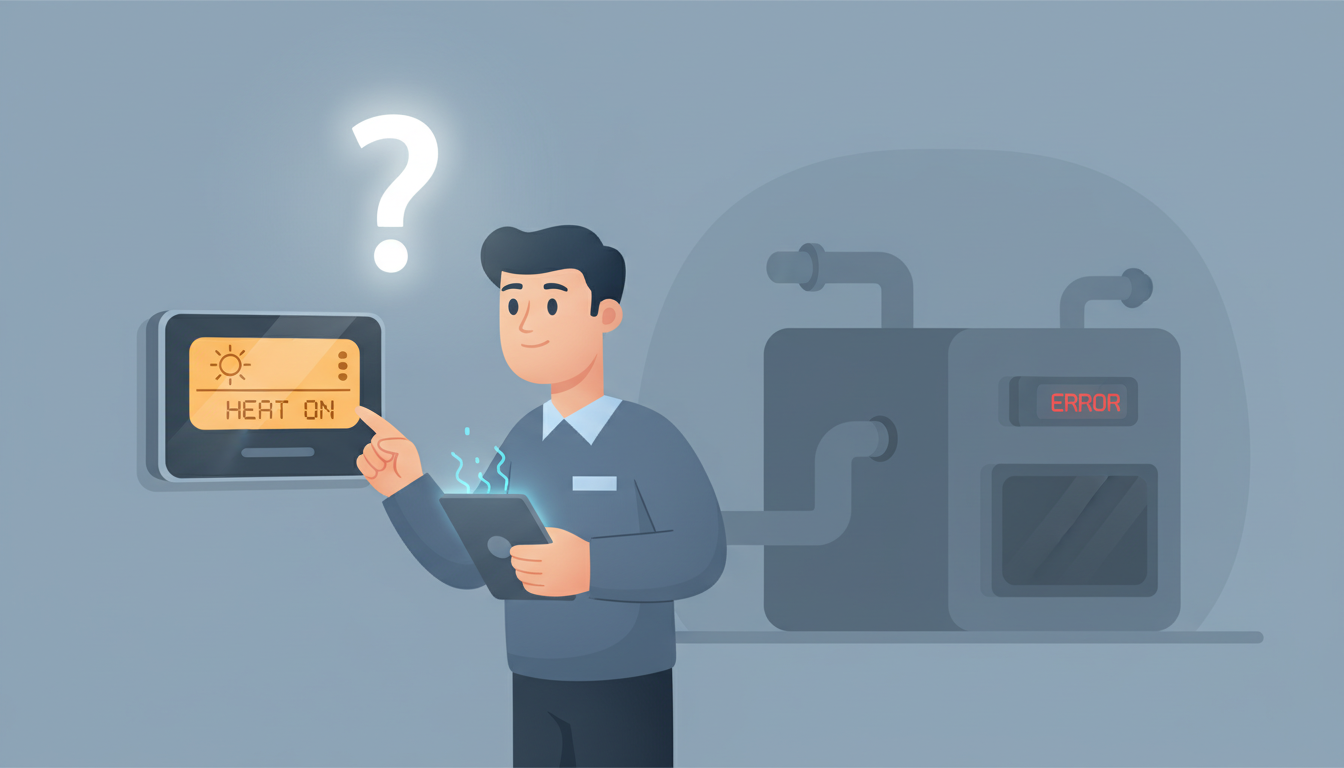
You've turned up the thermostat, heard that familiar click, and watched the display show "Heat On" or see the flame icon light up. But your house is still cold, and your furnace is sitting there doing absolutely nothing. If this sounds familiar, you're not alone—and the good news is that many causes of this frustrating problem have simple fixes you can tackle yourself.
When your thermostat calls for heat but your furnace doesn't respond, the issue could be as simple as a tripped circuit breaker or as complex as a failed component inside your heating system. In this guide, we'll walk you through every possible cause, from the easiest DIY fixes to problems that require a professional HVAC technician.
What Does "Calling for Heat" Actually Mean?
Before we dive into troubleshooting, let's clarify what's happening when your thermostat is calling for heat. When you set your thermostat above the current room temperature, it sends an electrical signal through the wiring to your furnace or heating system. This signal tells your heating equipment to fire up and start warming your home.
When everything's working correctly, this process takes just seconds. But when that signal doesn't reach your furnace—or your furnace receives it but can't respond—you'll experience the frustrating scenario of a thermostat that says it's heating while your home stays cold.
Quick Diagnostic Checklist: Start Here
Before you start dismantling your HVAC system, run through this quick checklist. These simple checks solve the problem about 60% of the time:
- Check your thermostat display - Is it completely blank? You might have dead batteries or no power.
- Verify the mode setting - Make sure your thermostat is set to "Heat" mode, not "Cool" or "Off."
- Look at your circuit breaker panel - Is the breaker for your furnace in the "On" position?
- Check the furnace power switch - Look for a light switch near your furnace and make sure it's on.
- Inspect your air filter - Can you see light through it? If not, it needs changing.
- Listen for any sounds - Does your furnace make any noise at all when the thermostat calls for heat?
If these quick checks don't reveal the problem, let's dig deeper into the most common culprits.
1. Dead or Dying Thermostat Batteries
Likelihood: Very High for Battery-Powered Thermostats
If you have a battery-powered thermostat, dead batteries are one of the most common reasons your heating system won't respond. Even if your thermostat display is still working, weak batteries may not provide enough power to send the heating signal to your furnace.
How to Fix It:
Replace the batteries with fresh ones—most thermostats use AA or AAA batteries. After installing new batteries, give your thermostat a minute to reboot, then try calling for heat again. If your thermostat is hardwired (powered by your HVAC system's transformer), you can skip this step.
Pro Tip: Even hardwired thermostats sometimes have backup batteries. Check your thermostat manual or look for a battery compartment on the back or side of the unit.
2. Tripped Circuit Breaker or Blown Fuse
Likelihood: Very High
Your furnace won't run without power. If someone accidentally flipped a switch, if there was a power surge, or if your furnace drew too much current, the circuit breaker may have tripped. This is actually a safety feature that prevents electrical fires.
How to Fix It:
- Go to your home's electrical panel (breaker box)
- Look for any breakers in the "Off" position or in the middle position (which indicates they've tripped)
- Find the breaker labeled for your furnace or HVAC system
- If it's tripped, flip it fully to "Off" first, then back to "On"
- Try your thermostat again
Important: If the breaker trips again immediately, don't keep resetting it. This indicates a serious electrical problem that requires a professional HVAC technician or electrician.
Also check the furnace itself for a power switch (it looks like a regular light switch and is usually red or has a red plate). Make sure it's in the "On" position.
3. Clogged or Dirty Air Filter
Likelihood: Very High
A clogged air filter is the silent killer of HVAC systems and one of the most common reasons your furnace might not start even when the thermostat calls for heat. When your filter is packed with dust, pet hair, and debris, it restricts airflow to your furnace.
Modern furnaces have safety sensors that detect when airflow is too restricted. If the limit switch (a safety device) detects overheating due to poor airflow, it will shut down your furnace to prevent damage or fire hazards.
How to Fix It:
- Locate your furnace filter (usually in a slot near the blower compartment or in a return air grille)
- Remove the filter and hold it up to a light
- If you can't see light passing through it, it needs to be replaced immediately
- Install a new filter of the correct size, making sure the airflow arrow points toward the furnace
- Wait a few minutes for your system to reset, then try your thermostat again
Maintenance Tip: Change your furnace filter every 1-3 months during heating season, or more frequently if you have pets or allergies. This simple task can prevent 80% of heating problems. For more comprehensive maintenance tips, check out our complete HVAC repair guide.
4. Thermostat Wiring Problems
Likelihood: Moderate
Your thermostat connects to your furnace through low-voltage wires (usually 24 volts). If these wires are loose, corroded, or damaged, your thermostat's heating signal won't reach your furnace. This is especially common in older homes or after recent thermostat installations.
Key Wires to Know:
- R wire (red): Provides power to the thermostat
- W wire (white): Signals the heating system to turn on
- G wire (green): Controls the fan/blower
- Y wire (yellow): Controls air conditioning (if you have it)
- C wire (blue/black): Common wire that provides continuous power (not present in all systems)
How to Fix It:
- Turn off power to your HVAC system at the circuit breaker
- Remove your thermostat from the wall plate (most snap or slide off)
- Check that all wires are firmly connected to their terminals
- Look for any exposed copper wire or corrosion on the connections
- If a wire is loose, tighten the terminal screw
- If you see corrosion, disconnect the wire, clean it with sandpaper, and reconnect it
- Reattach your thermostat and restore power
Warning: If you're uncomfortable working with electrical wiring, even low-voltage wiring, call a professional. A wiring mistake could damage your expensive thermostat or furnace control board.
If your thermostat isn't working correctly overall, you might want to read our detailed guide on what to do when your thermostat is not working.
5. Faulty or Dirty Flame Sensor
Likelihood: High for Gas Furnaces
If you have a gas furnace, the flame sensor is a critical safety component. This small metal rod sits in the flame path and confirms that gas is actually burning when your furnace ignites. If the sensor doesn't detect a flame (even if one exists), it will shut off the gas valve within seconds as a safety measure.
Over time, flame sensors get coated with carbon deposits and residue from combustion. When this happens, they can't properly detect the flame, causing your furnace to start and then immediately shut down—or not start at all.
Symptoms of a Dirty Flame Sensor:
- Furnace starts but shuts off after a few seconds
- You hear the ignitor clicking but no sustained heating
- Multiple start attempts with immediate shutdowns
How to Fix It:
Cleaning a flame sensor requires opening your furnace and finding a thin metal rod (about 1/4 inch diameter) positioned near the burner assembly. You can gently clean it with fine-grit sandpaper or steel wool. However, this requires accessing the inside of your furnace, which many homeowners aren't comfortable doing. If this sounds beyond your skill level, it's a quick and inexpensive fix for an HVAC technician.
6. Closed or Partially Closed Gas Valve
Likelihood: Moderate for Gas Furnaces
For gas furnaces to work, natural gas needs to flow to the burners. If someone accidentally closed the gas valve (it happens during summer maintenance or after work on gas appliances), your furnace can't ignite even when the thermostat calls for heat.
How to Fix It:
- Locate the gas valve on the gas pipe leading to your furnace
- Check the valve handle—it should be parallel (in line with) the gas pipe when open
- If the handle is perpendicular (at a 90-degree angle to the pipe), the valve is closed
- Turn the valve carefully so it's parallel with the pipe
- Wait a minute for gas to reach the furnace, then try your thermostat again
Safety Note: If you smell gas (a rotten egg odor), do NOT try to fix anything. Leave your home immediately and call your gas company or 911 from outside.
7. Malfunctioning Ignitor or Pilot Light
Likelihood: High for Older Systems
Modern furnaces use electronic ignitors to light the gas, while older systems may use a standing pilot light. If the ignitor fails or the pilot light goes out, your furnace can't create heat even when your thermostat calls for it.
Electronic Ignitor Issues:
Electronic ignitors can fail due to:
- Buildup of debris or dust
- Cracks in the ignitor element
- Age and normal wear (they typically last 4-7 years)
If your ignitor is cracked or won't glow when your furnace tries to start, it needs replacement. This is a job for a professional since it requires accessing internal furnace components and ensuring proper gas flow.
Pilot Light Issues:
If you have an older furnace with a standing pilot light, check if the flame is lit. You should see a small blue flame burning continuously. If it's out, your furnace manual will have instructions for relighting it—but if you're not comfortable doing this, call a professional.
8. Failed Limit Switch
Likelihood: Moderate
The limit switch is a safety device that monitors your furnace's temperature. If your furnace gets too hot (usually due to restricted airflow from a dirty filter), the limit switch shuts down the system to prevent overheating and potential fire hazards.
Sometimes the limit switch itself can fail or get stuck in the "open" position, which prevents your furnace from starting even when airflow is fine.
Symptoms:
- Furnace won't start at all
- Blower fan runs constantly
- Furnace starts then stops before warming up
How to Fix It:
Testing and replacing a limit switch requires technical knowledge and tools. If you've ruled out airflow restrictions (clean filter, open vents) and your furnace still won't start, a failed limit switch might be the culprit. This repair requires an HVAC professional.
9. Incorrect Thermostat Settings or Location
Likelihood: Moderate
Sometimes the issue isn't mechanical—it's about thermostat configuration or placement. If your thermostat is installed in the wrong location, it might be reading temperatures incorrectly and not calling for heat when you actually need it.
Configuration Issues:
- Wrong system type: If your thermostat is configured for a heat pump but you have a gas furnace (or vice versa), it won't send the correct signals
- Incorrect anticipator setting: Older mechanical thermostats have an "anticipator" that needs proper calibration
- Smart thermostat learning mode: Some smart thermostats learn your schedule and may override your manual changes
Location Issues:
Your thermostat shouldn't be:
- In direct sunlight
- Near drafts from doors or windows
- Above heat sources like lamps or appliances
- In rarely used rooms
These locations cause your thermostat to read inaccurate temperatures, leading to heating problems.
How to Fix It:
Check your thermostat's system settings (usually in a configuration or setup menu) and verify it's set for your actual heating system type. If you have a smart thermostat, temporarily disable learning mode or schedules to see if that resolves the issue.
If location is the problem, relocating a thermostat is a job for a professional since it involves running new wires through your walls.
10. Faulty Capacitor or Blower Motor
Likelihood: Moderate to Low
Your furnace's blower fan (which pushes warm air through your ducts) needs a capacitor to start. The capacitor stores electrical energy and releases it in a burst to get the motor spinning. If the capacitor fails, your blower motor won't run, and your furnace may not start the heating cycle.
Similarly, if the blower motor itself has failed, your furnace's safety controls may prevent the burners from lighting (since there would be no way to distribute the heat).
Symptoms:
- Humming sound from the furnace but no air movement
- Furnace doesn't start at all
- Burning smell (indicates motor overheating)
How to Fix It:
Capacitors store electrical charge even when power is off and can deliver a dangerous shock. Testing and replacing capacitors and blower motors should be done by a licensed HVAC technician. This is typically a same-day repair that costs between $150-$400 depending on the component.
When to Call a Professional vs. DIY
You can safely handle these issues yourself:
- Replacing thermostat batteries
- Changing air filters
- Resetting circuit breakers
- Checking and opening gas valves (if no gas smell present)
- Cleaning thermostat contacts
- Verifying thermostat settings
Call an HVAC professional for:
- Wiring repairs or replacements
- Flame sensor cleaning or replacement
- Ignitor replacement
- Limit switch replacement
- Capacitor or blower motor issues
- Any issue involving the gas valve or burner assembly
- Repeated problems after DIY fixes
- Any situation where you smell gas
Cost Expectations: Basic diagnostic calls typically range from $75-$150. Simple repairs (capacitor, flame sensor) usually cost $150-$300. More complex repairs (control board, blower motor, ignitor) can run $300-$600. A new thermostat installation ranges from $150-$400 depending on the model.
Preventive Maintenance Tips
The best way to avoid "thermostat calling for heat but nothing happens" problems is regular maintenance:
- Change your filter monthly during heating season (every 1-3 months minimum)
- Schedule annual furnace tune-ups before winter starts
- Keep the area around your furnace clear of storage and debris
- Test your thermostat monthly by adjusting the temperature and verifying your system responds
- Clean your thermostat twice a year by removing the cover and gently dusting inside
- Replace thermostat batteries annually even if they seem fine
- Check your vents throughout your home and ensure they're open and unblocked
These simple steps can prevent 70% of heating system failures and extend your furnace's lifespan by years.
FAQ: Common Questions About Thermostats and Heating
Why does my thermostat click but my furnace doesn't turn on?
The clicking sound you hear is the relay inside your thermostat switching to call for heat. If your furnace doesn't respond, the most common causes are no power to the furnace (tripped breaker), a clogged air filter triggering safety shutoffs, or a wiring problem preventing the signal from reaching your furnace.
How long should it take for my furnace to start after the thermostat calls for heat?
A properly functioning furnace should start within 15-30 seconds after your thermostat calls for heat. You should hear the blower motor start, followed by the burners igniting (you might hear a "whoosh" sound). If it takes longer than a minute or doesn't start at all, there's a problem that needs attention.
Can a bad thermostat cause my furnace not to work?
Yes, absolutely. If your thermostat isn't sending the proper electrical signal to your furnace, your heating system won't know it needs to turn on. Dead batteries, faulty wiring connections, or a malfunctioning thermostat can all prevent your furnace from receiving the heating call. Try replacing the batteries and checking wiring connections first.
Why does my thermostat say "Heat On" but there's no heat?
When your thermostat displays "Heat On" but your home isn't warming up, it means your thermostat is calling for heat but your furnace isn't responding—or your furnace is running but not producing heat. Check your air filter first, then verify your circuit breaker hasn't tripped. If the furnace is running but blowing cold air, you may have a failed ignitor or gas valve issue.
Will a blown fuse cause my heating not to work?
Yes. Your furnace has multiple fuses and safety devices. If the main power fuse blows, your entire system won't work. If a control board fuse blows, your thermostat might power on but can't communicate with your furnace. Check your electrical panel first for tripped breakers before investigating fuses inside the furnace.
Conclusion: Get Your Heat Back On Track
When your thermostat calls for heat but nothing happens, it's frustrating—especially on a cold day. But as we've covered, most causes have straightforward solutions. Start with the simple checks: batteries, circuit breakers, air filters, and thermostat settings. These solve the majority of heating problems without requiring any tools or technical knowledge.
If you've worked through this troubleshooting guide and your furnace still won't respond to your thermostat, it's time to call a professional. What seems like a complex problem to diagnose often takes an experienced HVAC technician just minutes to identify and fix.
Don't wait until the coldest night of winter to address heating problems. If your system is showing any signs of trouble—strange noises, intermittent operation, or poor heating performance—schedule a service call now. Regular maintenance and prompt repairs will keep your home comfortable all season long and prevent a complete system failure when you need heat the most.
Need professional HVAC help? Contact a licensed technician in your area to get your heating system inspected and repaired. Your comfort and safety are worth the investment.