What Happens During an HVAC Diagnostic Visit?
What Happens During an HVAC Diagnostic Visit?
Your HVAC system isn't cooling like it used to, or maybe you've noticed strange noises coming from your furnace. You've scheduled an HVAC diagnostic visit, but what exactly will the technician do? Understanding what happens during an HVAC diagnostic visit helps you prepare properly and know what to expect from this essential service.
What Is an HVAC Diagnostic Visit?
An HVAC diagnostic visit is a comprehensive evaluation of your heating and cooling system to identify the root cause of performance issues. Unlike routine maintenance, which focuses on preventative care, a diagnostic service is performed when you're experiencing specific problems with your system.
Think of it like visiting a doctor when you're sick rather than going for a yearly checkup. The HVAC technician acts as a detective, using specialized tools and expertise to pinpoint exactly what's wrong with your system so they can recommend the right repairs.
Why You Need an HVAC Diagnostic Visit
Most HVAC problems don't announce themselves clearly. Your system might not be heating or cooling properly, but the underlying cause could be anything from a simple air filter issue to a failing compressor. An HVAC diagnostic service helps identify the exact problem so you're not wasting money on unnecessary repairs.
Professional diagnostics also prevent one HVAC problem from causing another, which can lead to expensive cascading failures if left unchecked.
Signs You Need an HVAC Diagnostic Service
How do you know when it's time to schedule a diagnostic visit? Watch for these common warning signs:
Temperature Inconsistencies
If some rooms in your home are significantly warmer or cooler than others, or your system can't reach the temperature set on your thermostat, you need a diagnostic check. This could indicate ductwork problems, refrigerant leaks, or sensor issues.
Unusual Noises
Strange sounds like grinding, squealing, banging, or rattling aren't normal. These noises often signal mechanical problems with components like the blower motor, compressor, or loose parts that need immediate attention.
Higher Energy Bills
A sudden spike in your energy costs without increased usage typically means your HVAC system is working harder than it should to maintain comfort. This inefficiency points to underlying problems that a diagnostic can uncover.
Weak Airflow
If air barely comes out of your vents, or certain vents have no airflow at all, you're dealing with circulation issues. This could stem from blower motor problems, blocked ducts, or dirty components restricting air movement.
System Short Cycling
When your HVAC system turns on and off frequently without completing full heating or cooling cycles, it's short cycling. This puts excessive wear on your equipment and indicates problems that need professional diagnosis.
What to Expect: The HVAC Diagnostic Process Step by Step
Understanding the diagnostic process helps you prepare and ensures you get thorough service. Here's what happens during a typical HVAC diagnostic visit.
Initial Consultation and Assessment
Your diagnostic visit begins with communication. The technician will ask detailed questions about the problems you're experiencing:
- When did you first notice the issue?
- Does the problem happen constantly or intermittently?
- Have you noticed any patterns (time of day, weather conditions)?
- What sounds, smells, or performance changes have you observed?
Be specific and detailed in your answers. The more information you provide, the more efficiently the technician can diagnose your system. Write down symptoms before the appointment so you don't forget important details.
The technician will also ask about your system's age, previous repairs, and maintenance history. This context helps them understand potential problem areas and overlooked causes of HVAC problems specific to your equipment.
Visual Inspection of Indoor and Outdoor Units
Next comes a thorough visual examination of your entire HVAC system. The technician will inspect both your indoor unit (furnace or air handler) and outdoor unit (condenser) for obvious signs of trouble.
During this inspection, they're looking for:
- Physical damage to components
- Rust or corrosion on metal parts
- Oil spots indicating leaks
- Burnt or discolored wiring
- Dirty or clogged components
- Loose or disconnected parts
- Evidence of pests or debris
This visual assessment often reveals issues that don't require testing to identify, saving diagnostic time.
Thermostat Evaluation
Your thermostat is the command center for your HVAC system. The technician will verify that it's:
- Accurately reading room temperature
- Properly calibrated
- Communicating correctly with your HVAC equipment
- Set to the appropriate mode (heat, cool, auto)
- Functioning without battery or electrical issues
Many comfort problems stem from thermostat malfunctions rather than the heating or cooling equipment itself, making this a critical diagnostic step.
Air Filter and Airflow Analysis
A dirty air filter is one of the most common culprits behind HVAC problems. The technician will check your filter's condition and determine if restricted airflow is causing your issues.
They'll also measure airflow at various points throughout your system using specialized instruments. Proper airflow is essential for system efficiency and performance. Low airflow can indicate:
- Blocked or closed vents
- Dirty evaporator coils
- Blower motor problems
- Ductwork leaks or restrictions
- Improperly sized equipment
Electrical System Inspection
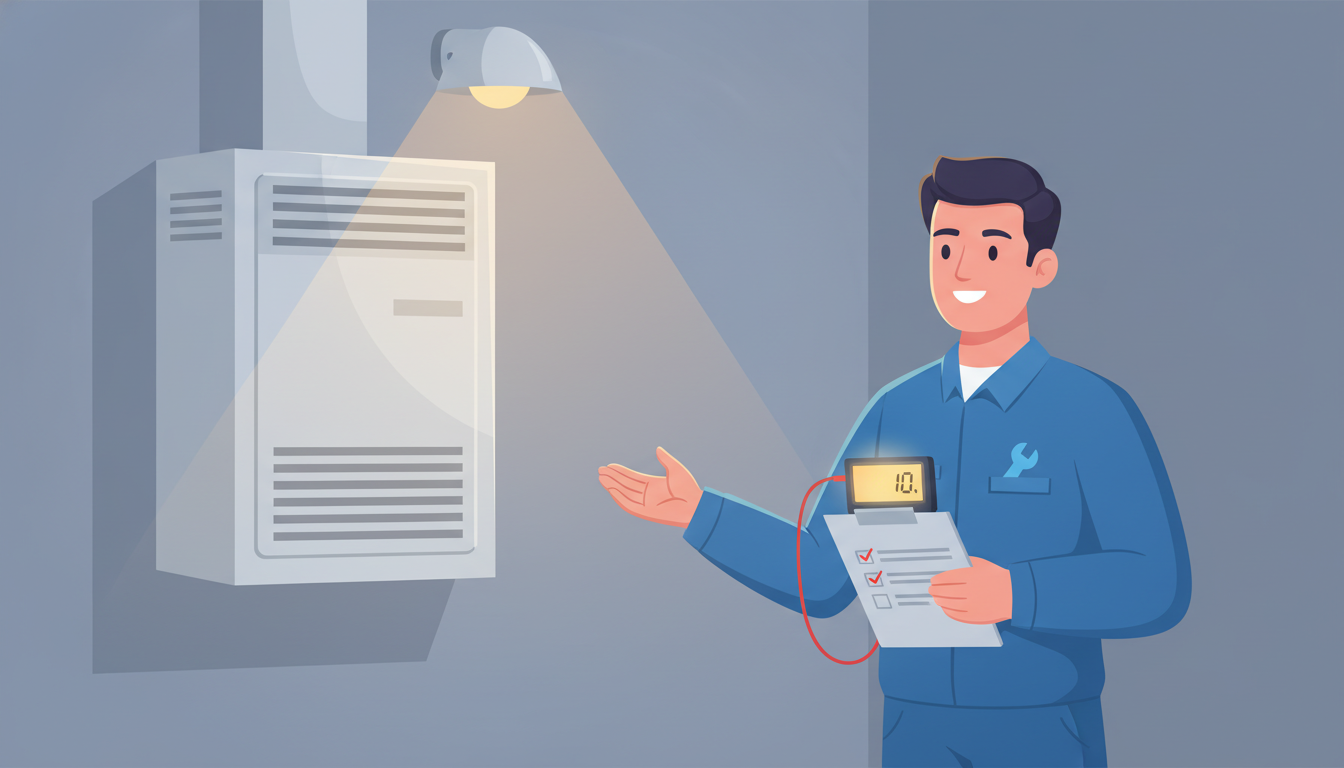
HVAC systems rely on numerous electrical components working in harmony. Using digital multimeters and other testing equipment, the technician will check:
- Voltage levels at key connection points
- Capacitor function (these help motors start and run)
- Contactor operation (electrical switches)
- Wire integrity and connections
- Circuit breaker function
- Fuse condition
Electrical problems can cause intermittent failures that are difficult to diagnose without proper testing equipment and expertise.
Refrigerant Level Check
For air conditioning and heat pump systems, proper refrigerant charge is critical. Too much or too little refrigerant dramatically reduces efficiency and can damage your compressor.
The technician uses manifold gauges to measure refrigerant pressure on both the high and low sides of your system. These readings, combined with temperature measurements, reveal whether your system has the correct refrigerant charge.
If levels are low, the technician will look for leaks using electronic leak detectors or UV dye. Refrigerant doesn't disappear on its own—low levels always indicate a leak that needs repair.
Component Testing and Performance Evaluation
Next, the technician will test individual components while your system runs. This includes:
Compressor: The heart of your AC or heat pump. They'll check amp draw, operating pressures, and temperature differential.
Blower Motor: They'll verify proper speed, check for unusual vibrations or noise, and ensure adequate air delivery.
Condenser Fan: The outdoor fan must move sufficient air across the condenser coils for proper heat exchange.
Heat Exchanger: For furnaces, they'll inspect for cracks or corrosion that could leak dangerous carbon monoxide into your home.
Evaporator Coils: These must be clean and properly transferring heat. Frozen coils indicate problems.
Condensate Drain: Clogs in this drain line can cause water damage and system shutdowns.
Ductwork Assessment
In many homes, ductwork problems significantly impact HVAC performance. The technician may check accessible ductwork for:
- Air leaks at connections
- Proper insulation
- Crushed or damaged sections
- Disconnected sections
- Excessive dust buildup
While a complete duct inspection might require a separate camera inspection, technicians can often spot major ductwork issues during a standard diagnostic.
Safety Checks
Safety is paramount during any HVAC diagnostic visit. The technician will specifically check for:
- Gas leaks (for furnaces and boilers)
- Carbon monoxide production
- Proper combustion and venting
- Gas pressure levels
- Flame sensor operation
- Emergency shutoff function
These safety checks protect your family from potentially deadly hazards. Never skip or postpone diagnostic visits if you suspect gas or carbon monoxide issues.
System Performance Testing
After inspecting and testing individual components, the technician will evaluate overall system performance. This includes measuring:
- Temperature differential (the difference between return and supply air)
- System run time
- Cycling frequency
- Time to reach set temperature
- Overall efficiency compared to manufacturer specifications
These performance metrics help determine if components are working correctly individually but failing to deliver proper system-level performance.
How Long Does an HVAC Diagnostic Visit Take?
Most HVAC diagnostic visits take between 60 and 90 minutes, though complex issues or larger systems may require more time. Emergency diagnostics during extreme weather may be shorter, focusing on getting your system operational quickly with a follow-up visit for comprehensive diagnosis.
Don't be concerned if your diagnostic takes longer than expected. Thorough diagnostics save money in the long run by identifying problems correctly the first time rather than through trial-and-error repairs.
What Happens After the Diagnostic?
Once the diagnostic is complete, the technician will explain their findings in plain language. You should receive:
A Clear Explanation: What's wrong with your system and what's causing the problem.
Repair Options: Specific repairs needed, including parts and labor costs. For multiple issues, they'll prioritize based on urgency and safety.
Timeline: How quickly repairs can be completed and whether temporary solutions are available.
Prevention Advice: Recommendations to prevent similar problems in the future.
Many companies will waive or credit the diagnostic fee toward repairs if you approve the work immediately. Ask about this policy when scheduling.
HVAC Diagnostic Visit vs. Maintenance Tune-Up
It's important to understand the difference between a diagnostic visit and routine maintenance:
Diagnostic Visit: Problem-focused service when something is wrong. Uses specialized testing equipment to identify specific issues. Usually includes a service call fee.
Maintenance Tune-Up: Preventative service performed on healthy systems. Includes cleaning, adjustments, and minor repairs to prevent future problems. Typically scheduled seasonally.
Both services are valuable, but they serve different purposes. Regular maintenance can reduce the need for diagnostic visits by catching problems early, but when issues arise, a targeted diagnostic identifies solutions more efficiently than a standard tune-up.
For more guidance on keeping your system healthy, check out our comprehensive HVAC repair guide.
How to Prepare for Your HVAC Diagnostic Visit
Maximize the value of your diagnostic appointment with these preparation steps:
Clear Access: Ensure the technician can easily reach both your indoor and outdoor units. Move furniture, storage boxes, or other obstacles.
Document Symptoms: Write down specific details about problems you've noticed, including when they occur and any patterns.
Gather Records: Have maintenance records and previous repair invoices available. These help the technician understand your system's history.
Make a List: Write questions you want to ask so you don't forget them during the visit.
Plan to Be Home: While not always required, being present lets you show the technician exactly what you've observed and ask questions immediately.
Check Simple Things: Before the appointment, verify your thermostat batteries are working, your circuit breaker hasn't tripped, and your air filter isn't completely clogged. This saves time if the solution is simple.
Understanding HVAC Diagnostic Costs
HVAC diagnostic fees typically range from $75 to $200, depending on your location, the company you choose, and the complexity of your system. This fee covers the technician's time, expertise, and use of specialized diagnostic equipment.
While some companies advertise "free" diagnostics, there's usually a catch. They may:
- Require you to commit to repairs before coming out
- Include the diagnostic cost in inflated repair prices
- Only offer free diagnostics with membership plans
- Provide only a basic visual inspection rather than comprehensive testing
A fair diagnostic fee ensures the technician has incentive to properly diagnose your system rather than rushing to sell you repairs. Companies that credit the diagnostic fee toward approved repairs offer a reasonable compromise.
Questions to Ask During Your Diagnostic Visit
Don't hesitate to ask questions. A professional technician welcomes your engagement. Good questions include:
- What exactly is causing my problem?
- How urgent is this repair?
- What happens if I delay the repair?
- Are there temporary solutions while I consider options?
- Is this problem related to my system's age, or is it premature failure?
- What's your warranty on parts and labor?
- Are there preventative measures to avoid this problem in the future?
- Should I consider system replacement instead of repair?
When to Get a Second Opinion
In most cases, one diagnostic is sufficient. However, consider seeking a second opinion if:
- The proposed repair cost approaches the price of system replacement
- The diagnosis doesn't seem to match your symptoms
- You feel pressured to make an immediate decision
- The technician can't clearly explain what's wrong
- Multiple repairs are recommended but you're unsure if they're all necessary
Getting a second diagnostic adds cost, but it can save thousands if it prevents an unnecessary major repair or premature system replacement.
FAQ: Common Questions About HVAC Diagnostic Visits
Can I stay home during the diagnostic visit?
Yes, and it's often helpful. Being present allows you to show the technician exactly what you've observed and get immediate answers to your questions. However, if you must leave, ensure the technician has access to all necessary areas.
Will the technician need access to my entire home?
Not usually. They'll primarily need access to your HVAC equipment (typically in a closet, attic, basement, or garage), your thermostat, and a few vents to test airflow. They may ask to check all rooms briefly to assess temperature distribution.
Do I need to turn off my system before the technician arrives?
No, leave your system operating as usual unless it's creating a dangerous condition. The technician needs to observe how it's functioning and will control when to turn it on or off during testing.
Is an HVAC diagnostic the same as an inspection?
The terms are often used interchangeably, but a diagnostic typically focuses on identifying the cause of a specific problem, while an inspection might be a broader assessment of overall system condition. For practical purposes, they involve similar processes.
What if the diagnostic reveals multiple problems?
This is common, especially with older systems. A good technician will prioritize repairs based on safety, urgency, and impact. You're not obligated to address everything immediately—ask which repairs are critical and which can wait.
Should I get annual diagnostics even if nothing seems wrong?
No, that's what maintenance tune-ups are for. Schedule diagnostics only when problems arise. Annual or seasonal maintenance prevents many issues that would otherwise require diagnostic visits.
Take Action: Schedule Your HVAC Diagnostic Visit Today
Understanding what happens during an HVAC diagnostic visit helps you feel confident about this essential service. When your heating or cooling system isn't performing properly, a professional diagnostic identifies problems accurately so you can make informed repair decisions.
Don't ignore warning signs or delay diagnostics hoping problems will resolve themselves. Small issues become expensive failures when left unaddressed. Schedule your diagnostic visit with a qualified, licensed HVAC technician who uses proper testing equipment and takes time to thoroughly evaluate your system.
Your comfort and safety depend on a properly functioning HVAC system. A comprehensive diagnostic visit is your first step toward reliable heating and cooling performance.