Why One HVAC Problem Often Causes Another (And How to Break the Chain)
Why One HVAC Problem Often Causes Another (And How to Break the Chain)
Have you ever called an HVAC technician for what seemed like a minor issue, only to discover your system needed extensive repairs? You're not alone. HVAC systems are interconnected networks where one problem rarely stays isolated. A small malfunction in one component creates stress on others, triggering a domino effect that can transform a $20 fix into thousands of dollars in damage.
Understanding why HVAC problems cascade is crucial for homeowners who want to protect their investment and avoid emergency breakdowns. In this guide, you'll learn how HVAC issues create chain reactions, how to spot the warning signs, and most importantly, how to stop problems before they spread throughout your system.
The Domino Effect: How HVAC Systems Create Chain Reactions
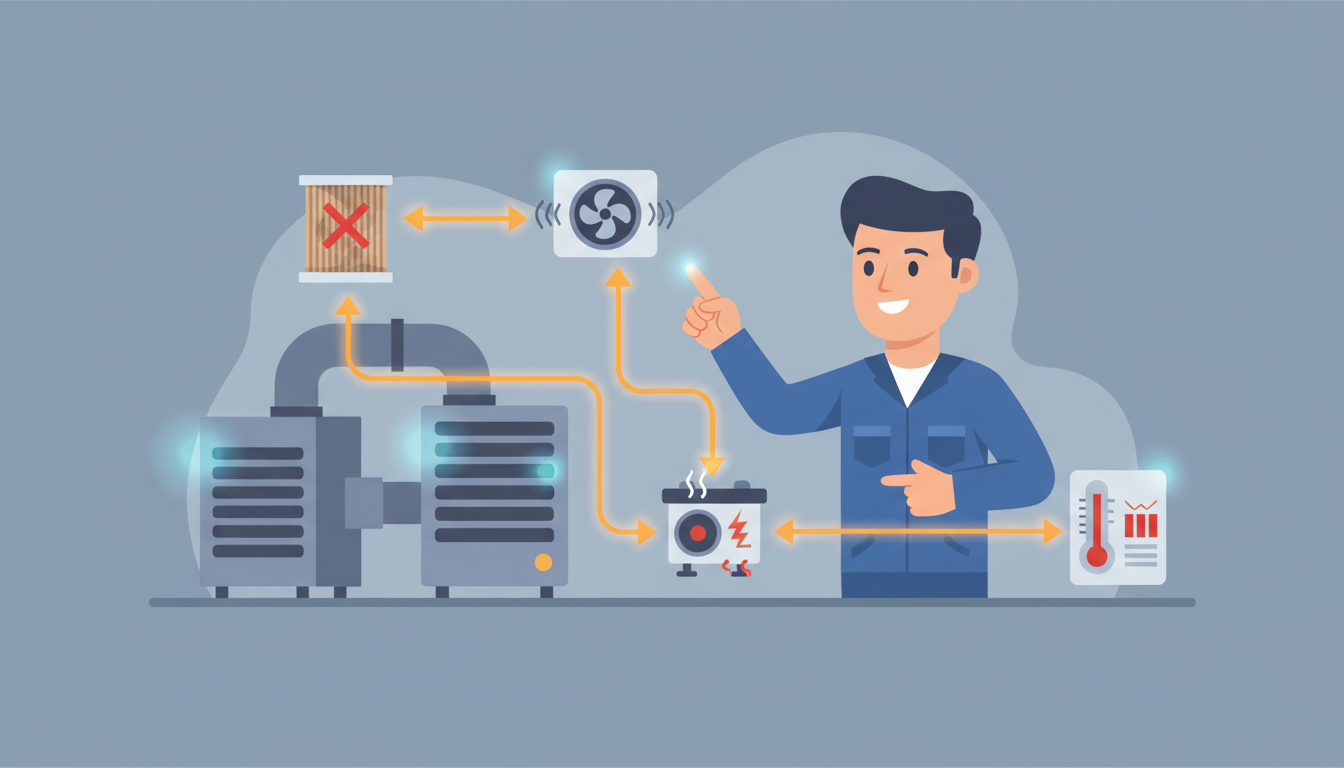
Your HVAC system isn't a collection of independent parts—it's a carefully balanced ecosystem. When one component fails or operates inefficiently, it forces other parts to work harder, creating additional strain that leads to more failures.
Think of it like a relay race where one runner gets injured. The remaining runners must sprint faster to compensate, quickly exhausting themselves and risking injury too. In HVAC terms, this cascading effect happens because every component depends on others functioning properly.
The three main reasons why one HVAC problem causes another:
- Shared Resources: Components compete for the same airflow, electrical power, and refrigerant
- Compensation Strain: When one part fails, others work overtime to maintain comfort
- Physical Dependencies: Damage in one area directly impacts connected components
The Dirty Filter Cascade: The Most Common Chain Reaction
Clogged air filters cause more cascading HVAC problems than any other single issue. This seemingly minor maintenance task triggers a chain reaction affecting your entire system.
Stage 1: Restricted Airflow
When your air filter gets clogged with dust, pet hair, and debris, airflow drops significantly. Your system can't pull enough air through the vents, creating negative pressure throughout the ductwork.
Stage 2: System Overwork
Your blower motor compensates by running longer and drawing more power. The thermostat signals the system to keep running because it can't reach the set temperature, even though the equipment is working continuously.
Stage 3: Component Damage
The restricted airflow causes multiple problems simultaneously:
- Frozen evaporator coils: Without adequate airflow, the evaporator coil gets too cold and ice forms
- Overheating heat exchanger: In heating mode, trapped heat causes the exchanger to crack or warp
- Blower motor failure: Running constantly under strain burns out the motor
- Compressor damage: Frozen coils send liquid refrigerant back to the compressor, causing catastrophic failure
Stage 4: Total System Failure
What started as a $20 air filter replacement becomes a $2,000+ repair bill including compressor replacement, coil repairs, and potential ductwork modifications.
According to HVAC repair experts, clogged filters account for nearly 80% of preventable system failures.
Refrigerant Leaks: The Silent System Killer
Refrigerant leaks create one of the most destructive cascade effects in HVAC systems because the damage happens gradually and often goes unnoticed until major components fail.
How the Refrigerant Cascade Works
Initial Problem: A small leak develops in your refrigerant lines, evaporator coil, or condenser coil. You might notice slightly reduced cooling but dismiss it as normal wear.
Phase 1 - Reduced Cooling Capacity: Your system runs longer cycles trying to cool your home. The compressor works harder but achieves less cooling because there's insufficient refrigerant to transfer heat effectively.
Phase 2 - Compressor Overheating: The compressor relies on refrigerant for internal cooling. Low refrigerant levels cause the compressor to overheat because it can't dissipate heat properly.
Phase 3 - Oil Breakdown: Overheating breaks down the compressor oil, reducing lubrication and creating metal-on-metal friction inside the compressor.
Phase 4 - Complete Compressor Failure: The compressor seizes up completely, often sending metal shavings throughout your refrigerant lines and contaminating the entire system.
Final Damage: Now you're not just fixing a leak—you're replacing the compressor, flushing all refrigerant lines, replacing the filter drier, and potentially replacing damaged coils. A $200 leak repair becomes a $3,000-$5,000 system replacement.
Why Refrigerant Leaks Accelerate Other Problems
Low refrigerant doesn't just damage the compressor. It creates additional cascading issues:
- Ice buildup on coils restricts airflow (triggering the filter cascade mentioned earlier)
- Uneven cooling makes the thermostat malfunction
- Electrical components work overtime, leading to capacitor and contactor failures
- Moisture infiltration from ice melting damages electrical connections
Electrical Issues: When Power Problems Trigger Mechanical Failures
HVAC electrical problems often disguise themselves as mechanical issues, creating confusion about the root cause while damage spreads to multiple components.
The Capacitor Failure Chain Reaction
Capacitors provide the electrical boost needed to start motors. When a capacitor begins failing, it triggers this cascade:
Week 1-2: The weakening capacitor struggles to start the compressor or blower motor. You hear clicking sounds or delayed starts.
Week 3-4: Motors start slowly, drawing excessive amperage during the startup phase. This creates heat in the motor windings.
Week 5-8: The motor runs hot, degrading insulation on the electrical windings. The motor runs but operates inefficiently.
Final Failure: The motor burns out completely, often tripping circuit breakers and potentially damaging the control board in the process.
A $30 capacitor replacement becomes a $800 motor replacement plus $400 control board repair.
Thermostat Malfunctions Creating System-Wide Chaos
Your thermostat controls when your HVAC system runs, making it the command center for your entire system. When it malfunctions, the cascading effects impact every component.
Short Cycling: A faulty thermostat causes the system to turn on and off rapidly. This creates:
- Excessive wear on the compressor and contactors
- Electrical stress on capacitors and circuit boards
- Temperature swings that damage ductwork seals
- Increased humidity from incomplete cooling cycles
Continuous Running: A stuck thermostat keeps your system running constantly, leading to:
- Frozen evaporator coils from overcooling
- Burned-out blower motors from continuous operation
- Skyrocketing energy bills that stress electrical components
- Premature system aging (a 15-year system dies in 8-10 years)
Understanding what happens during an HVAC diagnostic visit can help you identify thermostat-related cascade problems before they spread.
Drainage Problems: How Water Damage Spreads Throughout Your System
Condensate drainage issues create unique cascade problems because they combine mechanical failure with water damage.
The Clogged Drain Line Cascade
Your AC system produces gallons of water daily as it removes humidity from your air. When the condensate drain clogs, problems multiply quickly:
Day 1-3: Water backs up in the drain pan. The float switch (if equipped) shuts down the system to prevent overflow.
Day 4-7: Without the float switch, water overflows the pan and drips onto nearby components, floors, or ceilings.
Week 2: Standing water becomes a breeding ground for mold and bacteria, which spread through your ductwork.
Week 3-4: Water damages:
- Electrical connections (causing shorts and corrosion)
- Insulation around ductwork (reducing efficiency)
- Drywall and flooring (creating structural issues)
- Control boards and safety switches (requiring expensive replacements)
Long-term: Rust develops on metal components including the heat exchanger, coils, and blower housing. What started as a $100 drain cleaning becomes thousands in water damage remediation and component replacement.
Frozen Coil Water Damage
When evaporator coils freeze (often from filter problems or refrigerant leaks), the eventual thaw creates another water-based cascade:
- Ice melts rapidly, overwhelming the drain pan
- Water leaks onto electrical components
- Rust develops on metal housing
- Insulation absorbs water and loses R-value
- Secondary condensation issues develop from poor insulation
Ductwork Issues: The Hidden Cascade Multiplier
Many homeowners overlook ductwork when thinking about HVAC problems, but duct issues amplify every other problem in your system.
How Leaky Ducts Create Cascading Failures
When your ductwork has leaks, holes, or disconnections, it creates pressure imbalances that cascade throughout your system:
Immediate Effect: Conditioned air escapes into unconditioned spaces (attics, crawlspaces, wall cavities). Your system runs longer to compensate.
Secondary Effect: Extended run times stress the compressor, blower motor, and heat exchanger.
Pressure Problems: Leaks create negative pressure that:
- Pulls unconditioned air through envelope gaps
- Brings in moisture, pollen, and contaminants
- Unbalances the air distribution
- Creates hot and cold spots
Component Wear: The system working overtime to overcome duct losses causes:
- Premature compressor failure
- Blower motor burnout
- Increased filter clogging (from pulling in attic dust)
- Thermostat confusion from temperature inconsistencies
Blocked Vents and Returns
Closing too many vents or blocking return air grilles seems harmless but creates serious cascade effects:
- Increased static pressure: Forces the blower to work harder
- Ductwork damage: Excessive pressure blows apart duct joints and seals
- Coil freezing: Reduced airflow over the evaporator coil causes ice formation
- Furnace overheating: Blocked airflow causes the heat exchanger to overheat and crack
These are overlooked causes of HVAC problems that many homeowners unknowingly create.
Seasonal Cascade Patterns: Summer vs. Winter Failures
HVAC problems cascade differently depending on the season, with unique patterns for cooling and heating modes.
Summer Cooling Cascades
The Heat Wave Accelerator: Extended hot weather intensifies existing problems:
- Small refrigerant leaks become critical as the system runs continuously
- Marginal capacitors fail under sustained load
- Dirty coils overheat the system faster
- Aging compressors reach their breaking point
Common Summer Chain Reactions:
- Dirty outdoor coil → High head pressure → Compressor overheating → Complete failure
- Low refrigerant → Frozen coil → Water damage → Electrical shorts
- Overworked system → Tripped breakers → Control board damage → Multiple component failures
Winter Heating Cascades
The Furnace Flame-Out Cascade: Heating problems often involve combustion and gas components, creating different cascades:
Ignition Problems Leading to Damage:
- Dirty flame sensor → Failed ignition attempts → Excessive gas buildup → Delayed ignition → Cracked heat exchanger
- Clogged burners → Incomplete combustion → Soot buildup → Carbon monoxide risk → Heat exchanger replacement
Winter-Specific Chain Reactions:
- Clogged filter → Overheated heat exchanger → Cracks develop → Carbon monoxide leak → Emergency shutdown
- Failed limit switch → Continuous blower operation → Motor burnout → No heat distribution
- Dirty flame sensor → Lockout mode → Frozen pipes → Water damage → Structural issues
Warning Signs: How to Detect Cascading Problems Early
Catching HVAC problems before they cascade saves thousands in repair costs. Watch for these warning signs:
Red Flag Combinations (Multiple Symptoms = Active Cascade)
If you notice two or more of these together, a cascade is already underway:
- Higher energy bills + longer run times = Efficiency loss from multiple failing components
- Ice on outdoor unit + weak airflow = Filter/coil problems causing refrigerant issues
- Strange noises + frequent cycling = Motor or compressor struggling from another underlying problem
- Uneven temperatures + high humidity = System running inefficiently from multiple failures
- Water leaks + musty odors = Drainage and mold issues spreading
Sounds That Signal Cascading Damage
- Clicking without starting: Capacitor failing, will soon damage the motor
- Grinding or screeching: Bearing failure spreading metal debris through the system
- Hissing near refrigerant lines: Active leak that's damaging the compressor
- Banging in ductwork: Pressure imbalances from multiple system problems
Performance Changes Indicating Cascades
- Gradual cooling/heating loss: Small problems compounding over time
- Sudden efficiency drop: A cascade just accelerated to critical stage
- Short cycling (on/off every 5-10 minutes): Electrical or thermostat problems stressing components
- Extended recovery time: System struggling because multiple components are compromised
Breaking the Chain: How to Stop HVAC Cascades Before They Start
Prevention is exponentially cheaper than repair. Here's how to interrupt cascade failures before they destroy your system.
The 80/20 Rule for HVAC Maintenance
Focus on these high-impact maintenance tasks that prevent 80% of cascade failures:
1. Monthly Air Filter Changes (Prevents: coil freezing, motor burnout, heat exchanger damage, compressor failure)
- Check filter monthly, replace every 1-3 months depending on usage
- Use the correct MERV rating for your system (typically MERV 8-11)
- Never run the system without a filter
2. Annual Professional Inspection (Catches: refrigerant leaks, electrical issues, drainage problems, early component wear)
- Schedule in spring for AC, fall for heating
- Includes refrigerant level check, electrical testing, drainage verification
- Identifies problems while they're still inexpensive fixes
3. Quarterly Visual Checks (Detects: outdoor unit blockage, visible leaks, ice formation, unusual wear)
- Clear debris from outdoor condenser unit
- Check for ice or frost on refrigerant lines
- Look for water where it shouldn't be
- Listen for unusual sounds during operation
4. Thermostat Verification (Prevents: short cycling, continuous running, unnecessary component stress)
- Test thermostat accuracy with a separate thermometer
- Replace batteries annually in battery-powered units
- Upgrade to smart thermostats for better diagnostics
Emergency Cascade Intervention
If you suspect a cascade is already happening, take these immediate steps:
1. Turn Off the System: Stop further damage by shutting down at the thermostat and potentially the circuit breaker.
2. Document What You Observe: Note all symptoms, sounds, leaks, and performance issues. This helps technicians diagnose the root cause versus symptoms.
3. Call a Professional Immediately: Cascading failures accelerate quickly. Next-day service might be too late.
4. Don't Attempt Complex Repairs: While you can change filters and clear debris, refrigerant work, electrical repairs, and component replacement require licensed professionals. DIY attempts often worsen cascade damage.
The Cost-Benefit of Prevention
Consider these real-world cascade prevention scenarios:
- $30 filter + $15 of your time monthly vs. $2,500 compressor replacement
- $150 annual maintenance vs. $5,000 emergency system replacement
- $200 refrigerant leak repair (caught early) vs. $4,000 contaminated system flush and rebuild
- $80 capacitor replacement vs. $800 motor replacement + $400 control board
The math is clear: preventing cascades costs pennies compared to repairing them.
System Interdependencies: Understanding Your HVAC Ecosystem
To truly understand why one HVAC problem causes another, you need to see how every component relies on others.
The Air Side: Flow Dependencies
Filter → Blower → Coils → Ducts → Vents
Each link in this chain depends on the one before it:
- Dirty filter restricts blower performance
- Weak blower reduces coil efficiency
- Inefficient coils can't condition air properly
- Undersized or leaky ducts waste the work of all upstream components
The Refrigerant Side: Pressure Dependencies
Compressor → Condenser → Expansion Valve → Evaporator → Compressor
This closed loop means problems anywhere affect everywhere:
- Compressor failure contaminates the entire refrigerant circuit
- Dirty condenser coils increase system pressure and stress the compressor
- Clogged expansion valves starve the evaporator and damage the compressor
- Frozen evaporator sends liquid back to damage the compressor
The Electrical Side: Power Dependencies
Panel → Disconnect → Contactor → Capacitors → Motors → Controls
Electrical problems propagate both upstream and downstream:
- Failing capacitors draw excessive current, tripping breakers
- Weak contactors create voltage fluctuations damaging control boards
- Burned motors can damage transformers and safety controls
- Control board failures can send wrong signals to all components
When to Call a Professional vs. When to DIY
Knowing when to handle problems yourself versus calling a technician determines whether you interrupt a cascade or accelerate it.
Safe DIY Interventions
You can safely handle these without risking cascade damage:
- Changing air filters monthly
- Clearing debris from outdoor condenser units
- Resetting tripped circuit breakers (once—if it trips again, call a pro)
- Replacing thermostat batteries
- Clearing condensate drain lines with vinegar or compressed air
Always Call a Professional For
These require expertise to avoid worsening cascade problems:
- Refrigerant work (illegal for unlicensed individuals in most areas)
- Electrical repairs beyond breaker resets
- Compressor or motor replacements
- Heat exchanger inspections or repairs
- Ductwork modifications or major repairs
- Gas line or combustion work on furnaces
- Any problem involving multiple symptoms or intermittent failures
A professional diagnostic visit identifies the root cause versus symptoms, ensuring you fix the actual problem rather than chasing cascade effects.
FAQ: Common Questions About HVAC Problem Cascades
Can a dirty air filter really damage my compressor?
Yes. A clogged filter restricts airflow over the evaporator coil, causing it to freeze. Ice sends liquid refrigerant back to the compressor, which is designed to compress gas, not liquid. Liquid refrigerant causes catastrophic compressor damage called "slugging." This chain reaction—filter to coil to compressor—is one of the most expensive cascades in HVAC systems.
How quickly do HVAC problems cascade?
It varies by problem. Some cascades happen in days (like refrigerant leaks during summer), while others develop over months (like slow capacitor degradation). Electrical cascades often happen suddenly, while mechanical cascades give more warning. The key is addressing problems at the first symptom before they spread.
Why did my technician recommend replacing multiple parts?
When a cascade has progressed, fixing only one component often fails because related parts are already damaged. For example, if your compressor failed from a refrigerant leak, the technician must fix the leak AND replace the contaminated compressor. Replacing just one leaves damaged components that will fail shortly after repair.
Are HVAC cascades covered by warranty?
It depends on the root cause. If cascade damage results from lack of maintenance (like a dirty filter causing compressor failure), warranties typically don't cover it. However, if the initial problem was a manufacturing defect, cascading damage might be covered. Always review your warranty terms and document regular maintenance to protect your coverage.
Can regular maintenance really prevent these cascades?
Absolutely. Professional maintenance catches small problems before they cascade. Technicians check refrigerant levels, test electrical components, clean coils, verify drainage, and identify unusual wear patterns. The annual cost of maintenance is typically 5-10% of what you'd pay for cascade-related emergency repairs.
Conclusion: Stop Small Problems Before They Become System Failures
Understanding why one HVAC problem causes another empowers you to protect your system and your wallet. HVAC components form an interconnected ecosystem where failure in one area creates stress, damage, and failure in others. A simple clogged filter becomes a frozen coil, then a damaged compressor. A small refrigerant leak turns into complete system contamination.
The good news? Most cascade failures are preventable with basic maintenance and early intervention. Change your filters monthly, schedule annual professional inspections, and address problems at the first symptom. When you notice multiple warning signs together—higher bills, unusual sounds, ice formation, or performance changes—don't wait. Call a professional immediately to break the chain before minor issues become major expenses.
Your HVAC system is likely the second-largest investment in your home after the structure itself. Protecting it from cascade failures means understanding the interdependencies, watching for warning signs, and taking action before small problems multiply into system-wide disasters.
Don't let a $20 problem become a $2,000 emergency. Stay proactive, stay informed, and keep your HVAC system running efficiently for years to come.